You Won’t Believe Who Was RIGHT About the Earth’s Shape!
admin
Author
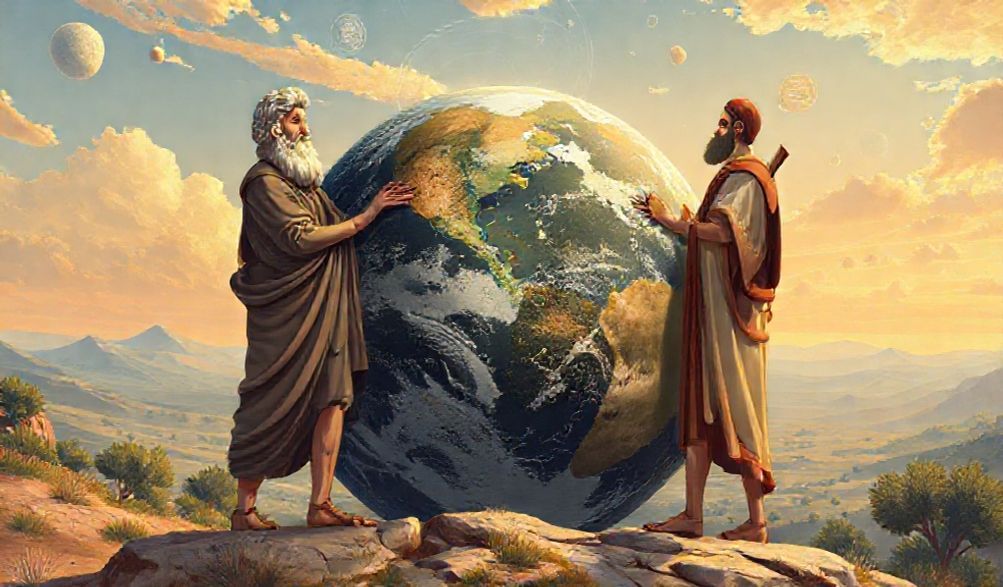
The Sphericity Debate has been a longstanding topic of discussion among scholars, scientists, and the general public, with many prominent figures weighing in on the shape of our planet. For centuries, the concept of a spherical Earth has been widely accepted, but there have been numerous individuals and groups who have challenged this idea, proposing alternative theories such as a flat Earth or an oblate spheroid. In recent years, the Sphericity Debate has gained significant attention, with many people taking to social media and other online platforms to share their thoughts and opinions on the matter. But who was right about the Earth’s shape, and what evidence do we have to support their claims?
Introduction to the Sphericity Debate
The Sphericity Debate is a complex and multifaceted issue, with roots dating back to ancient civilizations. The idea of a spherical Earth was first proposed by the Greek philosopher Pythagoras in the 6th century BCE, and was later supported by other notable figures such as Aristotle and Eratosthenes. However, the concept of a flat Earth or other alternative shapes has also been present throughout history, with various cultures and societies proposing their own theories about the planet’s shape. In modern times, the Sphericity Debate has taken on a new level of significance, with the rise of social media and the internet allowing people to share and access information on a massive scale.
Historical Context of the Sphericity Debate
Throughout history, the Sphericity Debate has been shaped by a variety of factors, including scientific discoveries, cultural and religious beliefs, and technological advancements. In ancient times, the idea of a spherical Earth was often linked to philosophical and metaphysical concepts, with many Greek philosophers seeing the sphere as a perfect and symmetrical shape. The concept of a flat Earth, on the other hand, was often associated with mythological and religious beliefs, with many ancient cultures believing in a flat Earth surrounded by a firmament or other celestial bodies. As scientific knowledge and understanding of the world increased, the Sphericity Debate evolved to incorporate new evidence and theories, including the work of astronomers such as Copernicus and Galileo, who provided significant evidence for a heliocentric model of the universe.
Detailed Examination of the Sphericity Debate
In order to fully understand the Sphericity Debate, it is necessary to examine the various arguments and evidence presented by both sides. The following sections will provide a detailed analysis of the key points and concepts involved in the debate.
### Section 1: Ancient Theories and Philosophies
In ancient times, the concept of a spherical Earth was often linked to philosophical and metaphysical concepts. The Greek philosopher Pythagoras is credited with being one of the first people to propose a spherical Earth, based on observations of the Earth’s shadow during lunar eclipses. Other notable philosophers, such as Aristotle and Plato, also supported the idea of a spherical Earth, citing evidence such as the way ships disappeared over the horizon and the existence of time zones. However, the concept of a flat Earth was also present in ancient cultures, with many societies believing in a flat Earth surrounded by a firmament or other celestial bodies.
### Section 2: Scientific Evidence and Discoveries
The Sphericity Debate has been significantly influenced by scientific evidence and discoveries. The work of astronomers such as Copernicus and Galileo provided significant evidence for a heliocentric model of the universe, with the Earth and other planets orbiting around the Sun. The discovery of the law of gravity by Sir Isaac Newton also supported the idea of a spherical Earth, as it provided a mechanism for explaining the way objects move and interact with each other. In modern times, a wide range of scientific evidence supports the concept of a spherical Earth, including satellite imagery, GPS technology, and the existence of time zones.
### Section 3: Alternative Theories and Models
Despite the overwhelming scientific evidence supporting a spherical Earth, there are still many alternative theories and models that have been proposed. Some of these theories, such as the flat Earth model, propose that the Earth is flat and surrounded by a firmament or other celestial bodies. Other theories, such as the hollow Earth model, propose that the Earth is hollow and contains a network of tunnels and caverns. While these theories are often based on flawed or incomplete evidence, they continue to be popular among certain groups and individuals.
### Section 4: The Role of Technology in the Sphericity Debate
Technology has played a significant role in the Sphericity Debate, providing new evidence and tools for exploring and understanding the Earth’s shape. Satellite imagery and GPS technology have been particularly important, allowing us to visualize the Earth from space and navigate its surface with precision. The internet and social media have also had a major impact, allowing people to share and access information on a massive scale and facilitating the spread of alternative theories and models. However, technology has also been used to spread misinformation and propaganda, highlighting the need for critical thinking and media literacy in the digital age.
### Section 5: The Impact of the Sphericity Debate on Society and Culture
The Sphericity Debate has had a significant impact on society and culture, influencing the way we think about and interact with the world around us. The concept of a spherical Earth has been used to promote global awareness and cooperation, with many organizations and initiatives using the idea of a shared planet to promote unity and understanding. However, the debate has also been used to promote conspiracy theories and misinformation, highlighting the need for critical thinking and media literacy in the digital age. In addition, the Sphericity Debate has had a significant impact on education and scientific literacy, with many schools and educational institutions incorporating the concept of a spherical Earth into their curricula.
Counter-Arguments in the Sphericity Debate
While the overwhelming scientific evidence supports the concept of a spherical Earth, there are still many counter-arguments and alternative theories that have been proposed. Some of these counter-arguments are based on flawed or incomplete evidence, while others are based on a misunderstanding of scientific principles and concepts. In order to fully understand the Sphericity Debate, it is necessary to examine these counter-arguments and evaluate the evidence presented by both sides.
Some common counter-arguments in the Sphericity Debate include:
- The idea that the Earth looks flat when viewed from a distance, and that the horizon always appears to be at eye level.
- The claim that the lack of visible curvature on the Earth’s surface is evidence that the planet is flat.
- The argument that the existence of the firmament and other celestial bodies is evidence that the Earth is flat and surrounded by a solid dome.
- The proposal that the concept of gravity is an illusion, and that objects do not attract each other with an invisible force.
Conclusion to the Sphericity Debate
In conclusion, the Sphericity Debate is a complex and multifaceted issue, with a wide range of arguments and evidence presented by both sides. While the overwhelming scientific evidence supports the concept of a spherical Earth, there are still many alternative theories and models that have been proposed. By examining the historical context, scientific evidence, and counter-arguments in the Sphericity Debate, we can gain a deeper understanding of the issues involved and make informed decisions about the shape of our planet. Ultimately, the Sphericity Debate highlights the importance of critical thinking, media literacy, and scientific literacy in the digital age, and the need for ongoing education and awareness about the world around us.
The Sphericity Debate is an ongoing and evolving issue, with new evidence and arguments being presented all the time. As we continue to explore and understand the world around us, it is essential that we approach this debate with an open mind and a critical eye, evaluating the evidence and arguments presented by both sides and making informed decisions about the shape of our planet. By doing so, we can promote a greater understanding and appreciation of the world around us, and work towards a more informed and engaged society.