You Won’t Believe How Upper-Atmosphere Temperature Layers Form Perfectly Flat Stratified Bands!
admin
Author
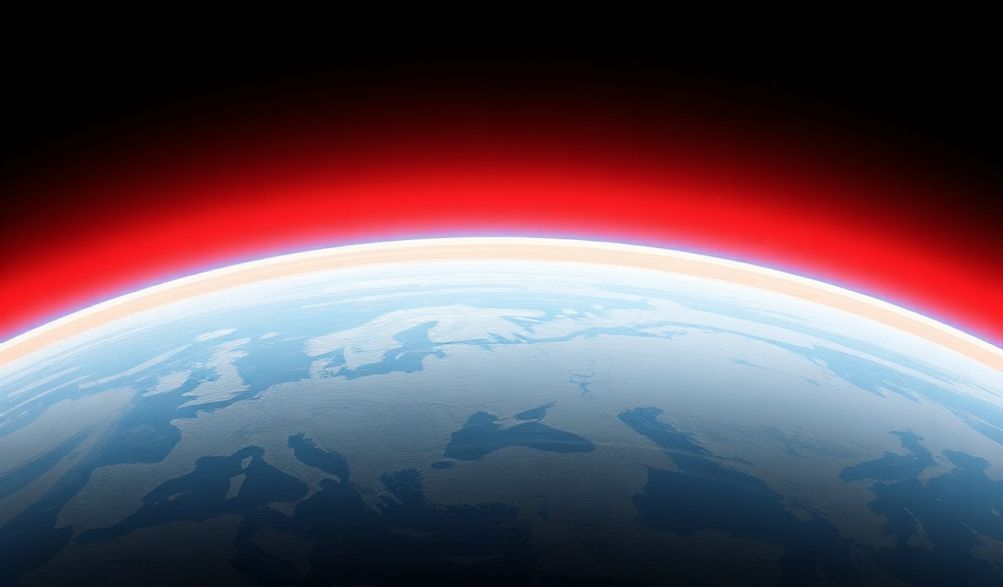
The formation of perfectly flat stratified bands in upper-atmosphere temperature layers is a phenomenon that has fascinated scientists and researchers for decades. This intriguing occurrence has been observed in various parts of the world, leaving many to wonder about the underlying mechanisms that drive this unique atmospheric behavior. As we delve into the world of atmospheric science, we will explore the complex interactions that give rise to these flat stratified bands, and examine the factors that influence their formation. In this article, we will take a closer look at the upper-atmosphere temperature layers and their role in shaping our understanding of the Earth’s atmosphere.
Historical Context: Understanding the Evolution of Upper-Atmosphere Temperature Layers
The study of upper-atmosphere temperature layers dates back to the early 20th century, when scientists first began to explore the properties of the Earth’s atmosphere. Initially, researchers focused on the lower atmosphere, but as technology advanced, attention shifted to the upper atmosphere, where the temperature layers were found to be more complex and dynamic. The discovery of these temperature layers revolutionized our understanding of the atmosphere, revealing a previously unknown level of complexity and stratification. As scientists continued to study the upper-atmosphere temperature layers, they began to notice the formation of perfectly flat stratified bands, which sparked a new wave of research and inquiry.
Detailed Analysis of Upper-Atmosphere Temperature Layers: Introduction to Stratified Bands
So, what exactly are these stratified bands, and how do they form? To answer this question, we need to take a closer look at the upper-atmosphere temperature layers and their properties. The atmosphere is divided into several distinct layers, each with its own unique characteristics and temperature profiles. The upper atmosphere, which extends from approximately 10 to 50 kilometers above the Earth’s surface, is where the temperature layers are most pronounced. Within this region, the temperature can vary significantly, giving rise to a range of complex interactions and phenomena. The stratified bands, in particular, are a result of the interplay between temperature, humidity, and atmospheric pressure, which combine to create a unique and fascinating pattern of flat, layered structures.
Section 1: The Role of Temperature Gradients in Shaping Upper-Atmosphere Temperature Layers
Temperature gradients play a crucial role in the formation of upper-atmosphere temperature layers. These gradients, which refer to the rate of change of temperature with respect to altitude, are responsible for driving the circulation of air and the formation of distinct temperature layers. In the upper atmosphere, temperature gradients are particularly strong, resulting in a pronounced stratification of the air. This stratification, in turn, gives rise to the formation of flat, layered structures, which are characteristic of the stratified bands. By examining the temperature gradients in the upper atmosphere, researchers can gain valuable insights into the mechanisms that drive the formation of these bands.
Section 2: The Impact of Humidity on Upper-Atmosphere Temperature Layers
Humidity is another critical factor that influences the formation of upper-atmosphere temperature layers. Water vapor, in particular, plays a significant role in shaping the temperature profiles of the upper atmosphere. As water vapor condenses and freezes, it releases heat, which can alter the local temperature and drive the formation of distinct temperature layers. In regions where the humidity is high, the upper-atmosphere temperature layers tend to be more pronounced, resulting in a more defined and flat stratified band structure. Conversely, in dry regions, the temperature layers are less distinct, and the stratified bands are less pronounced.
Section 3: Atmospheric Pressure and Its Effect on Upper-Atmosphere Temperature Layers
Atmospheric pressure is also an important factor that influences the formation of upper-atmosphere temperature layers. Changes in pressure can drive the circulation of air, which, in turn, affects the temperature profiles of the upper atmosphere. In regions where the pressure is high, the air tends to be more stable, resulting in a more pronounced stratification of the temperature layers. Conversely, in regions where the pressure is low, the air is more unstable, and the temperature layers are less distinct. By examining the relationship between atmospheric pressure and upper-atmosphere temperature layers, researchers can gain a deeper understanding of the mechanisms that drive the formation of stratified bands.
Section 4: The Influence of Wind Patterns on Upper-Atmosphere Temperature Layers
Wind patterns also play a significant role in shaping the upper-atmosphere temperature layers. The circulation of air in the upper atmosphere is driven by wind patterns, which can either enhance or disrupt the formation of stratified bands. In regions where the wind patterns are strong and consistent, the upper-atmosphere temperature layers tend to be more pronounced, resulting in a more defined and flat stratified band structure. Conversely, in regions where the wind patterns are weak or variable, the temperature layers are less distinct, and the stratified bands are less pronounced. By examining the relationship between wind patterns and upper-atmosphere temperature layers, researchers can gain valuable insights into the mechanisms that drive the formation of these bands.
Section 5: The Role of Upper-Atmosphere Temperature Layers in Shaping Global Climate Patterns
The upper-atmosphere temperature layers play a critical role in shaping global climate patterns. The stratified bands, in particular, can influence the formation of high and low-pressure systems, which, in turn, drive the circulation of air and the distribution of heat around the globe. By examining the upper-atmosphere temperature layers and their relationship to global climate patterns, researchers can gain a deeper understanding of the mechanisms that drive climate change and the formation of extreme weather events. Furthermore, the study of upper-atmosphere temperature layers can provide valuable insights into the potential impacts of climate change on global weather patterns and the formation of stratified bands.
Counter-Arguments: Challenging the Consensus on Upper-Atmosphere Temperature Layers
While the majority of researchers agree that the upper-atmosphere temperature layers play a critical role in shaping the formation of stratified bands, there are some who challenge this consensus. Some argue that the temperature layers are not as pronounced as previously thought, and that other factors, such as atmospheric waves and turbulence, play a more significant role in shaping the upper atmosphere. Others argue that the stratified bands are not as flat and uniform as they appear, and that there is more variability and complexity in the temperature layers than currently acknowledged. While these counter-arguments are valid and worthy of consideration, the overwhelming evidence suggests that the upper-atmosphere temperature layers do indeed play a critical role in shaping the formation of stratified bands.
Conclusion: The Significance of Upper-Atmosphere Temperature Layers in Understanding Atmospheric Science
In conclusion, the formation of perfectly flat stratified bands in upper-atmosphere temperature layers is a complex and fascinating phenomenon that has significant implications for our understanding of atmospheric science. By examining the upper-atmosphere temperature layers and their relationship to temperature gradients, humidity, atmospheric pressure, wind patterns, and global climate patterns, researchers can gain valuable insights into the mechanisms that drive the formation of these bands. While there are some who challenge the consensus on the role of upper-atmosphere temperature layers, the overwhelming evidence suggests that these layers play a critical role in shaping the upper atmosphere and the formation of stratified bands. As we continue to study and explore the upper-atmosphere temperature layers, we may uncover new and exciting discoveries that challenge our current understanding of the atmosphere and the formation of stratified bands.
- Further research is needed to fully understand the mechanisms that drive the formation of upper-atmosphere temperature layers and stratified bands.
- The study of upper-atmosphere temperature layers has significant implications for our understanding of global climate patterns and the formation of extreme weather events.
- The use of advanced technologies, such as satellite imaging and computer modeling, can provide valuable insights into the upper-atmosphere temperature layers and the formation of stratified bands.
- International collaboration and cooperation are essential for advancing our understanding of the upper-atmosphere temperature layers and their role in shaping the Earth’s atmosphere.
- The discovery of new and exciting phenomena in the upper atmosphere can challenge our current understanding of the atmosphere and inspire new areas of research and inquiry.