You Won’t Believe How Maps Changed the Course of History: Cartographers vs. Clergy
admin
Author
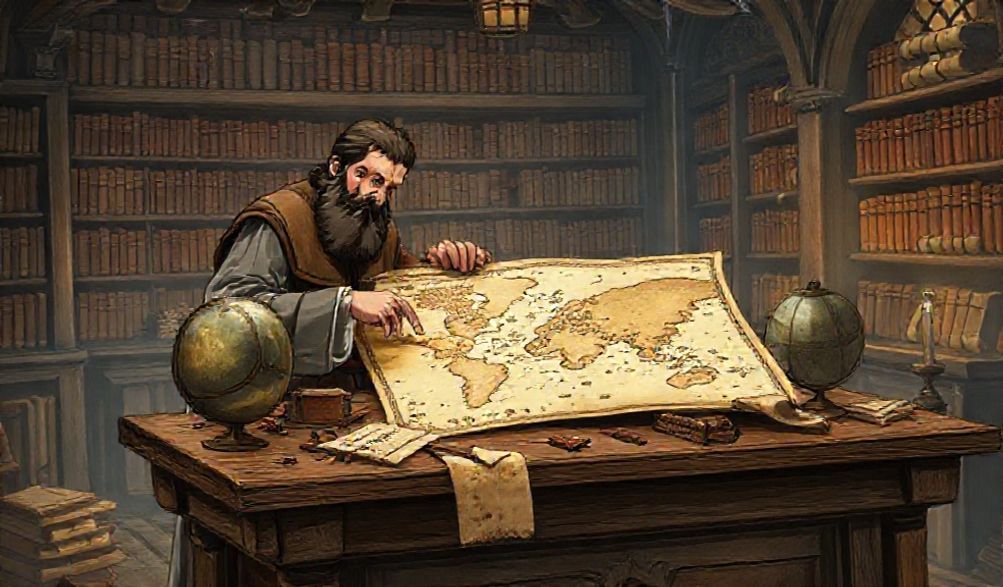
The age-old debate of Cartographers vs Clergy has been a pivotal force in shaping the course of human history. For centuries, the pursuit of mapping the world has been a contentious issue, with cartographers seeking to uncover the truth about the Earth’s geography, while clergy members have often sought to suppress such knowledge in favor of religious dogma. This struggle has had far-reaching consequences, influencing the way we understand the world, our place within it, and the relationships between different cultures and societies. In this article, we will delve into the fascinating story of how maps have changed the course of history, and the ongoing battle between Cartographers vs Clergy.
Historical Context: The Early Days of Cartography
Cartography, the art and science of map-making, has its roots in ancient civilizations. The earliest known maps date back to around 2500 BCE, with the Babylonians creating clay tablets that depicted the world as a flat disc surrounded by water. As civilizations rose and fell, so too did the development of cartography. The ancient Greeks, in particular, made significant contributions to the field, with philosophers such as Eratosthenes and Aristotle proposing innovative ideas about the shape and size of the Earth. However, with the rise of Christianity in the Middle Ages, the clergy began to exert a significant influence over the development of cartography, often seeking to suppress knowledge that contradicted religious teachings.
The Role of the Church in Shaping Cartography
The Catholic Church, in particular, played a significant role in shaping the course of cartography during the Middle Ages. The Church’s doctrine of a flat Earth, with Jerusalem at its center, became the dominant view of the world. Cartographers who dared to challenge this view, such as the Greek philosopher Crates of Mallus, were often ridiculed or persecuted. The Church’s influence extended to the production of maps, with many cartographers being forced to include religious symbols and imagery in their work. This had a profound impact on the development of cartography, as cartographers were often more concerned with pleasing the Church than with accurately depicting the world.
Cartographers vs Clergy: The Age of Exploration
The Age of Exploration, which began in the 15th century, marked a significant turning point in the battle between Cartographers vs Clergy. As European explorers began to venture out into the world, they encountered new lands, peoples, and cultures that challenged the traditional view of the world. Cartographers such as Gerardus Mercator and Abraham Ortelius created innovative new maps that reflected this changing understanding of the world. However, the clergy continued to exert a significant influence over the development of cartography, with many cartographers being forced to include religious imagery and symbols in their work. This led to a number of interesting and often bizarre maps, such as the infamous “Here be Dragons” map, which featured a giant sea serpent in the middle of the ocean.
The Impact of the Reformation on Cartography
The Protestant Reformation of the 16th century had a significant impact on the development of cartography. As Protestant reformers such as Martin Luther and John Calvin challenged the authority of the Catholic Church, cartographers began to feel more free to challenge traditional views of the world. The invention of the printing press, which allowed for mass production of maps, also contributed to the spread of new ideas about the world. Cartographers such as Sebastian Münster and Johannes Kepler created innovative new maps that reflected the changing understanding of the world, and the battle between Cartographers vs Clergy began to shift in favor of the cartographers.
Detailed Section 1: The Role of Cartography in Shaping National Identity
Cartography has played a significant role in shaping national identity, with maps often being used to promote a particular vision of a country or region. During the Age of Exploration, cartographers such as Mercator and Ortelius created maps that reflected the interests of their respective countries. The Mercator projection, which is still widely used today, was designed to facilitate navigation and promote the interests of European explorers. However, this projection also had the effect of distorting the size and shape of certain countries, particularly in the Southern Hemisphere. This has led to ongoing debates about the role of cartography in shaping national identity, with some arguing that maps can be used to promote a particular ideology or agenda.
Detailed Section 2: Cartographers vs Clergy – The Battle for the New World
The discovery of the New World in the 15th century marked a significant turning point in the battle between Cartographers vs Clergy. As European explorers began to colonize the Americas, cartographers such as Amerigo Vespucci and Ferdinand Magellan created innovative new maps that reflected the changing understanding of the world. However, the clergy continued to exert a significant influence over the development of cartography, with many cartographers being forced to include religious imagery and symbols in their work. This led to a number of interesting and often bizarre maps, such as the “Map of the New World” created by the Spanish cartographer Juan de la Cosa, which featured a giant cross in the middle of the Atlantic Ocean.
Detailed Section 3: The Impact of Cartography on International Relations
Cartography has had a significant impact on international relations, with maps often being used to promote a particular vision of the world or to justify territorial claims. During the Age of Exploration, cartographers such as Mercator and Ortelius created maps that reflected the interests of their respective countries. The Treaty of Tordesillas, which was signed in 1494, used a map to divide the New World between Spain and Portugal. This treaty had a profound impact on the development of international relations, as it established the principle of territorial claims based on discovery and exploration. However, it also led to ongoing conflicts over territory and resources, particularly in the Americas.
Detailed Section 4: Cartographers vs Clergy – The Scientific Revolution
The Scientific Revolution of the 16th and 17th centuries marked a significant turning point in the battle between Cartographers vs Clergy. As scientists such as Galileo and Kepler challenged traditional views of the world, cartographers began to feel more free to challenge traditional views of the Earth. The invention of new scientific instruments, such as the telescope and the microscope, also contributed to the development of more accurate maps. Cartographers such as Johannes Blaeu and Guillaume Delisle created innovative new maps that reflected the changing understanding of the world, and the battle between Cartographers vs Clergy began to shift in favor of the cartographers.
Detailed Section 5: The Legacy of Cartography in the Modern Era
Cartography has had a profound impact on the modern era, with maps continuing to shape our understanding of the world and our place within it. The development of new technologies, such as satellite imaging and geographic information systems (GIS), has allowed for the creation of more accurate and detailed maps than ever before. However, the battle between Cartographers vs Clergy continues, with some arguing that maps can be used to promote a particular ideology or agenda. The use of maps in propaganda and disinformation campaigns has become a significant concern, particularly in the age of social media. As cartographers continue to push the boundaries of what is possible with maps, it is essential to remember the ongoing struggle between Cartographers vs Clergy, and the impact that this struggle has had on the course of human history.
Counter-Arguments: The Role of the Clergy in Promoting Cartography
While the battle between Cartographers vs Clergy has been a significant force in shaping the course of human history, it is also important to recognize the role that the clergy has played in promoting cartography. Many clergy members, such as the Catholic priest and cartographer José de Acosta, have made significant contributions to the field of cartography. The Church’s patronage of cartographers and explorers has also been instrumental in promoting the development of cartography. However, this patronage has often come with strings attached, with cartographers being forced to include religious imagery and symbols in their work. This has led to a number of interesting and often bizarre maps, and has contributed to the ongoing debate about the role of the clergy in shaping the course of cartography.
Conclusion: The Enduring Legacy of Cartographers vs Clergy
The battle between Cartographers vs Clergy has been a pivotal force in shaping the course of human history. From the early days of cartography to the present day, the struggle between cartographers and clergy has had a profound impact on our understanding of the world and our place within it. As we continue to push the boundaries of what is possible with maps, it is essential to remember the ongoing struggle between Cartographers vs Clergy, and the impact that this struggle has had on the course of human history. Whether we are navigating the complexities of international relations, promoting national identity, or simply seeking to understand the world around us, the legacy of Cartographers vs Clergy continues to shape our lives in profound and often unexpected ways.
In conclusion, the story of Cartographers vs Clergy is a complex and fascinating one, full of unexpected twists and turns. As we move forward into an increasingly complex and interconnected world, it is essential to remember the enduring legacy of this struggle, and the impact that it has had on the course of human history. By understanding the role that cartography has played in shaping our world, we can better navigate the challenges of the present and future, and create a more just and equitable world for all.
- The debate between Cartographers vs Clergy has been ongoing for centuries, with cartographers seeking to uncover the truth about the Earth’s geography, while clergy members have often sought to suppress such knowledge in favor of religious dogma.
- The Age of Exploration marked a significant turning point in the battle between Cartographers vs Clergy, as European explorers began to venture out into the world and encounter new lands, peoples, and cultures.
- The Reformation had a significant impact on the development of cartography, as Protestant reformers challenged the authority of the Catholic Church and cartographers began to feel more free to challenge traditional views of the world.
- Cartography has played a significant role in shaping national identity, with maps often being used to promote a particular vision of a country or region.
- The battle between Cartographers vs Clergy continues to this day, with some arguing that maps can be used to promote a particular ideology or agenda, and others seeking to use maps to promote a more nuanced and accurate understanding of the world.