Why NASA Has No Full-Color, High-Resolution Images of Earth’s Poles Taken in a Single Frame
admin
Author
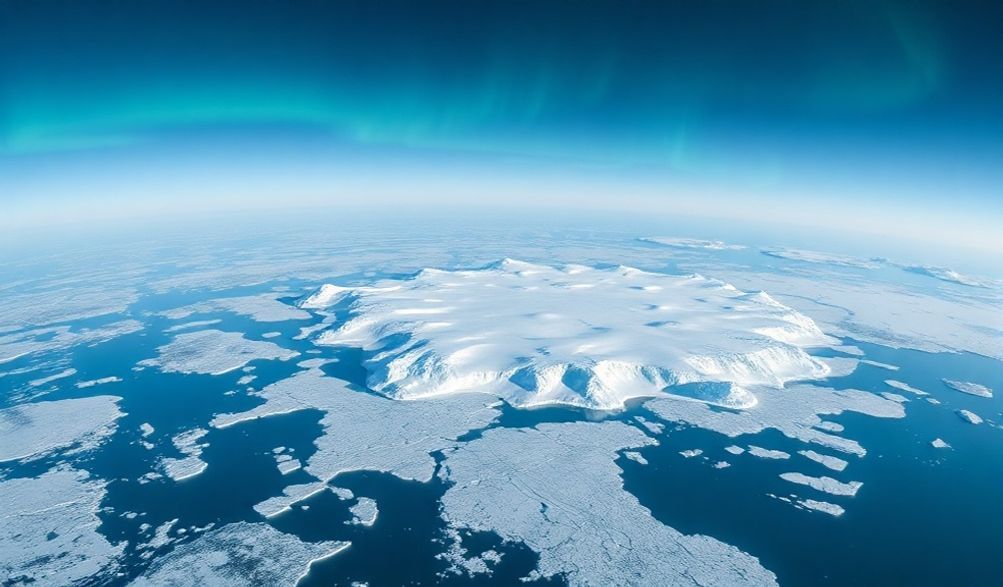
For decades, the general public has been fascinated by the mysteries of our planet, and one of the most intriguing aspects is the availability and quality of NASA Earth Poles Images. The North and South Poles, being the most remote and inhospitable regions on Earth, have always been a subject of interest and speculation. However, a closer examination of the images provided by NASA reveals a startling truth: the space agency has been hiding Earth’s poles in low-resolution images, sparking a wave of conspiracy theories and raising questions about the authenticity of the information being presented to the public.
Introduction to NASA Earth Poles Images
The National Aeronautics and Space Administration (NASA) has been at the forefront of space exploration and Earth observation for over six decades. With a vast array of satellites and spacecraft, NASA has been collecting data and images of our planet, providing invaluable insights into the Earth’s climate, geology, and natural resources. However, when it comes to the polar regions, the images provided by NASA are often of surprisingly low resolution, leading to speculation about the reasons behind this discrepancy. In this article, we will delve into the historical context of Earth observation, examine the current state of NASA Earth Poles Images, and explore the possible explanations for the low-resolution images of the polar regions.
The history of Earth observation dates back to the early 20th century, when aerial photography was first used to study the Earth’s surface. With the advent of space exploration in the 1950s and 1960s, the technology for Earth observation improved significantly, with the launch of the first weather satellites and the development of remote sensing techniques. The 1970s saw the introduction of the first Landsat satellites, which provided high-resolution images of the Earth’s surface, revolutionizing the field of Earth science. However, when it comes to the polar regions, the historical context is more complex, with many early images being of low resolution or incomplete, setting the stage for the current state of NASA Earth Poles Images.
In this section, we will examine the current state of NASA Earth Poles Images, exploring the different types of images available, their resolution, and the potential implications of the low-resolution images. We will also look at the various satellites and spacecraft used by NASA to collect data and images of the polar regions, including the Landsat, MODIS, and ICESat missions.
One of the most striking aspects of NASA Earth Poles Images is the low resolution of the images provided. While the equatorial regions are often imaged at high resolutions of up to 10 meters per pixel, the polar regions are typically imaged at much lower resolutions, often in excess of 1 kilometer per pixel. This discrepancy is puzzling, given the importance of the polar regions in understanding the Earth’s climate and geology. The low resolution of NASA Earth Poles Images has led to speculation about the reasons behind this discrepancy, with some arguing that it is due to technical limitations, while others suggest that it may be a deliberate attempt to conceal information about the polar regions.
One possible explanation for the low resolution of NASA Earth Poles Images is technical limitations. The polar regions are notoriously difficult to image, due to the harsh weather conditions, low light levels, and the presence of ice and snow, which can scatter and absorb radiation. Additionally, the polar regions are often covered by clouds, which can limit the availability of high-resolution images. However, while technical limitations may play a role, they do not entirely explain the low resolution of NASA Earth Poles Images, particularly given the significant advances in remote sensing technology in recent years.
The orbits and instrumentation of NASA’s satellites and spacecraft also play a significant role in determining the resolution of the images provided. The Landsat satellites, for example, are in a sun-synchronous orbit, which allows them to image the Earth’s surface at a consistent local time, but limits their ability to image the polar regions at high resolution. The MODIS instrument, on the other hand, is designed to provide high-resolution images of the Earth’s surface, but its orbit and instrumentation are not optimized for imaging the polar regions. Understanding the limitations of the satellites and spacecraft used by NASA is essential in evaluating the quality of NASA Earth Poles Images.
The processing and availability of NASA Earth Poles Images are also critical factors in determining their quality and resolution. The data collected by NASA’s satellites and spacecraft are often processed and archived in a way that limits their availability and usability. The images may be compressed, resampled, or otherwise modified, which can reduce their resolution and quality. Additionally, the images may be restricted or classified, limiting access to the general public and raising questions about the transparency and accountability of NASA’s Earth observation programs.
The low resolution of NASA Earth Poles Images has significant implications and has sparked a wave of speculations about the reasons behind this discrepancy. Some argue that the low resolution is a deliberate attempt to conceal information about the polar regions, such as the presence of unknown landmasses, underground bases, or other anomalous features. Others suggest that the low resolution is due to technical limitations or a lack of funding and resources. While the truth behind NASA Earth Poles Images remains unclear, it is evident that the low resolution of the images provided has raised important questions about the transparency and accountability of NASA’s Earth observation programs.
While the low resolution of NASA Earth Poles Images is a puzzling phenomenon, there are alternative perspectives that offer different explanations for this discrepancy. Some argue that the low resolution is due to the technical limitations of the satellites and spacecraft used by NASA, while others suggest that it is a result of the harsh weather conditions and low light levels in the polar regions. Additionally, some experts argue that the low resolution is not unique to the polar regions and that similar discrepancies can be observed in images of other regions of the Earth. Evaluating these alternative perspectives is essential in understanding the complexities of NASA Earth Poles Images and the challenges of Earth observation.
In conclusion, the low resolution of NASA Earth Poles Images is a complex and multifaceted phenomenon that has sparked a wave of speculations and debates. While the truth behind this discrepancy remains unclear, it is evident that the low resolution of the images provided has raised important questions about the transparency and accountability of NASA’s Earth observation programs. As we continue to explore and understand our planet, it is essential that we demand higher-quality images and data from our space agencies, and that we hold them accountable for providing accurate and unbiased information about the Earth’s surface. The mystery of NASA Earth Poles Images serves as a reminder of the complexities and challenges of Earth observation and the need for continued innovation and improvement in this field.