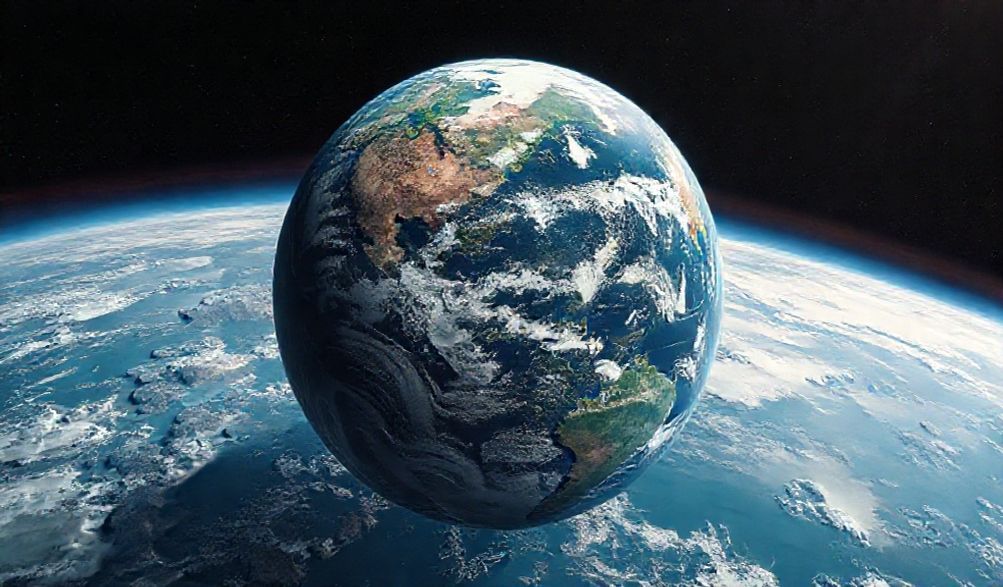
The concept of alternative geography has long been a topic of fascination and debate among scholars, researchers, and enthusiasts alike. It challenges our conventional understanding of the world’s layout, suggesting that there may be more to our planet’s geography than what we’ve been taught in school. As we delve into the uncharted territories of Earth’s secret geography, we’ll encounter a plethora of intriguing theories, mysterious landscapes, and unexplained phenomena that will leave you questioning everything you thought you knew about our world. In this article, we’ll embark on a journey to explore the unknown, navigating through the realms of alternative geography and uncovering the shocking truth that lies beneath the surface.
Introduction to Alternative Geography
Alternative geography refers to the study of unconventional geographical theories, often contradicting the established norms and challenging the status quo. This field of research encompasses a wide range of topics, from flat Earth theories to hollow Earth hypotheses, and everything in between. Proponents of alternative geography argue that the traditional understanding of our planet’s geography is incomplete, inaccurate, or even intentionally misleading. As we venture into the world of alternative geography, we’ll examine the historical context that has shaped our understanding of the Earth’s layout and the various theories that have emerged over time.
Historical Context: The Evolution of Geographical Thought
Throughout history, our understanding of the world’s geography has undergone significant transformations. From the ancient Greeks to modern-day cartographers, the concept of alternative geography has been a persistent theme. The ancient Greeks, for example, believed in a flat Earth, with the edges of the world being surrounded by the ocean. As civilizations evolved and new technologies emerged, our understanding of the world expanded, and the concept of a spherical Earth became widely accepted. However, even with the advent of modern cartography and satellite imaging, alternative geography continues to thrive, with many researchers and enthusiasts seeking to challenge the conventional wisdom and uncover new truths about our planet.
The Roots of Alternative Geography
The roots of alternative geography can be traced back to ancient civilizations, where myths and legends often described the world in terms that differed from our modern understanding. The concept of a hollow Earth, for example, has its roots in ancient mythology, with stories of hidden worlds and underground civilizations. Similarly, the idea of a flat Earth has been present in various forms throughout history, with some cultures believing in a flat Earth surrounded by a firmament. As we explore the historical context of alternative geography, it becomes clear that these unconventional theories have been a persistent part of human culture and imagination.
Detailed Examination of Alternative Geography Theories
In this section, we’ll delve into five detailed examinations of alternative geography theories, each challenging our conventional understanding of the world’s layout. From the hollow Earth hypothesis to the concept of Agartha, we’ll explore the fascinating world of alternative geography and the shocking truths that lie within.
The Hollow Earth Hypothesis
The hollow Earth hypothesis proposes that our planet is either entirely hollow or contains a large, hollow cavity within its core. This theory has been around for centuries, with some proponents arguing that the hollow Earth is home to advanced civilizations, exotic life forms, or even extraterrestrial beings. While the idea of a hollow Earth may seem far-fetched, it has garnered significant attention and interest among alternative geography enthusiasts. Researchers have pointed to various anomalies in the Earth’s gravitational field, seismic activity, and the presence of underground caves and tunnels as evidence supporting the hollow Earth hypothesis.
The Flat Earth Theory
The flat Earth theory, also known as flat Earth hypothesis, proposes that the Earth is flat, rather than spherical. This theory has gained significant traction in recent years, with many proponents arguing that the Earth is flat and that the concept of a spherical Earth is a myth perpetuated by governments and other organizations. Flat Earth theorists point to various observations, such as the appearance of the horizon, the behavior of water, and the lack of visible curvature, as evidence supporting their claims. However, the vast majority of the scientific community rejects the flat Earth theory, citing overwhelming evidence from astronomy, geology, and other fields that confirms the Earth’s spherical shape.
The Concept of Agartha
Agartha is a mythical place described in ancient texts as a hidden world within the Earth’s core. This concept has been associated with various alternative geography theories, including the hollow Earth hypothesis and the idea of a flat Earth. According to legend, Agartha is a paradise-like realm, home to advanced civilizations, exotic life forms, and hidden treasures. While the existence of Agartha is not supported by scientific evidence, it remains a fascinating topic of speculation and research among alternative geography enthusiasts.
The Lost City of Atlantis
The lost city of Atlantis is a mythical place described by the ancient Greek philosopher Plato as a powerful and advanced civilization that existed in the distant past. According to Plato, Atlantis was a island nation located beyond the “Pillars of Hercules” (the modern-day Strait of Gibraltar), which controlled a vast empire that extended into Europe and Africa. The story of Atlantis has been associated with various alternative geography theories, including the idea of a flat Earth and the concept of Agartha. While the existence of Atlantis is not supported by scientific evidence, it remains a captivating topic of speculation and research among alternative geography enthusiasts.
The New Earth Theory
The New Earth theory, also known as the “expanding Earth theory,” proposes that the Earth is expanding in size over time. This theory challenges the conventional understanding of plate tectonics and the Earth’s geological history, suggesting that the planet’s surface is increasing in size due to the expansion of the Earth’s core. Proponents of the New Earth theory point to various observations, such as the fit of the continents, the presence of mid-ocean ridges, and the distribution of earthquakes, as evidence supporting their claims. While the New Earth theory is not widely accepted by the scientific community, it remains an interesting topic of speculation and research among alternative geography enthusiasts.
Counter-Arguments: Debunking Alternative Geography Theories
While alternative geography theories can be fascinating and thought-provoking, they are often met with skepticism and criticism from the scientific community. Many experts argue that these theories are based on flawed assumptions, incomplete data, and a lack of empirical evidence. In this section, we’ll examine some of the counter-arguments to alternative geography theories, including the flat Earth theory, the hollow Earth hypothesis, and the concept of Agartha.
One of the primary counter-arguments to alternative geography theories is the overwhelming evidence from various fields of science, including astronomy, geology, and physics. The Earth’s spherical shape, for example, is confirmed by satellite imagery, GPS data, and the behavior of ships and aircraft as they circumnavigate the globe. Similarly, the concept of plate tectonics and the Earth’s geological history are well-established through the study of fossils, rocks, and seismic activity.
Another counter-argument to alternative geography theories is the lack of empirical evidence supporting these claims. While proponents of alternative geography often point to anomalies and unexplained phenomena, these observations can usually be explained by natural processes or human error. The absence of concrete evidence, such as photographs, videos, or physical samples, makes it difficult to take alternative geography theories seriously.
Conclusion: The Shocking Truth About Alternative Geography
In conclusion, the world of alternative geography is a complex and fascinating realm, full of intriguing theories, mysterious landscapes, and unexplained phenomena. While these theories may challenge our conventional understanding of the world’s layout, they often lack empirical evidence and are met with skepticism by the scientific community. As we’ve seen in this article, alternative geography encompasses a wide range of topics, from the flat Earth theory to the concept of Agartha, each with its own unique set of claims and counter-arguments.
Ultimately, the study of alternative geography serves as a reminder that our understanding of the world is always evolving, and that there may be more to our planet’s geography than what we’ve been taught in school. Whether or not you believe in alternative geography theories, it’s essential to approach these topics with an open mind, a critical eye, and a willingness to explore the unknown. As we continue to navigate the uncharted territories of alternative geography, we may uncover new truths, challenge our assumptions, and gain a deeper understanding of the world we live in.
In the context of alternative geography, it’s essential to recognize that the pursuit of knowledge and understanding is a continuous process, and that our current understanding of the world is subject to revision and refinement. As new evidence emerges, and new theories are proposed, we must be willing to adapt, to question our assumptions, and to explore the unknown. The shocking truth about alternative geography is that it challenges us to think differently, to question our beliefs, and to seek out new knowledge and understanding.
As we conclude our journey into the world of alternative geography, we’re left with more questions than answers. What lies at the center of the Earth? Is the Earth flat or spherical? What secrets lie hidden in the uncharted territories of our planet? The pursuit of these questions, and the exploration of alternative geography, is a testament to human curiosity, our desire for knowledge, and our passion for discovery. Whether or not you believe in alternative geography theories, the journey itself is what matters, for it’s in the pursuit of knowledge and understanding that we find the true value of alternative geography.