What Ancient Texts Say About the Purpose of the Pyramids
admin
Author
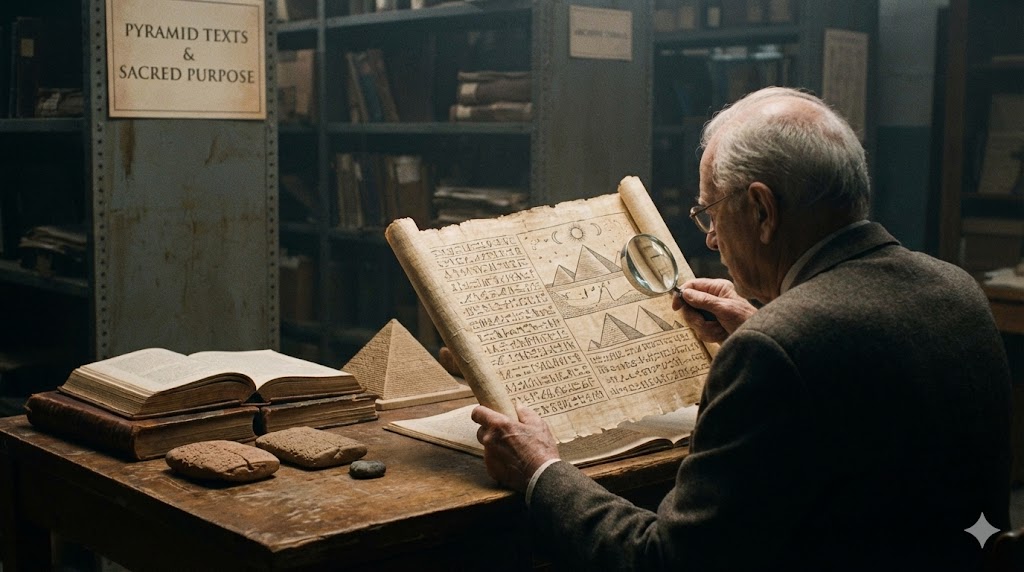
The pyramids of ancient Egypt are among the most studied structures in human history, yet their purpose is often misunderstood or oversimplified. While modern speculation ranges from lost technologies to symbolic monuments, ancient Egyptian texts offer direct insight into how these structures were viewed by the civilization that built them.
By examining surviving inscriptions, funerary texts, and historical records, a clearer picture emerges—one grounded in religion, kingship, and beliefs about the afterlife.
The Role of Written Records in Ancient Egypt
Ancient Egyptians left behind extensive written material carved into stone, painted on tomb walls, and preserved on papyrus. These texts were not written for modern historians, but for religious, ceremonial, and administrative purposes.
Because pyramids were primarily royal projects, many relevant texts are connected to burial rituals and beliefs about the soul rather than architectural explanations.
The Pyramid Texts
The earliest known religious writings in Egypt are the Pyramid Texts, found inscribed inside pyramids dating to the Old Kingdom period. These texts do not describe construction methods, but they clearly explain why pyramids existed.
They describe:
-
The pyramid as a gateway to the afterlife
-
The king’s ascent to the sky after death
-
The transformation of the deceased ruler into a divine being
The pyramid is repeatedly referenced as a sacred structure that enables the king’s soul to join the gods.
The Pyramid as a Symbolic Pathway
Ancient texts often associate pyramids with celestial movement. References to stars, especially circumpolar stars that never set, appear frequently.
According to these writings:
-
The king’s soul was believed to rise toward the heavens
-
The pyramid acted as a structured transition point
-
Eternal life was linked to alignment with cosmic order
This symbolic function was more important than public visibility or monumentality.
Royal Authority and Divine Kingship
Ancient Egyptian texts emphasize that the pharaoh was not merely a ruler, but a divine figure on Earth. The pyramid reinforced this belief.
Texts describe:
-
The king’s rebirth after death
-
His unification with divine forces
-
His continued protection over the land
The pyramid served as a physical representation of royal continuity and cosmic balance.
What Ancient Texts Do Not Say
Equally important is what ancient texts do not mention.
They do not describe:
-
Power generation
-
Advanced machines
-
Global energy networks
-
Non-human builders
While construction techniques remain debated due to limited records, the purpose of the pyramids is consistently described in spiritual and religious terms.
Later Interpretations and Changing Views
Centuries after the pyramids were built, Greek and Roman writers speculated about their meaning, often misunderstanding Egyptian beliefs. These later interpretations introduced confusion that persists today.
Modern archaeology relies more heavily on Egyptian-written sources, which provide the most direct insight into original intent.
Why the Textual Evidence Matters
Ancient texts reflect the worldview of the pyramid builders themselves. While they do not answer every modern question, they consistently frame pyramids as:
-
Funerary monuments
-
Spiritual structures
-
Symbols of cosmic order
-
Anchors of royal authority
This consistency across multiple texts strengthens their reliability as historical evidence.
Conclusion
Ancient Egyptian texts portray the pyramids not as mysterious machines or undeciphered technologies, but as deeply symbolic structures tied to beliefs about death, rebirth, and divine kingship. While questions about construction methods remain, the purpose of the pyramids is clearly rooted in religious tradition and cultural identity.
Understanding what ancient texts actually say helps separate historical evidence from later speculation and allows the pyramids to be appreciated within the context of the civilization that built them.