Unveiling the Shadow Masters: How Secret Societies Shaped Science, Law, and World Domination
admin
Author
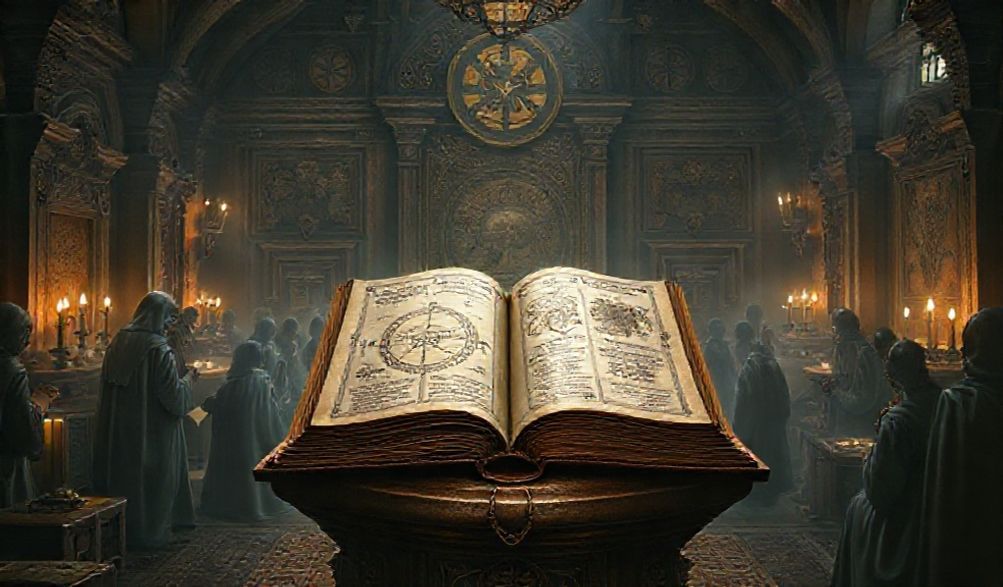
For centuries, the existence of secret societies has been a topic of fascination and speculation, with many believing that these mysterious groups have been pulling the strings of power from behind the scenes. The influence of secret societies can be seen in various aspects of our lives, from the way we perceive science and law to the very fabric of our global society. As we delve into the world of secret societies, it becomes apparent that their impact on human history has been profound, shaping the course of scientific discovery, legal frameworks, and even world domination. In this article, we will explore the intricate web of secret societies and their far-reaching consequences, revealing the shadow masters who have been guiding human destiny.
Historical Context: Uncovering the Roots of Secret Societies
The concept of secret societies dates back to ancient civilizations, where mystical and philosophical groups would convene in secret to discuss and practice their beliefs. The ancient Greeks, for example, had the Eleusinian Mysteries, a mystical cult that aimed to achieve spiritual enlightenment through rituals and ceremonies. Similarly, the ancient Chinese had the White Lotus Society, a Buddhist sect that sought to promote spiritual growth and social justice. These early secret societies laid the foundation for the modern secret societies that would emerge in the centuries to come.
During the Middle Ages, secret societies such as the Knights Templar and the Freemasons began to take shape, with the former being a military order that protected Christian pilgrims and the latter being a fraternal organization that promoted brotherly love and self-improvement. These groups, although not always secretive, would often hold private meetings and rituals, which sparked speculation and intrigue among the general public. As we will see, these secret societies would play a significant role in shaping the course of human history, particularly in the realms of science, law, and politics.
Secret Societies and the Emergence of Modern Science
The Scientific Revolution of the 16th and 17th centuries was a pivotal moment in human history, marking the transition from a geocentric to a heliocentric understanding of the universe. Secret societies, such as the Rosicrucians and the Royal Society, played a crucial role in this revolution, providing a platform for scientists and philosophers to share their ideas and collaborate on groundbreaking research. The Rosicrucians, in particular, were a mysterious group that emphasized the pursuit of spiritual and philosophical knowledge, and their influence can be seen in the works of prominent scientists such as Isaac Newton and Johannes Kepler.
One of the most significant contributions of secret societies to modern science was the development of the scientific method. The Royal Society, founded in 1660, was a secret society that brought together some of the most prominent scientists of the time, including Robert Hooke and Edmond Halley. Through their experiments and discussions, they established the principles of empirical research and peer review, which remain the cornerstone of scientific inquiry to this day. The impact of secret societies on the emergence of modern science cannot be overstated, as they provided a fertile ground for innovation and discovery, shaping the course of human knowledge and understanding.
The Role of Secret Societies in Shaping Legal Frameworks
Secret societies have also had a profound impact on the development of legal frameworks, particularly in the areas of contract law and property rights. The Freemasons, for example, played a significant role in shaping the legal systems of Europe and North America, with many of their members holding prominent positions in government and judiciary. The Freemasons’ emphasis on brotherly love and mutual aid helped to establish the principles of contract law, which govern the relationships between individuals and organizations.
In addition, secret societies such as the Illuminati and the Carbonari have been involved in shaping the course of political history, often through clandestine means. The Illuminati, founded in 1776, was a secret society that aimed to promote reason and intellectual freedom, and its members included prominent figures such as Johann Wolfgang von Goethe and Friedrich Schiller. Although the Illuminati was disbanded in 1785, its legacy can be seen in the modern concept of human rights and the principles of democracy. The Carbonari, on the other hand, was a secret society that emerged in Italy in the early 19th century, with the goal of promoting Italian unification and independence. Their efforts ultimately contributed to the formation of the modern Italian state.
Secret Societies and World Domination: The New World Order
The concept of a New World Order has been a topic of speculation and debate, with many believing that secret societies are working to create a one-world government that would control all aspects of human life. While this idea may seem far-fetched, there is evidence to suggest that secret societies have been involved in shaping global politics and economies. The Bilderberg Group, for example, is a secret society that brings together prominent figures from politics, finance, and industry to discuss global issues and shape policy. Although the group’s meetings are private, its influence on global affairs is undeniable, with many of its members holding key positions in government and international organizations.
Another secret society that has been linked to the New World Order is the Trilateral Commission, founded in 1973 by David Rockefeller and Zbigniew Brzezinski. The commission’s goal is to promote cooperation and understanding between the United States, Europe, and Japan, with the ultimate aim of creating a more integrated and interconnected world. While the commission’s intentions may seem benign, its influence on global policy has been significant, with many of its members holding prominent positions in government and international organizations. As we will see, the role of secret societies in shaping global affairs is complex and multifaceted, reflecting a range of motivations and agendas.
The Economics of Secret Societies: Wealth and Power
Secret societies have long been associated with wealth and power, with many of their members holding prominent positions in finance, industry, and government. The Rothschild family, for example, has been a dominant force in international finance for centuries, with their banking empire spanning the globe. Although the Rothschilds are not a secret society per se, they have been involved in various secret societies and have used their wealth and influence to shape global affairs.
Another example of the economic power of secret societies is the Council on Foreign Relations (CFR), a secret society that brings together prominent figures from politics, finance, and industry to discuss global issues and shape policy. The CFR has been instrumental in shaping U.S. foreign policy, with many of its members holding key positions in government and international organizations. The CFR’s influence on global economics is also significant, with many of its members holding prominent positions in finance and industry. As we will see, the economics of secret societies is a complex and multifaceted topic, reflecting a range of motivations and agendas.
Secret Societies and the Counterculture: A Challenge to Mainstream Values
Secret societies have also been associated with countercultural movements, challenging mainstream values and promoting alternative lifestyles. The hippie movement of the 1960s, for example, was influenced by secret societies such as the Diggers and the Yippies, who promoted free love, peace, and social justice. Although these groups were not traditional secret societies, they shared many characteristics with them, including a sense of exclusivity and a commitment to alternative values.
Another example of a countercultural secret society is the Chaos Magic movement, which emerged in the 1970s and emphasized the power of individual creativity and self-expression. The Chaos Magicians, led by figures such as Austin Osman Spare and Peter Carroll, developed a system of magic that was based on the principles of chaos theory and the power of the human imagination. Although the Chaos Magic movement was not a traditional secret society, it shared many characteristics with them, including a sense of exclusivity and a commitment to alternative values. As we will see, the relationship between secret societies and countercultural movements is complex and multifaceted, reflecting a range of motivations and agendas.
Counter-Arguments: Critiquing the Influence of Secret Societies
While secret societies have undoubtedly had a significant impact on human history, there are also counter-arguments to their influence. Some argue that secret societies are merely a symptom of a larger problem, such as social inequality or political corruption. Others argue that the influence of secret societies is exaggerated, and that their role in shaping human history is relatively minor. Additionally, some critics argue that the focus on secret societies is a form of conspiracy theory, distracting from the real issues and challenges facing humanity.
One of the main counter-arguments to the influence of secret societies is that they are often shrouded in mystery and speculation, making it difficult to separate fact from fiction. Many secret societies are indeed secretive, and their activities and membership are not always publicly known. However, this secrecy can also be a double-edged sword, as it can fuel speculation and conspiracy theories. Furthermore, the lack of transparency and accountability within secret societies can also raise concerns about their influence and motivations.
Conclusion: Unveiling the Shadow Masters
In conclusion, the influence of secret societies on human history has been profound, shaping the course of scientific discovery, legal frameworks, and world domination. From the ancient mysteries of the Eleusinian Mysteries to the modern-day machinations of the Bilderberg Group, secret societies have played a significant role in shaping the world we live in today. While there are counter-arguments to their influence, it is undeniable that secret societies have had a lasting impact on human history, reflecting a range of motivations and agendas.
As we move forward in an increasingly complex and interconnected world, it is essential to understand the role of secret societies and their influence on global affairs. By unveiling the shadow masters who have shaped human destiny, we can gain a deeper insight into the workings of power and the nature of reality itself. Whether we view secret societies as a force for good or evil, their impact on human history is undeniable, and their legacy will continue to shape the course of human events for generations to come. The question remains, what will be the future of secret societies, and how will they continue to shape the world we live in?
- Secret societies have been a part of human history for centuries, shaping the course of scientific discovery, legal frameworks, and world domination.
- The influence of secret societies can be seen in various aspects of our lives, from the way we perceive science and law to the very fabric of our global society.
- Secret societies have played a significant role in shaping the course of human history, reflecting a range of motivations and agendas.
- The role of secret societies in shaping global affairs is complex and multifaceted, reflecting a range of motivations and agendas.
- Understanding the influence of secret societies is essential to gaining a deeper insight into the workings of power and the nature of reality itself.
By exploring the world of secret societies, we can gain a deeper understanding of the complex and often hidden forces that shape our world. Whether we view secret societies as a force for good or evil, their impact on human history is undeniable, and their legacy will continue to shape the course of human events for generations to come.