Unlicensed & Unstoppable — Inside the Shadowy World of Rogue Medical Practitioners
admin
Author
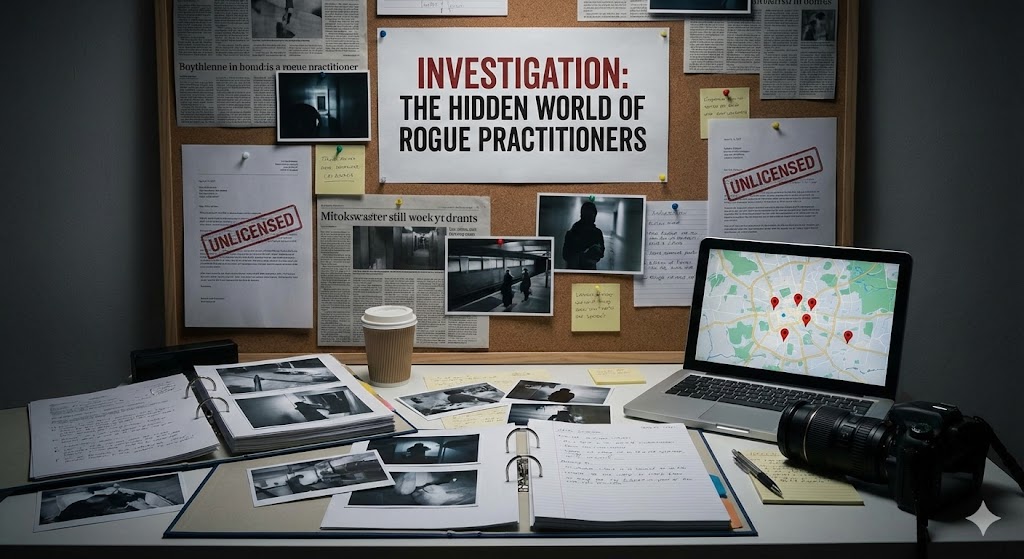
In back alleys, residential apartments, and dimly lit rooms tucked behind grocery stores, an invisible medical system thrives — one that operates without licenses, oversight, or ethics. These are the rogue practitioners: unregistered dentists, underground cosmetic surgeons, street pharmacists, counterfeit healers, self-taught “doctors,” and social-media-born medical influencers who sell treatments with confidence but no qualifications.
Their world runs parallel to legitimate medicine, yet it remains largely untouched by regulation. And, disturbingly, it is growing.
The roots of this underground system are simple: desperation. For many people, official healthcare is too expensive, too slow, too bureaucratic, or too intimidating. Rogue practitioners fill the gap with promises — quicker results, cheaper procedures, no paperwork, no judgment. Their clinics operate in secrecy, sometimes behind a curtain, sometimes in the back of a mobile van, sometimes in hotel rooms where equipment is sterilized with household cleaners instead of medical-grade solutions.
People come seeking relief. Instead, they gamble with their lives.
The most dangerous part? Rogue practitioners don’t look like movie criminals. Many appear charming, knowledgeable, even professional. They wear white coats bought online. They use medical terminology learned from YouTube. Some were once assistants or students who never completed training. Others are nothing more than bold entrepreneurs exploiting the illusion of medical authority.
Counterfeit medicine fuels this ecosystem. Fake antibiotics, diluted anesthetics, mislabeled pills — an entire shadow economy exists behind the scenes. These substances move across borders disguised as cosmetics or vitamins, slipping into markets where regulations are weak and enforcement is overworked. Once inside, they circulate freely among rogue operators who use them in unsuspecting patients.
Then there are the cosmetic procedures — a booming underground industry. Botox injections performed with counterfeit toxins. Lip fillers purchased wholesale from unknown manufacturers. Illegal fat-dissolving injections. “Stem cell therapy” that is really just saline. After-hours dental extractions done with no anesthetic other than courage and pain tolerance. Social media glamorizes these services, but behind every edited photo lies a risk most customers never consider.
Rogue practitioners survive not by hiding, but by blending. They set up temporary clinics. They rent rooms for a weekend, treat dozens of clients, then vanish before authorities catch wind. Their operations are fast, mobile, liquid. In the digital age, they use messaging apps, secret groups, encrypted channels. A recommendation spreads by word of mouth; a number is shared; an appointment follows. No records, no receipts, no trace.
And in many regions, enforcement agencies face overwhelming challenges. Investigating a rogue medical network requires undercover operations, multilingual intelligence, and coordination between health and criminal departments — a level of resource allocation few governments prioritize. Meanwhile, rogue practitioners adapt constantly, absorbing new techniques, studying real medical procedures online, and upgrading their equipment just enough to appear legitimate.
But despite the secrecy, patterns reveal themselves.
Victims come forward with complications: infections, allergic reactions, paralysis, scarring. Some never seek help out of shame. Others do not realize the damage until it is irreversible. Hospitals patch the wounds without knowing their origin, creating a trail of silent casualties.
Yet the underground continues to thrive — not because people trust it, but because people lack alternatives.
When official systems fail to serve everyone, unofficial systems rise to fill the void.
This hidden world hints at a deeper truth: modern healthcare is divided not between rich and poor, but between serviced and abandoned. Rogue practitioners step into that gap with tools they barely understand and patients who are willing to risk everything for relief.
The most dangerous part is not their existence, but the growing acceptance of their presence. When desperation becomes normalized, so does the shadow system built to exploit it.
The world of rogue practitioners is unlicensed.
Unregulated.
Unstoppable — until societies confront the reason it exists.
Behind every illegal procedure lies a simple question no authority wants to answer:
Why do so many people trust the underground more than the system meant to protect them?