Uncovered: The Shocking Reason Why Radio Signals Go Further at Night!
admin
Author
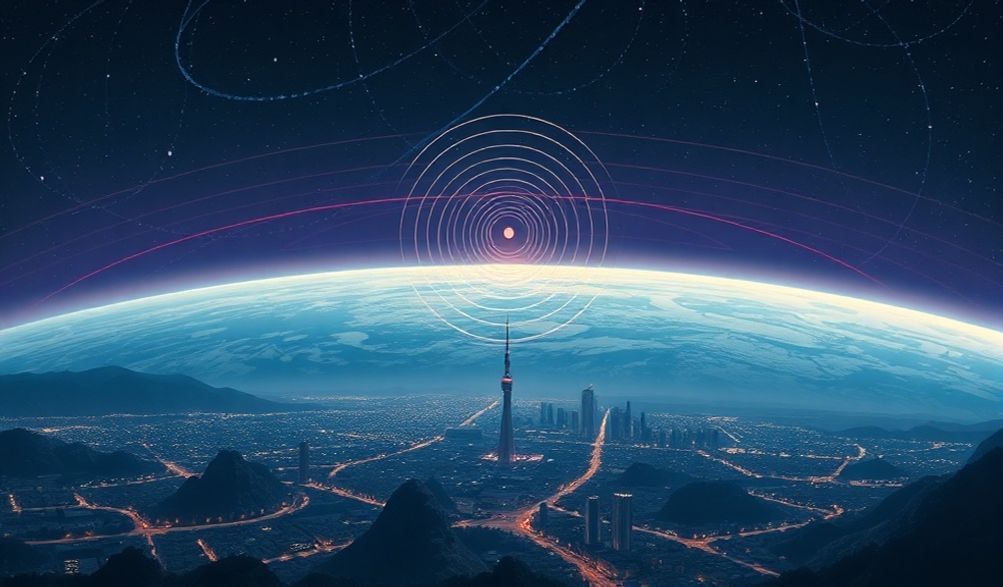
For decades, radio enthusiasts and professionals alike have been fascinated by the phenomenon of long-distance radio communication, where radio signals seem to travel farther and with greater clarity at night. This phenomenon has been observed and utilized by amateur radio operators, emergency responders, and even the military, but the underlying reasons behind it have remained somewhat of a mystery. In this article, we will delve into the history and science behind this phenomenon, exploring the factors that contribute to the increased range of radio signals at night, and examine the implications of this phenomenon for long-distance radio communication.
Historical Context: The Early Days of Long-Distance Radio Communication
The discovery of radio waves by Heinrich Hertz in the late 19th century marked the beginning of a new era in communication. As radio technology improved, it became clear that radio signals could travel long distances, but the conditions under which they did so were not well understood. Early radio operators noticed that signals seemed to travel farther at night, but the reasons behind this phenomenon were not immediately apparent. It wasn’t until the early 20th century, with the advent of amateur radio and the development of more sophisticated radio equipment, that the phenomenon began to be studied in earnest. Today, we know that the increased range of radio signals at night is due to a combination of factors, including the ionization of the atmosphere, the reflection of signals off the ionosphere, and the reduction of interference from other radio sources.
Understanding the Science Behind Long-Distance Radio Communication
So, what exactly happens at night that allows radio signals to travel farther? The answer lies in the way that radio waves interact with the Earth’s atmosphere. During the day, the sun’s radiation ionizes the atmosphere, creating a layer of charged particles that can absorb or scatter radio waves. At night, however, the atmosphere is less ionized, allowing radio waves to travel more freely. Additionally, the ionosphere, a layer of the atmosphere that extends from about 50 to 600 kilometers above the Earth’s surface, plays a critical role in long-distance radio communication. The ionosphere is composed of several layers, each with its own unique properties, and it is capable of reflecting radio waves back to the Earth’s surface, allowing them to travel much farther than they would otherwise.
The Role of the Ionosphere in Long-Distance Radio Communication
The ionosphere is a complex and dynamic system, and its behavior has a significant impact on long-distance radio communication. The ionosphere is divided into several layers, including the D-layer, the E-layer, and the F-layer. The D-layer is the lowest layer, and it is responsible for absorbing radio waves with frequencies below about 10 MHz. The E-layer is the next highest layer, and it is capable of reflecting radio waves with frequencies between about 10 MHz and 100 MHz. The F-layer is the highest layer, and it is responsible for reflecting radio waves with frequencies above about 100 MHz. At night, the F-layer becomes more dense, allowing it to reflect radio waves more efficiently and enabling long-distance radio communication to occur over much greater distances.
Section 1: The Impact of Solar Activity on Long-Distance Radio Communication
Solar activity, including sunspots and solar flares, can have a significant impact on long-distance radio communication. During periods of high solar activity, the ionosphere can become more ionized, leading to increased absorption and scattering of radio waves. This can make it more difficult for radio signals to travel long distances, and can even cause blackouts of radio communication. On the other hand, during periods of low solar activity, the ionosphere can become less ionized, allowing radio waves to travel more freely and enabling long-distance radio communication to occur over greater distances.
Section 2: The Role of Atmospheric Conditions in Long-Distance Radio Communication
Atmospheric conditions, including temperature, humidity, and air pressure, can also have a significant impact on long-distance radio communication. For example, temperature inversions, where a layer of cool air forms near the surface, can cause radio waves to be refracted, or bent, back towards the Earth’s surface, allowing them to travel farther. Similarly, high humidity can cause radio waves to be absorbed, reducing their range, while low humidity can allow them to travel more freely. Understanding these atmospheric conditions is critical for optimizing long-distance radio communication.
Section 3: The Importance of Antenna Design in Long-Distance Radio Communication
Antenna design is a critical factor in long-distance radio communication. The type and orientation of an antenna can significantly impact its ability to transmit and receive radio signals over long distances. For example, a directional antenna, such as a Yagi antenna, can be used to focus a radio signal in a specific direction, allowing it to travel farther. On the other hand, an omnidirectional antenna, such as a dipole antenna, can be used to transmit and receive radio signals in all directions, but may not be as effective for long-distance communication.
Section 4: The Impact of Noise and Interference on Long-Distance Radio Communication
Noise and interference are significant challenges in long-distance radio communication. Sources of noise and interference can include other radio signals, electrical devices, and even natural phenomena such as lightning. To overcome these challenges, radio operators use a variety of techniques, including filtering, modulation, and error correction. For example, amplitude modulation (AM) and frequency modulation (FM) can be used to reduce the impact of noise and interference, while error correction techniques such as forward error correction (FEC) can be used to detect and correct errors that occur during transmission.
Section 5: The Future of Long-Distance Radio Communication
The future of long-distance radio communication is exciting and rapidly evolving. New technologies, such as software-defined radio (SDR) and cognitive radio, are enabling more efficient and effective use of the radio spectrum. Additionally, the development of new antenna designs and propagation models is allowing for more accurate prediction and optimization of long-distance radio communication. As the demand for wireless communication continues to grow, the importance of long-distance radio communication will only continue to increase, driving innovation and advancement in this field.
Counter-Arguments: Challenges to the Phenomenon of Radio Signals Traveling Farther at Night
While the phenomenon of radio signals traveling farther at night is well-established, there are some challenges and counter-arguments to this idea. For example, some researchers have suggested that the increased range of radio signals at night may be due to the reduced interference from other radio sources, rather than any inherent property of the atmosphere. Additionally, the variability of the ionosphere and the impact of solar activity can make it difficult to predict and optimize long-distance radio communication. However, these challenges do not diminish the significance of the phenomenon, and ongoing research continues to refine our understanding of the factors that contribute to the increased range of radio signals at night.
Conclusion: The Significance of Long-Distance Radio Communication
In conclusion, the phenomenon of radio signals traveling farther at night is a complex and multifaceted one, influenced by a variety of factors including the ionization of the atmosphere, the reflection of signals off the ionosphere, and the reduction of interference from other radio sources. Understanding these factors is critical for optimizing long-distance radio communication, which has numerous applications in fields such as emergency response, navigation, and scientific research. As we continue to push the boundaries of wireless communication, the importance of long-distance radio communication will only continue to grow, driving innovation and advancement in this field. By exploring the science behind this phenomenon and its implications for long-distance radio communication, we can unlock new possibilities for communication and connection, and continue to expand our understanding of the world around us.
Some of the key takeaways from this article include:
- The increased range of radio signals at night is due to a combination of factors, including the ionization of the atmosphere, the reflection of signals off the ionosphere, and the reduction of interference from other radio sources.
- The ionosphere plays a critical role in long-distance radio communication, and its behavior can be affected by solar activity and atmospheric conditions.
- Antenna design, noise and interference, and atmospheric conditions are all critical factors in optimizing long-distance radio communication.
- The future of long-distance radio communication is exciting and rapidly evolving, with new technologies and innovations emerging all the time.
By understanding the science behind the phenomenon of radio signals traveling farther at night, we can unlock new possibilities for communication and connection, and continue to expand our understanding of the world around us. Whether you are a radio enthusiast, a professional communicator, or simply someone interested in the science behind long-distance radio communication, this phenomenon is sure to fascinate and inspire.