The weird behavior of distant lights across water (refraction or something else?)
admin
Author
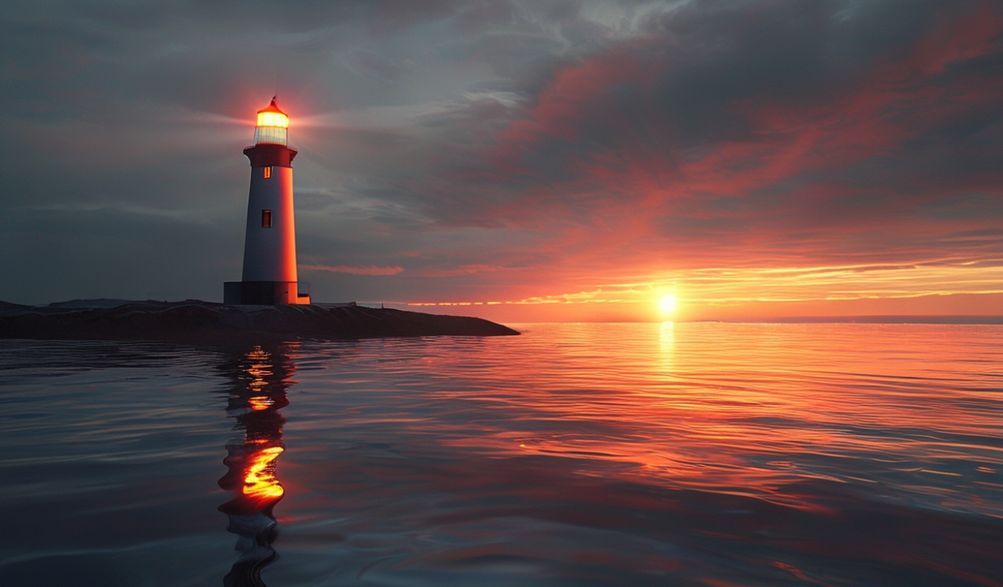
When observing distant lights over water, it’s not uncommon to notice a peculiar phenomenon – the bending of light as it passes from one medium to another, a process known as refraction over water. This occurrence has fascinated humans for centuries, with many attempting to explain the science behind it. From the shimmering mirages on a hot summer day to the distorted images of lighthouses on the horizon, refraction over water plays a significant role in shaping our visual perception of the world. In this article, we’ll delve into the mysteries of refraction over water, exploring its historical context, scientific explanations, and the impact it has on our daily lives.
Introduction to Refraction Over Water
Refraction over water is a fundamental concept in physics, describing the way light behaves when it travels from one medium to another with a different optical density. When light passes from air into water, it slows down and changes direction, causing the light to bend. This bending of light is what we observe as refraction over water. The extent of the bending depends on the angle of incidence, the wavelength of the light, and the properties of the two media. Understanding refraction over water is crucial for various fields, including optics, physics, and even navigation.
Historical Context of Refraction Over Water
The study of refraction over water dates back to ancient civilizations, with philosophers like Aristotle and Euclid attempting to explain the phenomenon. However, it wasn’t until the 17th century that the Dutch scientist Willebrord Snellius formulated the law of refraction, which describes the relationship between the angles of incidence and refraction. This law laid the foundation for our modern understanding of refraction over water and its applications. Over the centuries, scientists have continued to build upon Snellius’ work, refining our knowledge of refraction over water and its effects on our perception of the world.
Section 1: The Science of Refraction Over Water
To understand the science behind refraction over water, we need to examine the properties of light and its behavior in different media. Light is a form of electromagnetic radiation, and its speed is approximately 299,792 kilometers per second in a vacuum. However, when light travels through a medium like air or water, its speed decreases due to the interactions with the medium’s particles. The ratio of the speed of light in a vacuum to its speed in a medium is known as the refractive index. Water has a higher refractive index than air, which means that light travels slower in water than it does in air. This difference in speed is what causes the bending of light, or refraction, when it passes from air into water.
Key Factors Affecting Refraction Over Water
Several factors contribute to the refraction of light over water, including:
- Angle of incidence: The angle at which light hits the surface of the water affects the extent of refraction.
- Wavelength of light: Different wavelengths of light are refracted at slightly different angles, a phenomenon known as dispersion.
- Temperature and salinity of water: Changes in temperature and salinity can alter the refractive index of water, affecting the refraction of light.
- Surface roughness: The roughness of the water’s surface can distort the light, making it more difficult to observe the effects of refraction.
Section 2: Observing Refraction Over Water in Nature
Refraction over water is a common occurrence in nature, and it can be observed in various forms. One of the most striking examples is the mirage, which appears as a distorted image of a distant object, often inverted or stretched. Mirages are caused by the refraction of light as it passes through layers of air with different temperatures, creating a gradient of refractive indices. Another example is the shimmering effect seen on the surface of the water, particularly on hot days. This is due to the refraction of light as it passes from the air into the water, creating a series of tiny, distorted images.
Real-World Examples of Refraction Over Water
Refraction over water can be seen in many real-world scenarios, including:
- Lighthouses: The beam of light from a lighthouse can be refracted as it passes over the water, creating a distorted image.
- Ship navigation: Refraction over water can affect the accuracy of navigation systems, particularly when using visual references like lighthouses or buoys.
- Optical illusions: Refraction over water can create optical illusions, making it difficult to judge distances or sizes of objects.
Section 3: The Impact of Refraction Over Water on Navigation
Refraction over water has significant implications for navigation, particularly in maritime and aviation contexts. The bending of light can affect the accuracy of visual references, making it challenging to determine distances, sizes, and shapes of objects. This can lead to errors in navigation, potentially resulting in accidents or collisions. To mitigate these effects, navigators use a variety of techniques, including:
- Correcting for refraction: By applying mathematical corrections, navigators can account for the effects of refraction over water.
- Using electronic navigation aids: Electronic systems like GPS and radar can provide more accurate information, reducing the reliance on visual references.
- Training and experience: Experienced navigators develop a keen sense of observation and can learn to compensate for the effects of refraction over water.
Section 4: Refraction Over Water in Art and Photography
Refraction over water has been a source of inspiration for artists and photographers, who often seek to capture the unique effects of this phenomenon. The bending of light can create stunning visual effects, from the shimmering of the water’s surface to the distorted images of distant objects. By manipulating the angle of view, the time of day, and the weather conditions, artists and photographers can exploit the properties of refraction over water to create breathtaking works of art.
Techniques for Capturing Refraction Over Water
To capture the effects of refraction over water, artists and photographers use a range of techniques, including:
- Low-angle shots: Shooting from a low angle can emphasize the effects of refraction, creating a sense of drama and tension.
- Long exposures: Using long exposures can capture the movement of the water, creating a sense of blur and emphasizing the refraction effects.
- Polarizing filters: Polarizing filters can reduce the glare from the water’s surface, allowing the photographer to capture more detail and texture.
Section 5: The Future of Refraction Over Water Research
Despite our current understanding of refraction over water, there is still much to be discovered. Ongoing research is focused on improving our knowledge of the phenomenon, particularly in the context of climate change and its effects on the world’s oceans. By studying refraction over water, scientists can gain insights into the properties of light and its behavior in different media, which can have significant implications for fields like optics, materials science, and renewable energy.
Counter-Arguments: The Limitations of Refraction Over Water
While refraction over water is a fascinating phenomenon, it’s essential to acknowledge its limitations. The effects of refraction can be distorted by various factors, including the roughness of the water’s surface, the presence of impurities, and the angle of view. Additionally, the mathematical models used to describe refraction over water are based on simplifying assumptions, which can lead to inaccuracies in certain situations. Furthermore, the study of refraction over water is often limited by the availability of data and the complexity of the underlying physics.
Conclusion: The Significance of Refraction Over Water
In conclusion, refraction over water is a complex and fascinating phenomenon that has captivated humans for centuries. By understanding the science behind refraction over water, we can gain insights into the behavior of light and its interactions with different media. The effects of refraction over water have significant implications for various fields, including navigation, art, and science. As we continue to study and explore this phenomenon, we may uncover new and exciting applications, from improving navigation systems to developing new technologies. Whether you’re a scientist, an artist, or simply someone who appreciates the beauty of the natural world, refraction over water is sure to inspire and captivate, offering a unique perspective on the intricate and often mysterious workings of our universe.