The War Beneath the Waves: Bronze-Age Shipwrecks off the Uluburun Coast
admin
Author
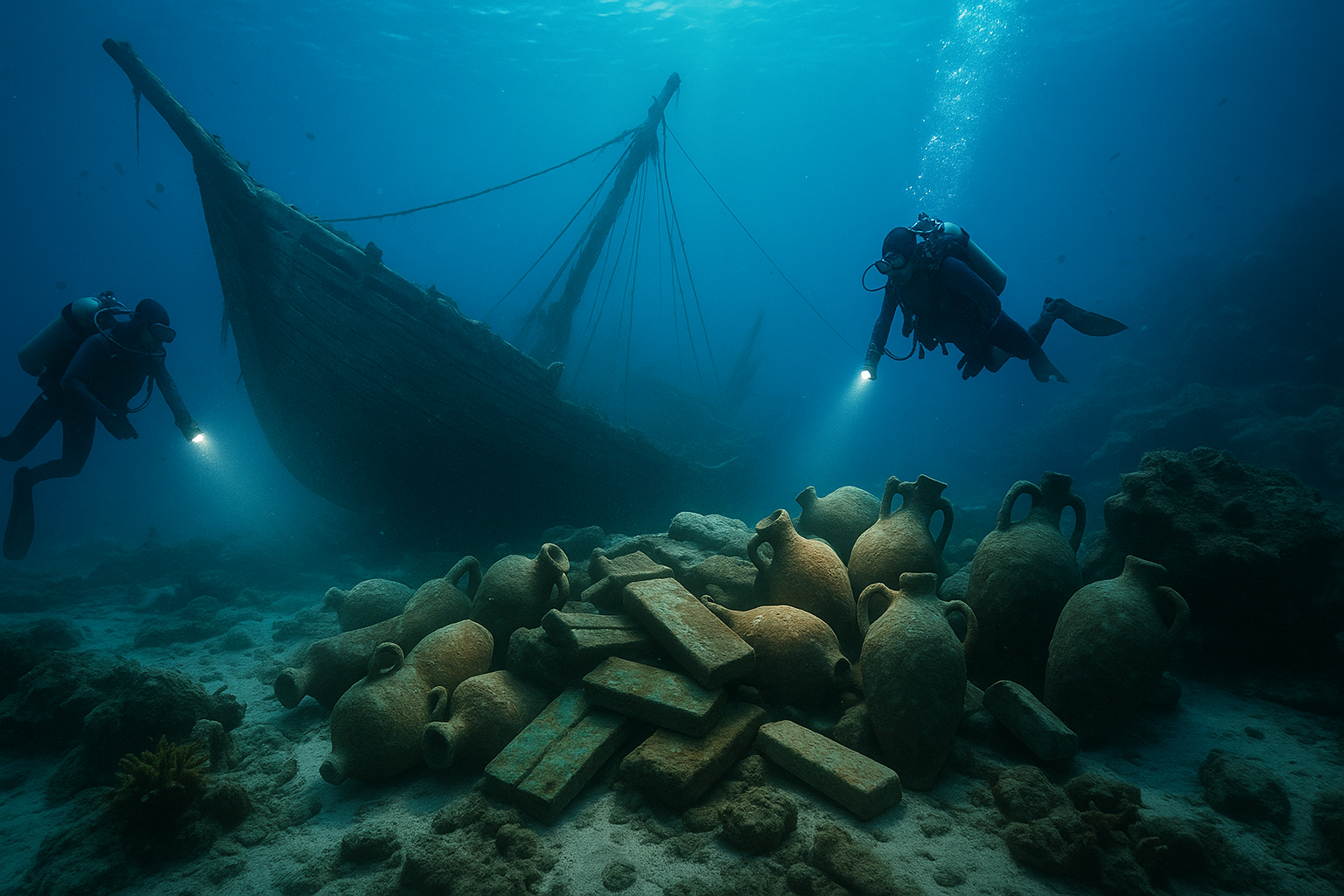
1. A Sunken Time Capsule
In 1982, sponge diver Mehmet Çakir stumbled upon fragments of pottery on the seabed off Uluburun (“Grand Father’s Nose”), a promontory near Kaş on Turkey’s Turquoise Coast. His find led to a multi-season excavation (1984–1994) by the Bodrum Museum of Underwater Archaeology, uncovering a Late Bronze Age merchant vessel—now known simply as the Uluburun shipwreck—resting at 44 m depth. This extraordinary discovery provides a snapshot of the political and economic rivalries that underpinned 14th-century BCE Eastern Mediterranean turmoil.
2. Setting the Stage: Bronze Age Power Struggles
By the late 14th century BCE, empires and kingdoms—from Egypt’s New Kingdom courts to Mycenaean palaces in Greece, Hittite strongholds in Anatolia, and city-states along the Levantine coast—vied for dominance. Central to their power was the production of bronze (an alloy of copper and tin), vital for weapons, armor, and prestige goods. Control of mining regions in Cyprus, Anatolia, and the Carpathians, as well as sea lanes, could tip the balance in dynastic wars and coalition battles.
3. The Vessel and Its Voyage
The Uluburun wreck measured roughly 15 m long with a beam of 4 m—typical of Late Bronze Age merchant ships. Its hull, constructed of mortise-and-tenon-joined planks, bore repair marks, suggesting years of service. Dendrochronology and wood analysis date its final voyage to ca. 1318 BCE. The ship likely sailed from a Levantine port, bound for a major palace center—perhaps in Egypt or a Hittite ally—carrying raw materials and luxury items essential to statecraft and warfare.
4. Cargo of Conflict and Prestige
The Uluburun cargo reads like a ledger of Bronze Age geopolitics:
-
Copper and Tin Ingots: Over 350 copper oxhide ingots (totaling ~10 tons) and 150 kg of decorated tin ingots—the raw ingredients for tens of thousands of bronze weapons and tools.
-
Bronze Weapons: Nearly 150 bronze axes, blades, and spearheads, some bearing gold-inlaid decoration—likely destined for elite warriors.
-
Ceremonial Goods: Canaanite amphorae of resin and oil, elite Cypriot-style base-ring juglets, and Egyptian faience beads—symbols of high ritual and diplomatic exchange.
-
Exotic Luxuries: Ostrich-egg cups, semicarnelian beads, ivory from Africa and India, and gold jewelry—tokens in the gift diplomacy that sealed alliances and tributary relationships.
5. Maritime Networks and Cultural Interactions
Analysis of amphora stamps, pottery fabrics, and epigraphic marks confirms the ship’s multinational network:
-
Syrian-Canaanite jars carried resin for Egyptian ceremonies.
-
Cypriot copper mines supplied the bulk of ingots.
-
Mycenaean sword styles and Aegean pottery fragments indicate Greek craftsmen’s involvement in downstream weapon manufacture.
These intertwined exchange systems underscore how strategic resource flows underpinned both commerce and conflict—naval convoys that carried grain and luxuries also transported the raw metals of war.
6. Underwater Excavation: A Race Against Time
Recovering the Uluburun wreck was a meticulous challenge:
-
Diver Archaeology: Over 20,000 dives retrieved 18,000+ artifacts, all painstakingly recorded in situ with photographs, measured drawings, and 3D laser scanning.
-
Conservation: Copper ingots were desalinated for months to prevent “bronze disease,” and organic materials (resin-soaked timbers, wooden boxes) underwent polyethylene glycol treatments.
-
Publication: The complete six-volume excavation report, published in 2004, remains a model for underwater archaeology.
7. Legacy of the Sunken Cargo
The Uluburun shipwreck reshaped our understanding of Late Bronze Age statecraft and warfare:
-
Resource Vulnerability: Empires needed constant metal supplies, making sea routes both lifelines and targets for piracy and interdiction.
-
Diplomatic Exchange: Luxury detachable from warfare—gifts of ivory and gold—cemented treaties and displayed power, even as bronze ingots underwrote armies.
-
Technological Innovation: The standardization of ingot shapes and weights hints at proto-bureaucratic control over resource distribution.
8. Conclusion: Echoes Beneath the Waves
The Uluburun wreck reminds us that beneath the glittering surface of Mediterranean trade lay currents of rivalry, alliance, and armament. As we piece together its cargo, we glimpse a world where every ingot, axe, and ostrich-egg cup carried both economic value and geopolitical weight. In the silent depths off the Uluburun coast, the echoes of Bronze Age conflicts still resonate—testaments to the enduring interplay of commerce and conflict on the waves of history.