The Shadow Library of Timbuktu: Smuggled Manuscripts and Desert Vaults
admin
Author
1. Introduction: Guardians of Written Memory
For over eight centuries, Timbuktu stood as a crucible of learning at Africa’s edge—its mud-brick mosques and family libraries housing some 50,000 handwritten manuscripts on theology, law, astronomy, and poetry. In 2012, when Islamist insurgents threatened this patrimony, a covert rescue mission sprang into action: manuscripts were smuggled past frontlines and hidden in secret desert vaults, giving rise to what locals call “The Shadow Library.”
2. The Golden Age of Timbuktu’s Script
-
Founding of the Manuscript Tradition (13th–15th centuries): Scholars like Ahmad Baba contributed treatises in Arabic and local languages, generating works on jurisprudence, grammar, and Sufism.
-
Private Family Collections: Unlike a single museum, Timbuktu’s knowledge was spread across over a hundred family libraries (e.g., the Mamma Haidara Library), each meticulously maintained and passed down through generations.
-
Global Connections: Merchant-scholars from Maghreb, Egypt, and the Sahel exchanged books, embedding Timbuktu in a trans-Saharan intellectual network.
3. Crisis and Concealment in 2012
-
Jihadist Occupation: As Islamist militants swept across northern Mali, they branded the manuscripts heretical. Threats of destruction loomed.
-
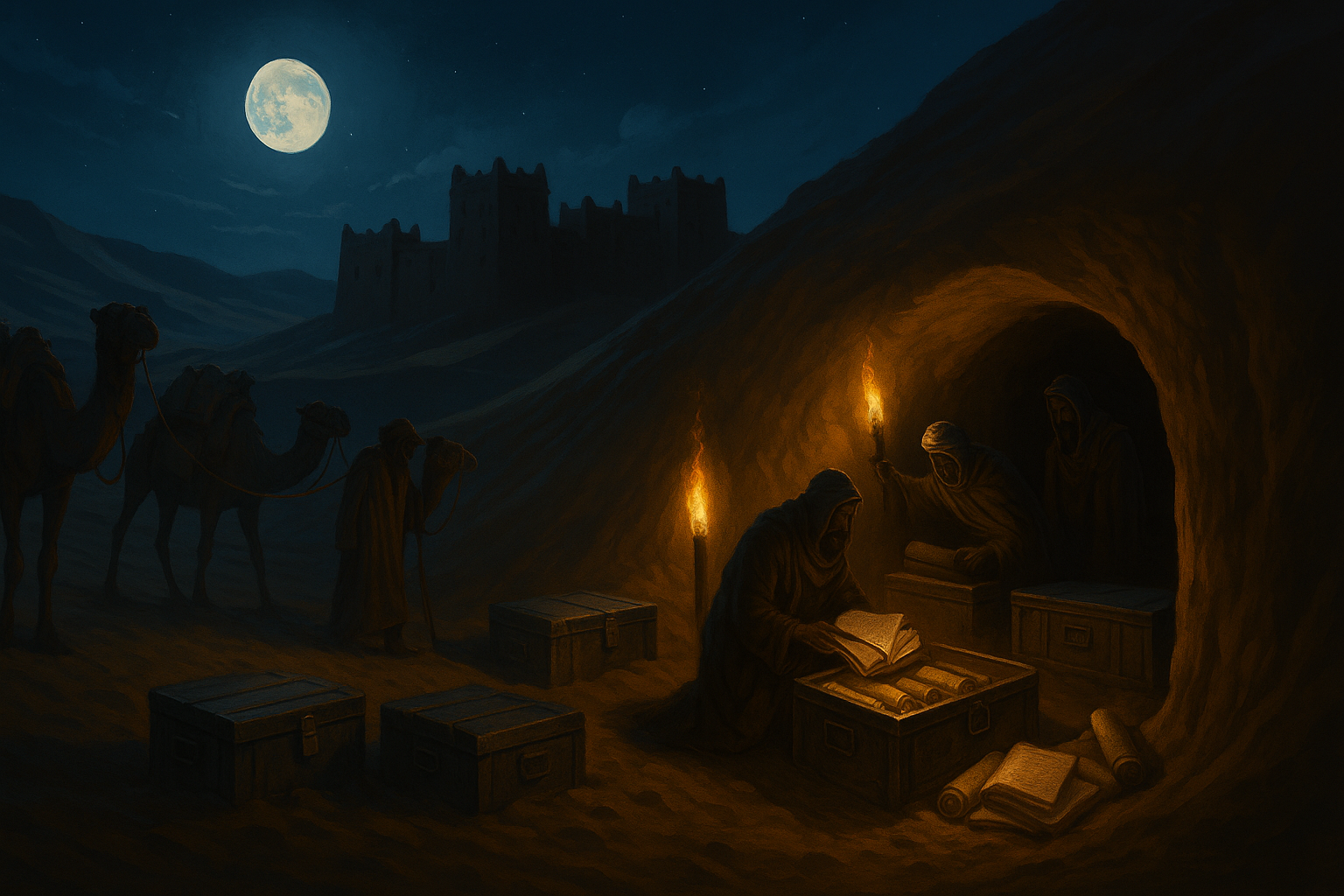
The Smuggling Operation: Under cover of night and torrid heat, Malian librarians—joined by local youth—packed volumes into metal trunks and secreted them by camel-caravan toward Bamako and neighboring Burkina Faso.
-
Desert Vaults: Some collections were buried in underground caches near remote oases; others entrusted to sympathetic Tuareg herders who concealed scrolls within empty grain silos.
4. The Shadow Network of Custodians
-
Local Librarians: Families like the Daouds and the Abubakars organized clandestine meetings to coordinate sorties across checkpoints.
-
International Scholars: At the Ahmed Baba Institute, staffers liaised with UNESCO and the Norwegian Manuscript Project to fund hidden storage facilities.
-
Diaspora Partnerships: Malian academics abroad arranged temporary safekeeping in European and American university libraries—always under strict conditions to return originals once Mali stabilized.
5. Rediscovery and Restoration
-
Return to Timbuktu: Following the 2013 French-led intervention, manuscripts emerged from vaults. Conservators at the Ahmed Baba Institute set up climate-controlled rooms to begin restoration.
-
Cataloging the Troves: Digitization projects, such as the Tombouctou Manuscripts Project at the University of Cape Town, have photographed over 10,000 volumes, preserving fragile pages in high-resolution archives.
-
Revealing Forgotten Texts: Among the safeguarded works are rare astronomical tables, pre-colonial treaties, and even poetic anthologies penned by women scholars.
6. Enduring Challenges
-
Security Risks: Sporadic violence still threatens re-opened libraries; armed patrols accompany custodians to deter looting.
-
Conservation Hurdles: Desert sand, fluctuating humidity, and pests continue to damage paper and parchment; local workshops train Malians in binding and deacidification techniques.
-
Access vs. Protection: Balancing scholarly access with preservation has led to controlled reading rooms and copy-only permissions for researchers.
7. Legacy of the Shadow Library
The clandestine efforts to save Timbuktu’s manuscripts underscore the power of community resolve in the face of cultural erasure. Today:
-
Cultural Revival: Annual Manuscript Week in Timbuktu attracts international visitors and raises awareness of Mali’s intellectual heritage.
-
Model for Other Crises: The desert-vault strategy inspires preservationists from Syria to Afghanistan, proving that when official channels falter, grassroots networks can safeguard history.
-
Symbol of Unity: In a region too often defined by conflict, the Shadow Library stands as a beacon of intercultural dialogue, reminding us that manuscripts—like people—are most precious when their voices risk being silenced.
In the hush of Mali’s sands, buried scrolls whisper a timeless lesson: knowledge, once hidden, can yet illuminate the world again.