The Rise of Synthetic Reality: When Photos, Voices, and Proof Don’t Mean Anything
admin
Author
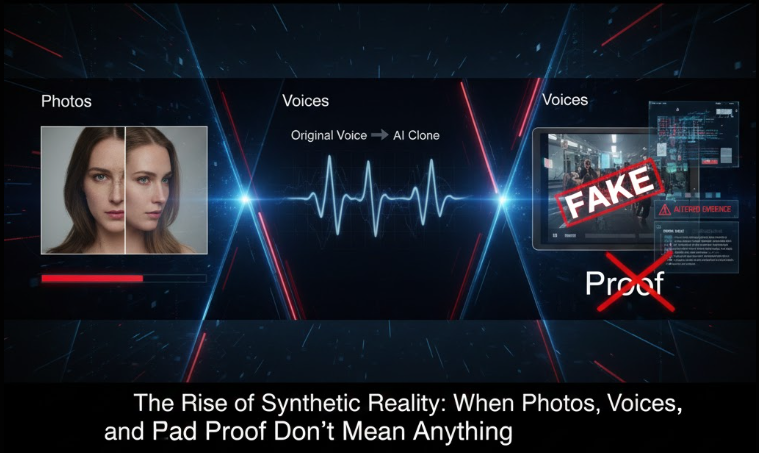
The advent of Synthetic Reality has ushered in a new era of deception, one that threatens to undermine the very fabric of our society. As technology continues to advance at an unprecedented rate, the lines between reality and fiction are becoming increasingly blurred, making it more challenging than ever to discern what is real and what is not. This phenomenon has significant implications for various aspects of our lives, from the way we consume information to the manner in which we interact with each other. In this article, we will delve into the world of Synthetic Reality and explore its far-reaching consequences on our perception of truth and trust.
Historical Context: The Evolution of Deception
Deception is not a new concept; it has been a part of human history since the dawn of civilization. From ancient myths and legends to modern-day propaganda and disinformation campaigns, humans have always been adept at manipulating reality to serve their interests. However, the rise of technology has significantly amplified the scope and impact of deception. The advent of the internet, social media, and other digital platforms has created an environment where false information can spread rapidly, often with devastating consequences. The current state of affairs is a culmination of decades of technological advancements, which have ultimately led to the development of Synthetic Reality.
Understanding Synthetic Reality
Synthetic Reality refers to the use of artificial intelligence, machine learning, and other technologies to create simulated environments, objects, and entities that are virtually indistinguishable from their real-world counterparts. This technology has numerous applications, ranging from entertainment and education to marketing and healthcare. However, it also has a darker side, as it can be exploited to create sophisticated deceptions that are designed to manipulate public opinion, influence behavior, and undermine trust in institutions.
The Psychology of Deception
To understand the impact of Synthetic Reality on our perception of reality, it is essential to examine the psychological factors that contribute to deception. Research has shown that humans are wired to respond to emotional cues, and false information can be designed to elicit strong emotional responses, making it more likely to be believed and shared. Furthermore, the proliferation of social media has created an environment where people are more likely to interact with information that confirms their pre-existing biases, rather than challenging them. This phenomenon, known as the “echo chamber effect,” can significantly amplify the spread of false information and contribute to the erosion of trust in institutions.
Synthetic Reality and the Erosion of Trust
The consequences of Synthetic Reality on our trust in institutions are far-reaching and alarming. As false information becomes increasingly sophisticated, it becomes more challenging for people to distinguish between fact and fiction. This can lead to a breakdown in trust in institutions, such as governments, media outlets, and educational institutions, which are essential for the functioning of a healthy democracy. The erosion of trust can have severe consequences, including the polarization of society, the rise of extremism, and the undermining of democratic processes.
The Role of Artificial Intelligence in Synthetic Reality
Artificial intelligence (AI) plays a critical role in the development of Synthetic Reality. AI algorithms can be used to create sophisticated simulations of reality, including fake videos, audio recordings, and images. These simulations can be designed to mimic the characteristics of real-world events, making them virtually indistinguishable from reality. Furthermore, AI can be used to analyze vast amounts of data, allowing for the creation of highly targeted and personalized deceptions. The use of AI in Synthetic Reality has significant implications for the future of deception, as it enables the creation of sophisticated and convincing deceptions that can be spread rapidly and efficiently.
Synthetic Reality and the Future of Deception
The future of deception in the age of Synthetic Reality is uncertain and alarming. As technology continues to advance, it is likely that we will see the development of even more sophisticated deceptions, which will be designed to manipulate public opinion and undermine trust in institutions. The consequences of this could be severe, including the erosion of democracy, the rise of extremism, and the breakdown of social cohesion. It is essential that we take immediate action to address the challenges posed by Synthetic Reality, including the development of new technologies and strategies to detect and mitigate the spread of false information.
The Impact of Synthetic Reality on Social Media
Social media has become a critical platform for the spread of false information, and Synthetic Reality has significantly amplified this phenomenon. Social media platforms, such as Facebook and Twitter, have been criticized for their role in spreading false information, and the use of Synthetic Reality has made it even more challenging to distinguish between fact and fiction. The impact of Synthetic Reality on social media is far-reaching, and it has significant implications for the future of online communication. As social media continues to play an increasingly important role in our lives, it is essential that we develop new strategies to mitigate the spread of false information and promote critical thinking and media literacy.
Synthetic Reality and the Importance of Critical Thinking
The rise of Synthetic Reality has highlighted the importance of critical thinking and media literacy in the digital age. As false information becomes increasingly sophisticated, it is essential that we develop the skills to distinguish between fact and fiction. This includes being able to analyze information critically, evaluate sources, and identify biases and flaws in reasoning. Furthermore, it is essential that we promote a culture of critical thinking, where people are encouraged to question information and challenge assumptions. By promoting critical thinking and media literacy, we can mitigate the impact of Synthetic Reality and promote a more informed and engaged citizenry.
The Role of Education in Mitigating the Impact of Synthetic Reality
Education plays a critical role in mitigating the impact of Synthetic Reality. By teaching people the skills to evaluate information critically, identify biases and flaws in reasoning, and promote media literacy, we can empower them to make informed decisions and challenge false information. Furthermore, education can play a critical role in promoting a culture of critical thinking, where people are encouraged to question information and challenge assumptions. By incorporating critical thinking and media literacy into educational curricula, we can promote a more informed and engaged citizenry, which is essential for the functioning of a healthy democracy.
Counter-Arguments: The Benefits of Synthetic Reality
While the rise of Synthetic Reality has significant implications for the erosion of trust, it also has numerous benefits. For example, Synthetic Reality can be used to create sophisticated simulations of real-world events, which can be used for educational and training purposes. Furthermore, Synthetic Reality can be used to create interactive and engaging experiences, which can be used to promote learning and creativity. Additionally, Synthetic Reality can be used to create virtual environments, which can be used to promote social interaction and community building. While these benefits are significant, it is essential that we acknowledge the potential risks and challenges associated with Synthetic Reality and take steps to mitigate its impact.
The Importance of Regulation and Oversight
Regulation and oversight are critical in mitigating the impact of Synthetic Reality. As the use of Synthetic Reality becomes increasingly widespread, it is essential that we develop regulatory frameworks and oversight mechanisms to ensure that it is used responsibly. This includes developing guidelines and standards for the use of Synthetic Reality, as well as establishing mechanisms for detecting and mitigating the spread of false information. Furthermore, it is essential that we promote transparency and accountability, by requiring companies and individuals to disclose the use of Synthetic Reality and to be held accountable for any harm caused by its use.
Conclusion: The End of Trust in the Age of Synthetic Reality
The rise of Synthetic Reality has significant implications for the erosion of trust in our society. As false information becomes increasingly sophisticated, it is essential that we develop the skills to distinguish between fact and fiction. This includes promoting critical thinking and media literacy, as well as developing regulatory frameworks and oversight mechanisms to ensure that Synthetic Reality is used responsibly. Furthermore, it is essential that we acknowledge the potential risks and challenges associated with Synthetic Reality and take steps to mitigate its impact. By working together, we can promote a more informed and engaged citizenry, which is essential for the functioning of a healthy democracy.
In conclusion, the end of trust in the age of Synthetic Reality is a complex and multifaceted issue, which requires a comprehensive and nuanced approach. By understanding the psychology of deception, the role of artificial intelligence, and the importance of critical thinking and media literacy, we can mitigate the impact of Synthetic Reality and promote a more informed and engaged citizenry. Ultimately, it is up to us to ensure that Synthetic Reality is used responsibly and that we promote a culture of critical thinking and transparency, which is essential for the functioning of a healthy democracy.