The Forgotten Tunnels Beneath the Desert: How Did Ancient Persians Bring Rivers Underground?
admin
Author
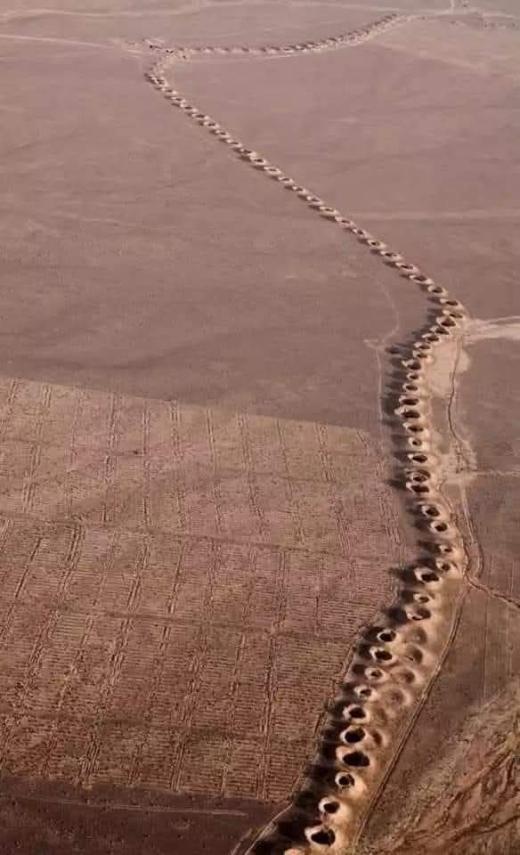
A River Beneath the Sand
Stretching across the deserts of Iran lies a breathtaking mystery—rows of perfectly aligned holes carved into the earth, vanishing into the horizon. At first glance, they resemble an alien landscape or the remnants of some forgotten war. But these strange formations are actually entrances to one of humanity’s greatest feats of engineering: the qanat, or Persian kanat.
Invented nearly 3,000 years ago, the qanat was an ingenious underground aqueduct designed to channel water from mountain springs deep beneath the desert, carrying life into the arid plains where surface rivers could not exist.
The Secret Technology of Survival
In the blistering heat of Persia’s deserts, water meant survival. Surface irrigation was impossible—rivers evaporated, and wells could not provide enough supply. The solution? Go underground.
Persian engineers dug gently sloping tunnels, sometimes stretching for dozens of kilometers, to guide water from underground aquifers toward villages and farmlands. Vertical shafts, like the ones seen in the image, were created both to provide ventilation during construction and to allow access for maintenance.
This system was so effective that it spread across civilizations—from Egypt to Morocco, from the Middle East to even parts of China. Many qanats are still in use today, silently feeding cities that don’t realize they are drinking from a 3,000-year-old invention.
More Than Just Engineering
The qanat was not merely a tool for survival; it was the foundation of civilization in barren lands. Entire cities were built where no settlement should have been possible. Villages sprouted in the middle of deserts, agriculture flourished, and empires rose—all thanks to these hidden underground rivers.
Historians argue that without qanats, Persian civilization might never have reached the heights it did. They represent not just technical brilliance but a mastery of adapting to the harshest environments.
A Legacy That Still Flows
What is most astonishing is that many qanats remain functional today—thousands of years after their creation. Farmers still rely on them to irrigate fields, and some Iranian cities still drink qanat water.
UNESCO has even recognized a network of these systems as World Heritage Sites, honoring their role as a living testimony to ancient human ingenuity.
Mystery and Memory
Looking at the endless line of desert shafts, one cannot help but wonder:
-
How did ancient Persians calculate gradients with such precision without modern tools?
-
What knowledge did they possess that allowed tunnels to remain stable for millennia?
-
And most of all—what other forgotten technologies might lie buried under the sands of history?
The qanats stand as silent reminders that ancient civilizations were not primitive, but profoundly advanced in ways we are only beginning to rediscover.
✨ Final Thought:
The next time you see a barren desert, imagine rivers flowing silently beneath it—hidden lifelines carved by hands that lived 3,000 years ago. The qanats remind us that sometimes the greatest miracles of survival are hidden just below the surface.