The “Consent Trap”: Why Cookie Popups Are Designed So You Click Accept
admin
Author
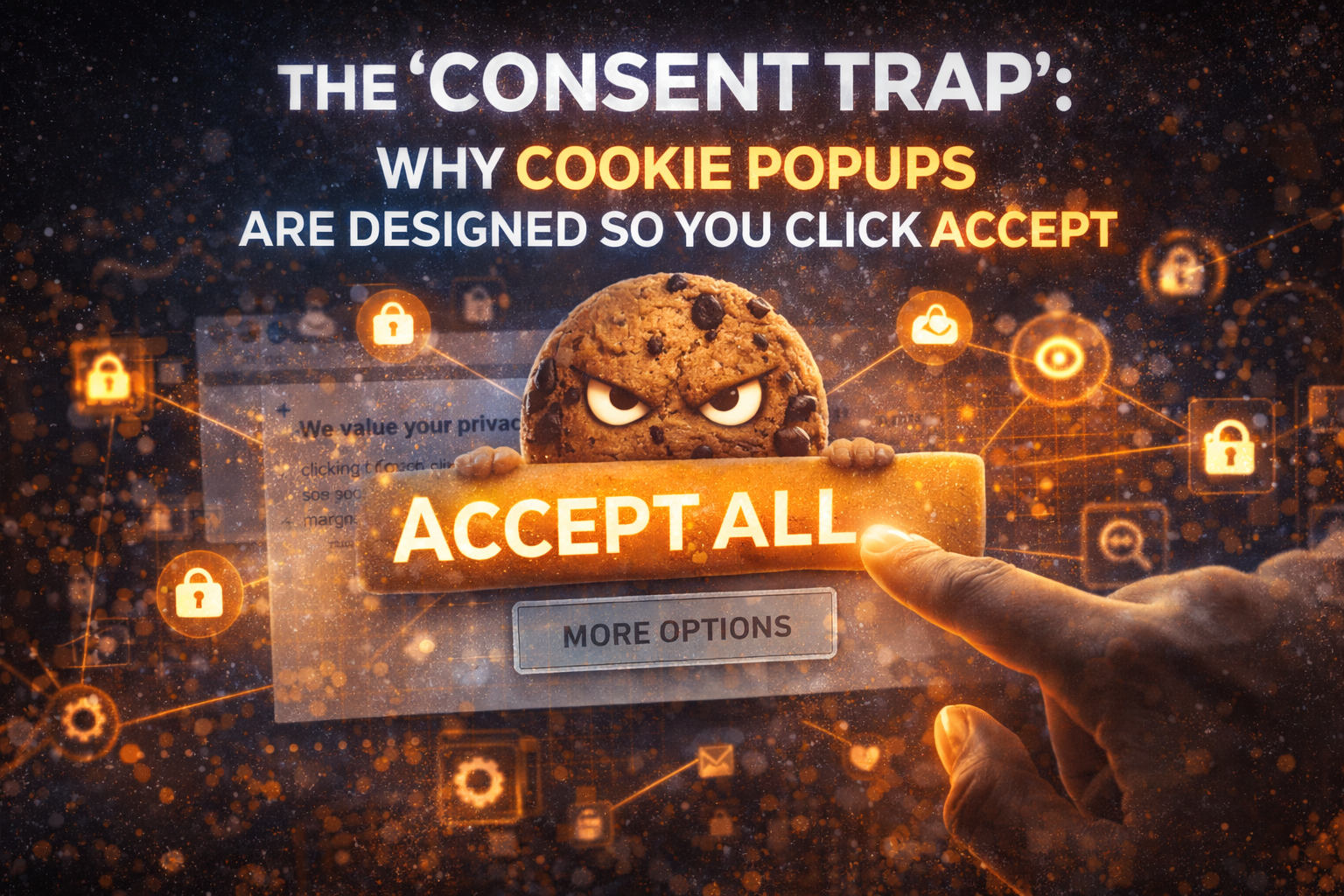
As you navigate through the vast expanse of the internet, it’s almost impossible to avoid those pesky cookie popups that seem to appear out of nowhere, asking for your consent to store cookies on your device. While they may seem like a minor annoyance, the truth behind these cookie popups is far more sinister than you might think. In this article, we’ll delve into the dark secret behind cookie popups and explore the ways in which they’re manipulating your online experience.
The Rise of Cookie Popups
The concept of cookies has been around since the early days of the internet, with the first cookie being introduced by Netscape in 1994. Initially, cookies were used to store small amounts of data on a user’s device, allowing websites to remember their preferences and provide a more personalized experience. However, as the internet evolved and online tracking became more prevalent, cookies began to be used for more nefarious purposes. The introduction of the EU’s General Data Protection Regulation (GDPR) in 2018 marked a significant turning point in the history of cookies, as it forced websites to obtain explicit consent from users before storing cookies on their devices. This led to the proliferation of cookie popups that we see today.
The Dark Secret Behind Cookie Popups
So, what’s the dark secret behind cookie popups? The answer lies in the way they’re designed to manipulate user behavior. By using tactics like fear, uncertainty, and doubt (FUD), websites are able to trick users into consenting to cookie storage, often without them even realizing it. This can have serious consequences, as cookies can be used to track your online activity, build detailed profiles of your behavior, and even sell your personal data to third-party companies. In this section, we’ll explore the ways in which cookie popups are manipulating your online experience and the potential risks associated with them.
The Psychology of Cookie Popups
One of the key factors behind the effectiveness of cookie popups is their ability to exploit psychological vulnerabilities. By using tactics like scarcity, social proof, and authority, websites are able to create a sense of urgency and importance around cookie consent. For example, a website might use a popup that says “Only 10 seconds left to consent to cookies!” or “95% of our users have already consented to cookies.” These tactics are designed to create a sense of FUD, making users more likely to consent to cookie storage without fully understanding the implications.
- Scarcity: Creating a sense of urgency or limited-time offer to prompt users into consenting to cookies.
- Social proof: Using statistics or testimonials to make users feel like they’re part of a larger group that has already consented to cookies.
- Authority: Using language or imagery that implies the website is an authority on the subject, making users more likely to trust their judgment.
The Technical Side of Cookie Popups
From a technical perspective, cookie popups are often more complex than they seem. Behind the scenes, websites are using sophisticated algorithms and tracking technologies to monitor user behavior and optimize their cookie consent strategies. This can include everything from A/B testing different popup designs to using machine learning algorithms to predict user behavior. By understanding the technical side of cookie popups, we can better appreciate the ways in which they’re manipulating our online experience.
- A/B testing: Testing different popup designs or messaging to see which one is most effective at obtaining user consent.
- Machine learning: Using algorithms to predict user behavior and optimize cookie consent strategies.
- Tracking technologies: Using technologies like cookies, beacons, or fingerprinting to monitor user behavior and build detailed profiles.
The Impact of Cookie Popups on User Experience
So, what’s the impact of cookie popups on the user experience? The answer is complex and multifaceted. On the one hand, cookie popups can be annoying and intrusive, disrupting the flow of the user experience and making it more difficult for users to access the content they want. On the other hand, cookie popups can also provide a sense of transparency and control, allowing users to make informed decisions about their online data. However, as we’ll explore in this section, the reality is often more nuanced, and the impact of cookie popups on the user experience is often more negative than positive.
- Friction: Creating a sense of friction or disruption in the user experience, making it more difficult for users to access the content they want.
- Transparency: Providing a sense of transparency and control, allowing users to make informed decisions about their online data.
- Trust: Eroding trust between users and websites, as users become increasingly skeptical of the motivations behind cookie popups.
The Role of Regulation in Cookie Popups
So, what’s the role of regulation in the world of cookie popups? The answer is complex and evolving. On the one hand, regulations like the GDPR have forced websites to obtain explicit consent from users before storing cookies on their devices. On the other hand, the enforcement of these regulations is often inconsistent, and websites are frequently finding ways to circumvent the rules. In this section, we’ll explore the ways in which regulation is shaping the world of cookie popups and the challenges that lie ahead.
- GDPR: The EU’s General Data Protection Regulation, which forces websites to obtain explicit consent from users before storing cookies on their devices.
- CCPA: The California Consumer Privacy Act, which provides similar protections to the GDPR but with some key differences.
- Enforcement: The challenges of enforcing regulations like the GDPR and CCPA, and the ways in which websites are finding ways to circumvent the rules.
The Future of Cookie Popups
So, what’s the future of cookie popups? The answer is uncertain and rapidly evolving. As users become increasingly aware of the ways in which cookie popups are manipulating their online experience, they’re starting to push back. This can be seen in the rise of ad blockers, browser extensions, and other technologies that are designed to block or circumvent cookie popups. At the same time, websites are responding by developing new and more sophisticated strategies for obtaining user consent. In this section, we’ll explore the ways in which the future of cookie popups is likely to unfold.
- Ad blockers: Technologies that block or circumvent cookie popups, providing users with more control over their online experience.
- Browser extensions: Tools that provide users with more transparency and control over their online data, often by blocking or circumventing cookie popups.
- New technologies: The development of new technologies that are designed to replace or circumvent cookie popups, such as fingerprinting or device tracking.
In Defense of Cookie Popups
While the criticisms of cookie popups are numerous and well-documented, there are also some counter-arguments that are worth considering. For example, some argue that cookie popups provide a necessary check on the power of websites, allowing users to make informed decisions about their online data. Others argue that cookie popups are a necessary evil, providing a way for websites to fund their operations and provide free content to users. In this section, we’ll explore some of the counter-arguments in favor of cookie popups and examine their validity.
- Necessary check: The idea that cookie popups provide a necessary check on the power of websites, allowing users to make informed decisions about their online data.
- Necessary evil: The argument that cookie popups are a necessary evil, providing a way for websites to fund their operations and provide free content to users.
- Transparency: The idea that cookie popups provide a sense of transparency and control, allowing users to make informed decisions about their online data.
The Dark Secret Behind Cookie Popups
In conclusion, the dark secret behind cookie popups is that they’re often designed to manipulate user behavior, exploiting psychological vulnerabilities and using sophisticated tracking technologies to monitor user activity. While there are some counter-arguments in favor of cookie popups, the reality is that they’re often more negative than positive, disrupting the user experience and eroding trust between users and websites. As we move forward, it’s essential that we prioritize transparency, control, and user-centric design, creating a more equitable and sustainable online ecosystem that benefits everyone involved.