One Giant Leap for Mankind or a Giant Hollywood Production? The Moon Landing Conspiracy
admin
Author
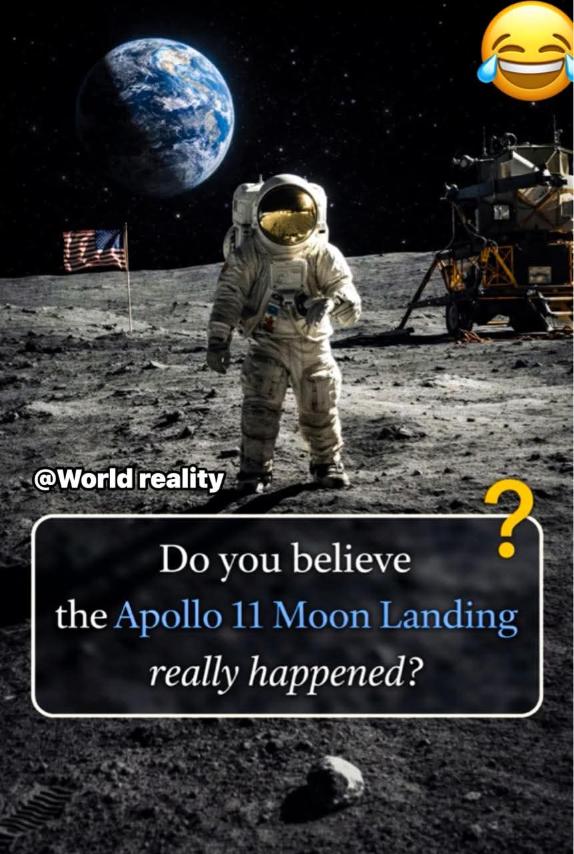
The image of an astronaut standing on the lunar surface, the American flag planted firmly in the grey dust, is iconic. It’s a symbol of human ingenuity and a moment of global unity. Yet, for over five decades, a persistent question has lingered in some corners: Did it actually happen? The Apollo 11 moon landing on July 20, 1969, remains one of the most significant and debated events in modern history. While a vast majority of scientists and historians agree that the missions were authentic, a substantial number of people continue to question the validity of NASA’s account. This article will explore the grounds for both the established consensus and the theories challenging it.
A Historic Achievement
The Apollo program was an enormous undertaking, a culmination of decades of research, engineering marvels, and immense political will. The space race between the United States and the Soviet Union provided the impetus and funding for NASA to push technological boundaries. Hundreds of thousands of engineers, scientists, and technicians worked tirelessly to make the improbable possible. The missions yielded a treasure trove of scientific data, including rock samples that continue to be analyzed to this day, providing invaluable insights into the moon’s composition and history. The Apollo program also laid the groundwork for future space exploration, demonstrating humanity’s capability to reach and explore another celestial body.
Doubts and Theories
Despite the evidence and consensus, the “moon landing conspiracy” persists, often fueled by a distrust of government and powerful institutions. Proponents of these theories point to perceived inconsistencies and anomalies in the photographs and footage.
The Missing Stars
One of the most frequently cited “proofs” is the absence of stars in the photographs taken on the lunar surface. If space is filled with stars, why are they not visible? Skeptics argue this points to a studio set where lighting rigs could not replicate the vastness of the cosmos. Scientists, however, offer a simple explanation based on camera exposure settings. To properly expose for the brightly lit astronauts and the lunar landscape under direct sunlight, the cameras needed a fast shutter speed and a small aperture. This setting was insufficient to capture the faint light of distant stars. Think about taking a photo of a person at night with a bright flash—the background stars likely won’t appear.
The Waving Flag
Another common point of contention is the American flag, which appears to “wave” in the wind. Since there is no atmosphere, and therefore no wind, on the moon, skeptics argue this is definitive proof of a fake. In reality, the flag was supported by a horizontal rod to keep it visible, as a simple vertical flagpole would leave the flag hanging limp. The perceived waving is actually the result of vibrations and ripples from the flag being deployed, which persisted due to the absence of air resistance. Astronauts Buzz Aldrin and Neil Armstrong described trying to unfurl the flag fully, causing the wrinkles and motion seen in the images.
Strange Shadows
Conspiracy theorists also focus on the shadows in the lunar photographs, claiming they are not parallel, indicating multiple light sources rather than a single sun. This, they argue, suggests lighting setups on a soundstage. Scientists explain this phenomenon through several factors: the uneven and undulating topography of the lunar surface, which distorts shadows; light reflected from the bright lunar regolith; and the wide-angle lenses used, which can distort perspective.
The Power of Verification
While skepticism can encourage deeper inquiry, it’s also important to consider the overwhelming body of evidence supporting the moon landings. This evidence extends far beyond official NASA press releases and grainy footage.
-
Third-Party Verification: Astronomers and tracking stations around the world, including in the Soviet Union—the United States’ primary space rival—monitored and verified the signals from the Apollo missions.
-
Physical Evidence: Hundreds of pounds of lunar rocks were brought back to Earth. These samples, distributed and studied by scientists globally for decades, possess a unique composition and evidence of exposure to cosmic radiation that would be impossibly difficult, if not impossible, to replicate artificially on Earth.
-
Modern Photography: In the decades since Apollo, subsequent lunar missions, including those from other countries like India (Chandrayaan) and Japan (Kaguya), have taken high-resolution photographs of the Apollo landing sites, clearly showing lander stages, moon buggies, and even astronaut footprints still undisturbed in the dusty lunar surface.
-
Scientific Instruments Left Behind: Retroreflectors placed on the moon by Apollo astronauts allow scientists on Earth to precisely measure the distance to the moon using lasers. This experiment has been ongoing for over 50 years, and it requires the existence of these specific reflectors on the lunar surface to function.
The moon landing conspiracy is a testament to the power of human doubt and the enduring appeal of alternative narratives. While it’s healthy to question established narratives, it’s equally crucial to evaluate the weight of evidence objectively. Ultimately, the story of Apollo remains a remarkable chapter in the ongoing saga of human exploration, pushing the boundaries of what we believe to be possible and reminding us of our shared capacity for extraordinary achievement.