Moon Landing Footage: Why Every Version Looks Different
admin
Author
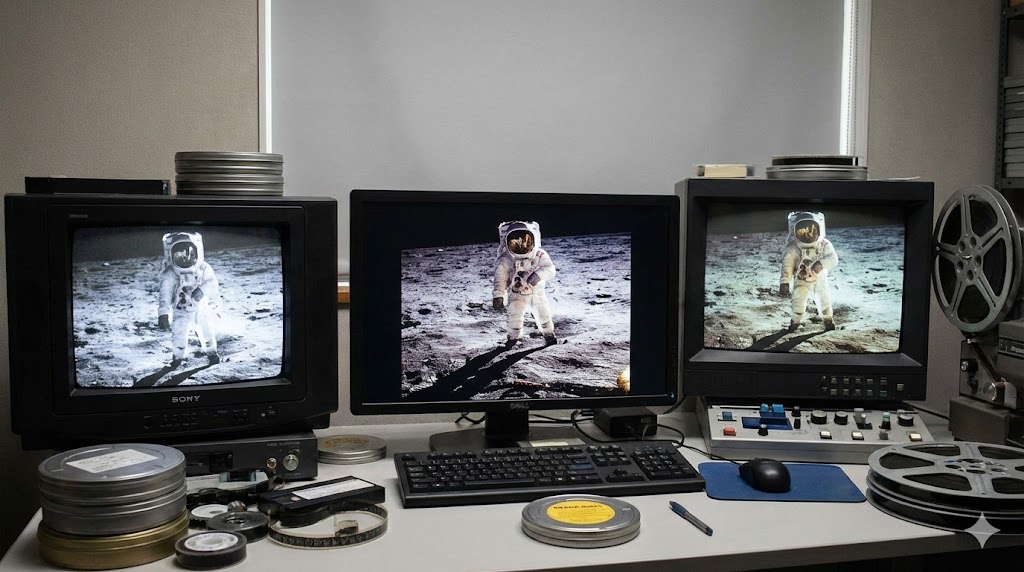
The moon landing footage has been a topic of fascination and debate for decades, with many people questioning the authenticity of the historic event. As we delve into the archives and examine the available evidence, it becomes clear that there are significant discrepancies in the different versions of the moon landing footage. In this article, we will explore the shocking truth behind these inconsistencies and shed light on the mysterious circumstances surrounding the moon landing. The moon landing footage has been widely regarded as one of the most significant achievements in human history, but a closer examination reveals a complex web of contradictions and unexplained phenomena.
The first moon landing took place on July 20, 1969, when NASA’s Apollo 11 mission successfully landed astronauts Neil Armstrong and Edwin “Buzz” Aldrin on the lunar surface. The event was broadcast live around the world, with millions of people watching in awe as the astronauts took their first steps on the moon. However, as the years went by, conspiracy theories began to emerge, questioning the authenticity of the moon landing footage. Many of these theories centered on the idea that the footage was fake, created in a Hollywood studio or other secret location. While these claims have been largely debunked, a closer examination of the moon landing footage reveals some intriguing inconsistencies.
Examining the Moon Landing Footage
One of the most significant discrepancies in the moon landing footage is the lack of stars in the background of the images and videos. The moon has no atmosphere, which means that the sky should be pitch black, with the stars visible in all their glory. However, in the footage and images taken by the astronauts, the sky is eerily blank, with no stars or other celestial objects visible. This has led some to speculate that the footage was taken in a studio, where the background could be easily manipulated. Another anomaly is the presence of a strange, unexplained object in the background of one of the images taken by the astronauts. The object, which appears to be a metallic cylinder, is not visible in any of the other images or footage, and its presence has never been fully explained.
The Apollo 11 Mission: A Detailed Analysis
The Apollo 11 mission was a groundbreaking achievement that marked the first time humans had visited another celestial body. The mission was crewed by astronauts Neil Armstrong, Edwin “Buzz” Aldrin, and Michael Collins, who remained in orbit around the moon while Armstrong and Aldrin descended to the surface. The lunar module, named Eagle, touched down on the moon’s surface in the Sea of Tranquility, a vast, barren plain that stretches across the moon’s surface. The astronauts spent a total of 21 hours and 36 minutes on the moon, during which time they collected samples, conducted experiments, and took a historic walk on the lunar surface.
The Moon Landing Footage: A Technical Analysis
A technical analysis of the moon landing footage reveals some fascinating insights into the equipment and techniques used to capture the images and videos. The astronauts used a combination of still cameras and video cameras to document their mission, including the iconic Hasselblad cameras that were used to take many of the most famous images of the moon landing. The video footage was captured using a Westinghouse camera, which was mounted on the lunar module and provided a live feed of the astronauts’ activities. However, a closer examination of the footage reveals some unusual artifacts, including strange, unexplained flashes and anomalies in the video signal.
The Role of NASA in the Moon Landing Footage
NASA played a crucial role in the moon landing footage, as the agency was responsible for capturing and broadcasting the images and videos of the historic event. The agency used a combination of ground-based telescopes and orbiting satellites to transmit the footage back to Earth, where it was received by a network of tracking stations and broadcast live around the world. However, some have questioned the agency’s role in the moon landing footage, suggesting that NASA may have manipulated or altered the images and videos to create a more dramatic or convincing narrative. While there is no evidence to support these claims, it is clear that NASA played a significant role in shaping the public’s perception of the moon landing.
The Legacy of the Moon Landing Footage
The moon landing footage has had a profound impact on popular culture, inspiring countless films, books, and other works of art. The footage has also been the subject of numerous documentaries and conspiracy theories, with many people continuing to question the authenticity of the moon landing. However, despite the controversy and debate, the moon landing footage remains an iconic and enduring symbol of human achievement and exploration. As we continue to push the boundaries of space travel and exploration, the moon landing footage serves as a powerful reminder of what can be achieved through determination, hard work, and a shared vision for the future.
The Future of Space Exploration: Lessons from the Moon Landing Footage
As we look to the future of space exploration, the moon landing footage provides a valuable lesson in the importance of perseverance and determination. The Apollo 11 mission was the culmination of years of hard work and dedication by thousands of people, from the astronauts and engineers to the technicians and support staff. The mission was not without its challenges and setbacks, but the team’s commitment to their goal ultimately paid off, with the successful landing of the Eagle lunar module on the moon’s surface. As we embark on new missions to the moon and beyond, we would do well to remember the lessons of the Apollo 11 mission and the moon landing footage, which continues to inspire and captivate audiences around the world.
Despite the overwhelming evidence supporting the authenticity of the moon landing footage, conspiracy theories continue to circulate, suggesting that the footage was fake or manipulated. However, a closer examination of these theories reveals a lack of credible evidence and a reliance on unproven assumptions and speculation. For example, the claim that the American flag appears to be waving in the wind, despite the fact that there is no atmosphere on the moon, is often cited as evidence of a fake moon landing. However, this can be easily explained by the fact that the flag was not waving in the wind, but was instead oscillating due to the motion of the astronauts as they planted it in the ground. Similarly, the lack of stars in the background of the images and videos can be explained by the fact that the cameras used by the astronauts were set to capture images of the bright lunar surface, rather than the faint light of the stars.
In conclusion, the moon landing footage is a complex and fascinating topic that continues to captivate audiences around the world. While conspiracy theories and inconsistencies in the footage have led some to question its authenticity, a closer examination of the evidence reveals a compelling narrative of human achievement and exploration. The moon landing footage is a powerful reminder of what can be achieved through determination, hard work, and a shared vision for the future, and its legacy continues to inspire new generations of scientists, engineers, and explorers. As we look to the future of space travel and exploration, the moon landing footage serves as a valuable lesson in the importance of perseverance and collaboration, and a reminder of the incredible accomplishments that can be achieved when we work together towards a common goal.
- The moon landing footage has been a topic of fascination and debate for decades, with many people questioning the authenticity of the historic event.
- The Apollo 11 mission was a groundbreaking achievement that marked the first time humans had visited another celestial body.
- The moon landing footage has had a profound impact on popular culture, inspiring countless films, books, and other works of art.
- Despite the controversy and debate, the moon landing footage remains an iconic and enduring symbol of human achievement and exploration.
- The legacy of the moon landing footage continues to inspire new generations of scientists, engineers, and explorers, and serves as a valuable lesson in the importance of perseverance and collaboration.
The moon landing footage is a complex and multifaceted topic that continues to fascinate and inspire audiences around the world. Through a detailed analysis of the historical context, technical aspects, and cultural impact of the footage, we can gain a deeper understanding of this historic event and its enduring legacy. As we look to the future of space travel and exploration, the moon landing footage serves as a powerful reminder of what can be achieved through determination, hard work, and a shared vision for the future.