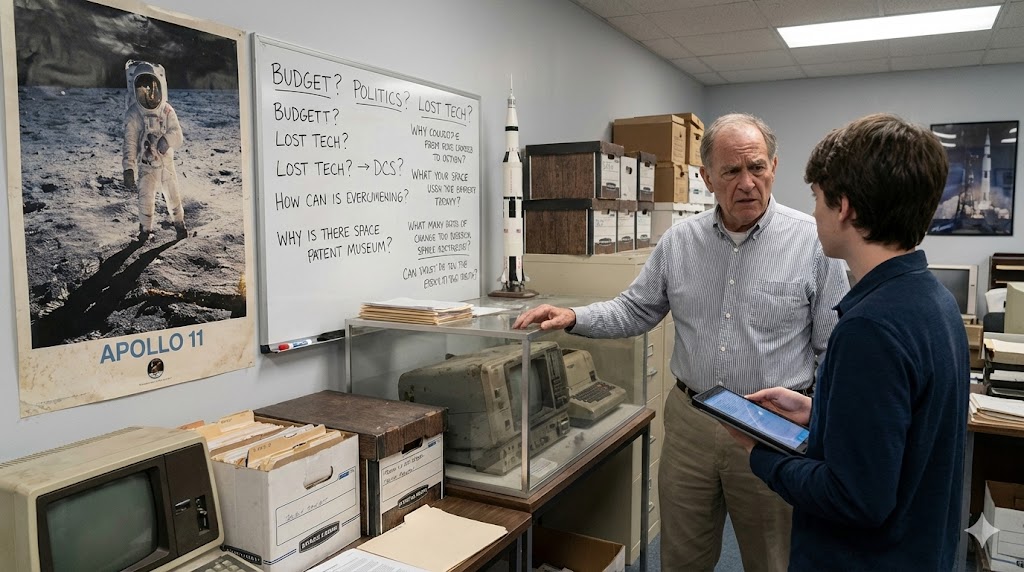
As the world continues to marvel at the incredible achievement of landing humans on the moon, a lingering question remains: why can’t we seem to accomplish a moon landing repeat? It’s been over five decades since NASA’s Apollo 11 mission made history by putting the first humans on the lunar surface, and yet, despite significant advancements in technology and space exploration, we have not been able to replicate this feat. The moon landing repeat has become an elusive goal, with various attempts and proposals being made over the years, but none have come to fruition. In this article, we will delve into the historical context and the complexities that have hindered our ability to return to the moon.
The Apollo Era and the Moon Landing Repeat
The Apollo program was a monumental achievement that marked the first time humans walked on the moon. The program was initiated by President John F. Kennedy in 1961, with the ambitious goal of landing a man on the moon before the end of the decade. After years of intense research, development, and testing, NASA finally achieved this goal on July 20, 1969, when Neil Armstrong and Buzz Aldrin set foot on the lunar surface. The success of the Apollo program was a testament to American ingenuity and determination, and it sparked a wave of interest in space exploration. However, as the years went by, the momentum gained from the Apollo program began to wane, and the moon landing repeat became an increasingly distant goal.
The Post-Apollo Era: A Shift in Priorities
In the aftermath of the Apollo program, NASA’s priorities shifted towards other areas of space exploration, such as the development of the Space Shuttle program and the International Space Station. While these programs were crucial for advancing our understanding of space and improving our capabilities, they did not focus on returning humans to the moon. The moon landing repeat was no longer a priority, and the necessary resources and funding were not allocated to make it a reality. As a result, the technology and expertise developed during the Apollo era began to fade, and the know-how required to send humans back to the moon was gradually lost.
Why the Moon Landing Repeat Has Been Elusive
So, what are the main reasons why we have not been able to accomplish a moon landing repeat? The answer lies in a combination of factors, including technological, financial, and logistical challenges. In the following sections, we will examine each of these factors in detail and explore the complexities that have hindered our ability to return to the moon.
Technological Challenges
One of the primary reasons why the moon landing repeat has been elusive is the significant technological challenges involved. The Apollo program was a monumental achievement that pushed the boundaries of what was thought possible at the time. However, the technology used during the Apollo era is now outdated, and developing new technologies that can match or surpass the capabilities of the Apollo program has proven to be a daunting task. For example, the development of a new heavy-lift rocket capable of carrying humans to the moon has been a major challenge. NASA’s Space Launch System (SLS) is currently under development, but its progress has been slow, and the rocket’s capabilities are still uncertain.
- Development of a new heavy-lift rocket
- Advancements in life support systems and radiation protection
- Improvements in navigation and communication systems
Financial Constraints
Another significant factor that has hindered the moon landing repeat is the financial constraints faced by space agencies. The Apollo program was a costly endeavor that required significant investment and resources. However, in the current fiscal environment, securing funding for a manned mission to the moon has been a challenge. NASA’s budget has been subject to fluctuations over the years, and the agency has had to prioritize its programs and allocate resources accordingly. The cost of developing new technologies and infrastructure required for a moon landing repeat is substantial, and it has been difficult to justify the expense in the face of competing priorities.
- Cost of developing new technologies and infrastructure
- Fluctuations in NASA’s budget
- Competing priorities for funding
Logistical Challenges
The moon landing repeat also poses significant logistical challenges. The Apollo program was a complex operation that required meticulous planning and execution. The mission involved a series of intricate steps, from launch to lunar landing, and each step required precise timing and coordination. Replicating this feat would require a similar level of planning and execution, which is a daunting task. Additionally, the lunar environment is harsh and unforgiving, and any mission to the moon would need to be designed with safety and reliability in mind.
- Complexity of the mission
- Harsh lunar environment
- Safety and reliability concerns
International Cooperation and Competition
The moon landing repeat is not just an American endeavor; it is a global effort that requires international cooperation and collaboration. However, the current space landscape is marked by increasing competition and nationalism, which has hindered cooperation and progress. The rise of new space-faring nations, such as China and India, has created a new dynamic, and the moon landing repeat has become a symbol of national pride and prestige. This has led to a renewed focus on lunar exploration, but it has also created new challenges and complexities.
- Increasing competition and nationalism
- Rise of new space-faring nations
- International cooperation and collaboration
Public Perception and Support
Finally, the moon landing repeat requires public perception and support. The Apollo program was a historic achievement that captivated the world’s imagination, and it enjoyed widespread public support. However, in recent years, public interest in space exploration has waned, and the moon landing repeat has not generated the same level of excitement and enthusiasm. This lack of public support has made it difficult to secure funding and resources for a manned mission to the moon, and it has hindered progress towards achieving this goal.
- Public interest and enthusiasm
- Securing funding and resources
- Importance of public perception and support
Why the Moon Landing Repeat Is Not a Priority
While the moon landing repeat is an exciting and ambitious goal, some argue that it is not a priority in the current space landscape. With the rise of new space-faring nations and the increasing complexity of space exploration, some argue that our focus should be on more pressing issues, such as asteroid detection and deflection, or the search for life beyond Earth. Additionally, the cost of a manned mission to the moon is substantial, and some argue that the resources could be better spent on other areas of space exploration, such as robotic missions or the development of new technologies.
The Moon Landing Repeat and the Future of Space Exploration
In conclusion, the moon landing repeat is a complex and challenging goal that requires significant technological, financial, and logistical advancements. While we have made significant progress in space exploration since the Apollo era, the moon landing repeat remains an elusive goal. However, it is an important milestone that can help us to push the boundaries of what is possible and to advance our understanding of space. As we look to the future of space exploration, it is essential that we continue to strive for this goal, and that we work together to overcome the challenges and complexities that have hindered our progress. The moon landing repeat is not just a nostalgic reminder of a bygone era; it is a beacon of hope and inspiration that can help us to achieve greatness and to explore the vast expanse of space.
The moon landing repeat is a challenge that requires international cooperation, technological innovation, and financial investment. It is a goal that can help us to advance our understanding of space and to push the boundaries of what is possible. As we look to the future, it is essential that we continue to strive for this goal, and that we work together to overcome the challenges and complexities that have hindered our progress. The moon landing repeat is a reminder of what can be achieved when we work together towards a common goal, and it is a beacon of hope and inspiration that can help us to achieve greatness in the years to come.