If the Ice Walls Melted: What Would Really Happen to the World We Know?
admin
Author
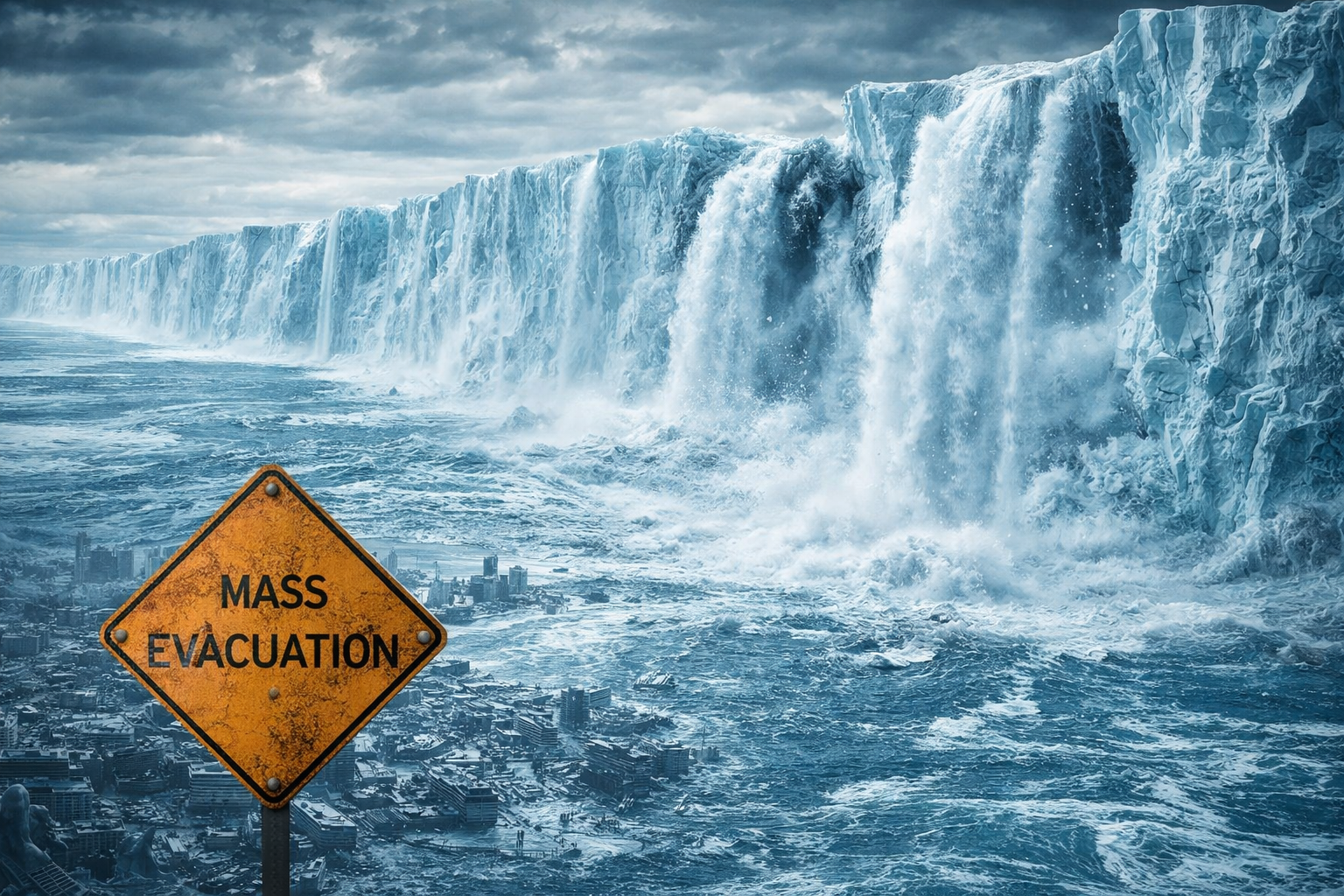
People often imagine ice melting like a slow bathtub overflow—annoying, manageable, something you can build a wall around.
But if Earth’s major ice reserves melted at scale, it wouldn’t be a neat, predictable rise in water.
It would be a chain reaction—ocean chemistry, weather systems, coastlines, food, economics, and politics all shifting at once.
And the scary part is this: the world doesn’t have to lose all its ice to feel “end of normal.”
1) Sea level doesn’t rise—civilization retreats
The most obvious result is sea-level rise. Not inches. Not “a bit more beach erosion.” Entire coastlines would move inland.
-
Low-lying cities flood permanently, not just during storms.
-
Ports, airports near the coast, industrial zones, and coastal highways get swallowed.
-
Saltwater creeps into groundwater and farmland, ruining drinking sources and crops.
Even a smaller melt scenario causes huge disruption because humans built the world’s busiest areas on coasts: trade, shipping, tourism, fisheries, finance, and dense housing.
This isn’t just “water comes in.” It’s the forced relocation of millions—and relocation isn’t a simple move. It’s jobs, property, infrastructure, identity, borders, and conflict.
2) The oceans get fresher—and that can break circulation
Here’s what many people miss: when massive ice melts, it adds freshwater into salty oceans.
That changes density, and density drives the planet’s big ocean “conveyor belts” (circulation systems that move heat around the world).
If those currents weaken or shift:
-
Some regions get colder even as the planet warms overall
-
Others get hotter, wetter, or dramatically drier
-
Storm tracks shift
-
Fisheries collapse because nutrient patterns change
This is one of those effects that looks invisible on a map—but it hits food supply and weather hard.
3) Weather becomes more extreme, less “seasonal”
Ice isn’t just frozen water. It’s part of the planet’s temperature control.
Ice reflects sunlight. Dark ocean absorbs it. So as ice disappears, the Earth absorbs more heat, which speeds up melting even more. That feedback loop can amplify extremes.
Possible outcomes:
-
Stronger heatwaves
-
Longer droughts in some areas, heavier rains in others
-
More intense cyclones because warmer oceans add energy
-
Unpredictable “broken seasons” that farmers can’t rely on
Civilization depends on predictability. Crops depend on it. Power grids depend on it. Water planning depends on it.
A world of chaotic seasons is a world where planning starts to fail.
4) Coastlines collapse and land erodes faster than people expect
When ice melt raises sea level, waves hit farther inland and at new angles. That means:
-
Cliffs crumble
-
Beaches vanish
-
Coastal roads become unsafe
-
Homes and buildings lose ground beneath them
-
Whole islands shrink or become uninhabitable
It’s not just flooding. It’s the physical destruction of land.
5) Food systems get hit from two directions
Food doesn’t fail only because of heat.
It fails because of:
-
unstable rainfall
-
soil salinization near coasts
-
crop timing changes
-
fisheries disruption
-
shipping and port failures from flooding
-
price shocks and shortages
And then comes the human response: panic buying, hoarding, trade restrictions, and political blame.
In a globalized world, food doesn’t just grow locally—it moves. If ports go down and storms increase, the entire supply chain stutters.
6) Mass migration becomes the biggest pressure on governments
When coastlines flood, people don’t disappear. They move.
-
Inland housing prices explode
-
Jobs concentrate in safer zones
-
Borders tighten
-
Refugee systems overload
-
Tensions rise between “receiving” areas and “displaced” communities
The biggest conflicts often aren’t about ideology—they’re about space, water, and stability.
7) Economies don’t crash once—they unravel in layers
At first it looks like “insurance issues.”
Then it becomes:
-
Insurance companies refuse to cover high-risk areas
-
Mortgages collapse in flooded zones
-
Property values crash
-
Governments spend massively on emergency response and relocation
-
Markets react, inflation rises, and debt expands
Even wealthy nations struggle when disasters become constant instead of rare.
8) The psychological toll becomes its own crisis
One of the least discussed impacts is what happens to people mentally when “normal” vanishes.
-
constant evacuation cycles
-
fear of storms
-
losing a hometown forever
-
living in temporary housing
-
watching maps change while leaders argue
This creates a slow-burning stress that spreads through families, schools, policing, health systems, and communities.
So what would “really happen”?
If the world’s major ice melted dramatically, the story wouldn’t be “more water.”
It would be:
retreat + chaos + adaptation + conflict + rebuilding—all at once.
And it wouldn’t hit everyone equally. People with money move first. People without money get trapped longer. And every year the cost of delaying grows.
The uncomfortable truth
The question isn’t just “what if the ice melts.”
It’s: how much instability can modern civilization absorb before it starts failing in places we assumed were permanent?
Because the planet can survive massive change.
The real question is whether our systems—food, trade, cities, governance—can survive it without breaking.