From Zion City to the Internet: A Short History of Flat Earth Leaders
admin
Author
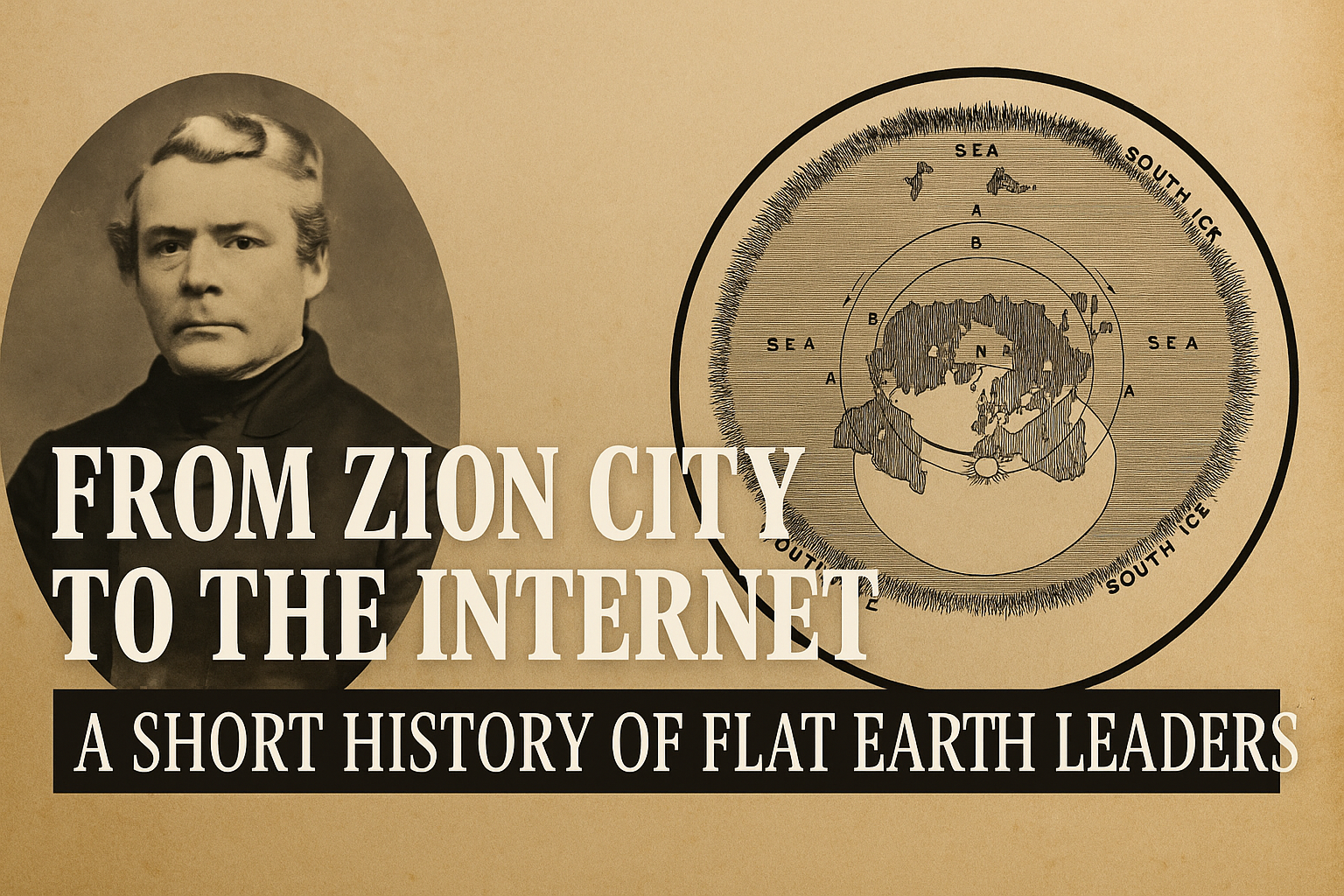
From Zion City to the Internet: A Short History of Flat Earth Leaders
The notion that the Earth is flat may seem like a relic of ancient times, yet the Flat Earth movement has persisted and even thrived in modern society. From fringe religious communities to viral internet personalities, flat earth leaders have played a crucial role in shaping and spreading this controversial worldview. In this article, we’ll explore the historical roots of Flat Earth leaders, spanning from early 20th-century communities like Zion City to the digital influencers who dominate today’s online platforms. Understanding the evolution of these leaders offers insight into how and why the Flat Earth theory continues to captivate audiences worldwide.
Early Roots: Zion City and Wilbur Glenn Voliva
The early 20th century marked one of the most prominent periods for organized Flat Earth leadership, largely due to Wilbur Glenn Voliva. Voliva was the leader of the Christian Catholic Apostolic Church in Zion City, Illinois, a utopian community founded by John Alexander Dowie. Zion City became a hotspot for some of the most fervent Flat Earth beliefs of its time.
Voliva, who assumed control of the community in the early 1900s, was an ardent Flat Earth advocate. He used Zion City as a platform to promote his views, mandating the teaching of Flat Earth theories in local schools and preaching them in church services. Voliva claimed to have scientific proof that the Earth was flat and that the globe model was a conspiracy propagated by governments and scientists.
His leadership combined religious fervor with pseudo-scientific claims, intertwining faith and Flat Earth ideology. Although Voliva’s influence waned after his death in 1942, Zion City remains a symbolic starting point for modern Flat Earth leadership.
Mid-20th Century: The Decline and Resurgence
Following Voliva’s era, Flat Earth belief largely receded into obscurity during the mid-20th century, overshadowed by rapid scientific advancements and the space race. Without prominent leaders to champion the cause, the movement fragmented and became a marginal curiosity.
However, the Flat Earth theory never completely disappeared. Various small groups and independent thinkers kept the idea alive, often blending it with conspiracy theories about NASA, government cover-ups, and secret societies. This period laid the groundwork for the eventual resurgence of Flat Earth ideology, fueled by the rise of mass media and later, the internet.
The Internet Age: A New Era for Flat Earth Leaders
The advent of the internet in the late 20th and early 21st centuries revolutionized how ideas spread—and Flat Earth theory was no exception. The internet provided a global platform for Flat Earth advocates to connect, share “evidence,” and recruit followers beyond localized communities.
Prominent Online Figures
One of the most influential modern Flat Earth leaders is Eric Dubay, who gained prominence through his website and YouTube channel. Dubay’s content combines selective interpretations of ancient texts, misunderstood science, and conspiratorial narratives to argue against the spherical Earth model. His engaging video presentations and articles have attracted thousands of followers worldwide.
Another noteworthy figure is Mark Sargent, known for his “Flat Earth Clues” video series. Sargent’s approachable style and production quality helped introduce Flat Earth ideas to a broader audience, making him one of the most recognizable voices in the movement.
These leaders harness social media algorithms to amplify their reach, creating echo chambers where Flat Earth beliefs flourish. They often position themselves as truth-seekers fighting against mainstream science, tapping into public distrust of authorities and experts.
Community Building and Conferences
Beyond online content, modern Flat Earth leaders have organized conferences, meetups, and conventions. Events like the Flat Earth International Conference bring together followers, speakers, and enthusiasts, strengthening the movement’s sense of community and legitimacy.
These gatherings help cement the leadership roles of prominent figures and create networking opportunities for activists and theorists. They also generate media attention, which can both challenge and promote the movement, depending on coverage.
The Psychological Appeal of Flat Earth Leaders
Understanding why Flat Earth leaders gain traction requires examining the psychological and social dynamics at play. Leaders often present themselves as holders of hidden truth, attracting individuals who feel alienated or skeptical of mainstream narratives.
Flat Earth ideology offers a simple, alternative explanation to complex scientific realities, which can be comforting or empowering. Leaders leverage this appeal by framing their message as a revelation or awakening, fostering loyalty and community among followers.
Moreover, the charismatic authority of leaders like Voliva in the past, and Dubay or Sargent in the present, plays a significant role. Their ability to communicate confidently and persuasively influences individuals to question established knowledge and embrace Flat Earth beliefs.
The Role of Media and Technology in Shaping Leadership
The trajectory from Zion City’s printing presses to YouTube livestreams illustrates how media evolution has shaped Flat Earth leadership. Early leaders relied on physical publications, lectures, and local institutions to spread their ideas, limiting reach but cultivating tight-knit communities.
In contrast, digital platforms democratize content creation, allowing leaders to bypass traditional gatekeepers like publishers or broadcasters. Algorithms on platforms like YouTube and Facebook further amplify engaging Flat Earth content, sometimes inadvertently promoting misinformation.
These technological changes have lowered barriers for leadership emergence, enabling a proliferation of new voices and styles within the Flat Earth movement. However, this also introduces challenges in verifying credentials, combating pseudoscience, and addressing misinformation.
Conclusion: The Enduring Legacy of Flat Earth Leaders
From the utopian ambitions of Wilbur Glenn Voliva in Zion City to the viral videos of today’s internet personalities, Flat Earth leaders have continuously shaped the movement’s evolution and visibility. Their methods have adapted alongside technological advancements, reflecting broader societal changes in communication and information consumption.
While the Flat Earth theory remains scientifically debunked, the leaders who promote it highlight important questions about trust, authority, and the search for meaning in the modern world. Understanding the history and strategies of these figures offers valuable insights into how fringe ideas persist and proliferate.
Whether as a case study in belief systems or a cautionary tale of misinformation, the story of Flat Earth leaders underscores the complex interplay between leadership, media, and human psychology in shaping alternative truths.
—
Keywords: Flat Earth leaders, Zion City, Wilbur Glenn Voliva, Flat Earth movement, Eric Dubay, Mark Sargent, Flat Earth history, Flat Earth conspiracy, internet Flat Earth, Flat Earth conference, pseudoscience, misinformation