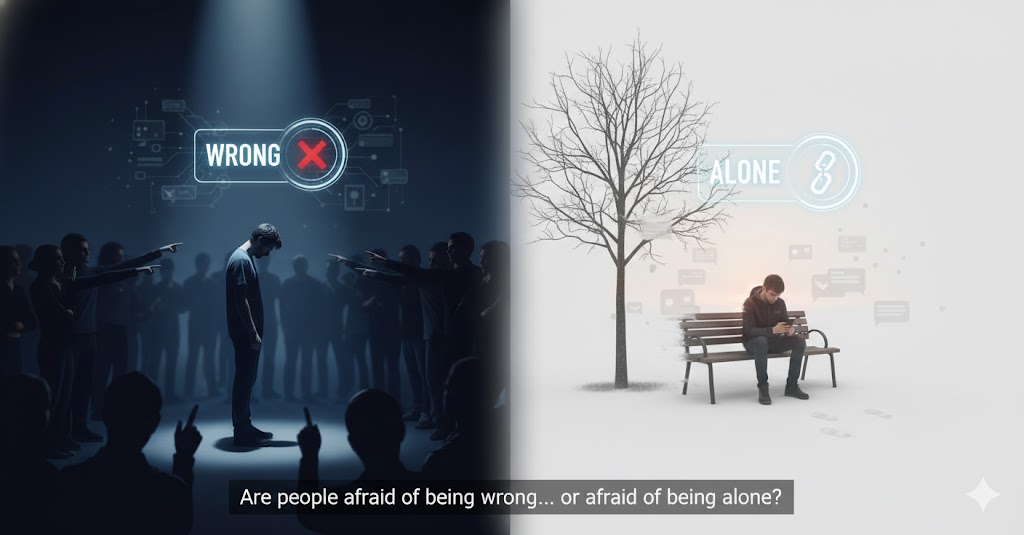
The fear of being wrong is a universal human emotion that has been a driving force behind many of our actions and decisions. It’s a feeling that can be both debilitating and motivating, often lurking in the shadows of our minds and influencing our behavior in profound ways. But have you ever stopped to consider that your fear of being wrong might be masking a deeper, more primal fear – the fear of being alone? This question has puzzled philosophers, psychologists, and scientists for centuries, and it’s a conundrum that we’ll delve into in this article. From the historical context of social isolation to the modern-day implications of being wrong, we’ll explore the complex relationship between these two fears and how they impact our lives.
Historical Context: The Fear of Being Wrong and Social Isolation
Throughout history, humans have been driven by a fundamental need for social connection and community. This need is so ingrained that it’s often referred to as a basic human instinct, rivaling the need for food, water, and shelter. In ancient times, being part of a tribe or community was essential for survival, providing protection, support, and a sense of belonging. However, this need for social connection also created a corresponding fear – the fear of being ostracized or rejected by the group. This fear of social isolation has been a powerful motivator, driving humans to conform to societal norms and avoid behaviors that might lead to rejection or exclusion.
In many ancient cultures, being wrong or holding unconventional beliefs was seen as a threat to the social order, and those who challenged the status quo were often shunned or punished. This created a culture of fear, where individuals were reluctant to express dissenting opinions or challenge established norms. The fear of being wrong was deeply intertwined with the fear of being alone, as being rejected by the group meant facing the harsh realities of social isolation.
The Fear of Being Wrong: A Barrier to Personal Growth
One of the most significant consequences of the fear of being wrong is its impact on personal growth and development. When we’re afraid of being wrong, we’re less likely to take risks, challenge our assumptions, and explore new ideas. This fear can create a sense of stagnation, where we become mired in our existing beliefs and perspectives, unable to adapt or evolve. By avoiding the possibility of being wrong, we also avoid the opportunity to learn and grow, which can lead to a sense of intellectual and emotional stagnation.
This fear can also manifest in our relationships, where we may avoid expressing our true thoughts and feelings for fear of being rejected or criticized. This can lead to a sense of disconnection and isolation, even in the midst of social connections. By prioritizing the need to be right over the need for genuine connection, we may inadvertently create a sense of loneliness and disconnection, even in our most intimate relationships.
The Psychology of Being Wrong
So, what drives our fear of being wrong? According to psychologists, this fear is often rooted in a deep-seated need for control and certainty. When we’re faced with uncertainty or ambiguity, our brains can become uncomfortable, and we may experience a sense of anxiety or unease. This discomfort can lead us to cling to our existing beliefs and perspectives, even if they’re no longer serving us. By avoiding the possibility of being wrong, we can maintain a sense of control and certainty, even if it means sacrificing our personal growth and development.
However, this fear can also be driven by a deeper fear of being alone. When we’re wrong, we may feel like we’re standing alone, separated from the group or community. This sense of isolation can be terrifying, and it may drive us to conform to societal norms or avoid challenging the status quo. By exploring the complex relationship between the fear of being wrong and the fear of being alone, we can gain a deeper understanding of what drives our behavior and how we can overcome these fears to live more authentic, connected lives.
The Fear of Being Wrong and the Quest for Knowledge
The fear of being wrong can also have a profound impact on our quest for knowledge and understanding. When we’re afraid of being wrong, we may be less likely to ask questions, challenge assumptions, or explore new ideas. This fear can create a sense of intellectual stagnation, where we become mired in our existing knowledge and perspectives, unable to adapt or evolve. By avoiding the possibility of being wrong, we also avoid the opportunity to learn and discover, which can lead to a sense of intellectual curiosity and wonder.
However, the fear of being wrong can also be a powerful motivator, driving us to seek out knowledge and understanding. When we’re willing to take risks and challenge our assumptions, we can gain a deeper understanding of the world and our place in it. By embracing the possibility of being wrong, we can cultivate a sense of intellectual humility and curiosity, which can lead to a lifelong love of learning and discovery.
The Fear of Being Wrong: A Threat to Creative Expression
The fear of being wrong can also have a profound impact on our creative expression and artistic endeavors. When we’re afraid of being wrong, we may be less likely to take risks, experiment with new ideas, or push the boundaries of what’s possible. This fear can create a sense of creative stagnation, where we become mired in our existing styles and perspectives, unable to innovate or evolve. By avoiding the possibility of being wrong, we also avoid the opportunity to create something truly original and innovative, which can lead to a sense of creative fulfillment and satisfaction.
However, the fear of being wrong can also be a powerful catalyst for creative expression. When we’re willing to take risks and challenge our assumptions, we can tap into a deep well of creativity and inspiration. By embracing the possibility of being wrong, we can cultivate a sense of creative courage and experimentation, which can lead to a lifelong passion for artistic expression and innovation.
Overcoming the Fear of Being Wrong
So, how can we overcome the fear of being wrong and cultivate a sense of courage, creativity, and connection? According to experts, the key is to develop a growth mindset, where we view challenges and setbacks as opportunities for growth and learning. By embracing the possibility of being wrong, we can cultivate a sense of intellectual humility and curiosity, which can lead to a lifelong love of learning and discovery.
We can also cultivate a sense of creative courage by taking risks and experimenting with new ideas. By embracing the possibility of being wrong, we can tap into a deep well of creativity and inspiration, which can lead to a sense of creative fulfillment and satisfaction. Ultimately, overcoming the fear of being wrong requires a willingness to be vulnerable, to take risks, and to challenge our assumptions. By doing so, we can cultivate a sense of connection, creativity, and courage, which can lead to a more authentic, fulfilling life.
Counter-Arguments: The Importance of Being Right
Some might argue that the fear of being wrong is a necessary and important motivator, driving us to strive for excellence and accuracy. In many areas of life, such as science, medicine, and engineering, being right is crucial, and the consequences of being wrong can be severe. In these contexts, the fear of being wrong can be a powerful motivator, driving us to be meticulous, thorough, and precise.
However, this argument assumes that the fear of being wrong is the only motivator, and that it’s the primary driver of human behavior. While it’s true that being right is important in many areas of life, it’s also important to recognize the limitations and drawbacks of this approach. By prioritizing the need to be right above all else, we may inadvertently create a culture of fear, where individuals are reluctant to take risks, challenge assumptions, or explore new ideas.
Conclusion: The Shocking Truth About the Fear of Being Wrong
In conclusion, the fear of being wrong is a complex and multifaceted emotion that has a profound impact on our lives. While it can be a powerful motivator, driving us to strive for excellence and accuracy, it can also be a debilitating fear, holding us back from taking risks, challenging assumptions, and exploring new ideas. By exploring the complex relationship between the fear of being wrong and the fear of being alone, we can gain a deeper understanding of what drives our behavior and how we can overcome these fears to live more authentic, connected lives.
Ultimately, the shocking truth about the fear of being wrong is that it’s often a mask for a deeper, more primal fear – the fear of being alone. By recognizing and addressing this fear, we can cultivate a sense of courage, creativity, and connection, which can lead to a more fulfilling, meaningful life. So, the next time you find yourself afraid of being wrong, ask yourself – are you afraid of being wrong, or are you afraid of being alone? The answer may surprise you, and it may just change your life forever.
- The fear of being wrong is a universal human emotion that drives our behavior and decision-making.
- This fear can be both debilitating and motivating, influencing our relationships, personal growth, and creative expression.
- The fear of being wrong is often intertwined with the fear of being alone, driving us to conform to societal norms and avoid behaviors that might lead to rejection or exclusion.
- By embracing the possibility of being wrong, we can cultivate a sense of intellectual humility, creative courage, and connection, which can lead to a more authentic, fulfilling life.
- Overcoming the fear of being wrong requires a willingness to be vulnerable, take risks, and challenge our assumptions, which can lead to a lifelong love of learning, discovery, and creative expression.
By recognizing the complex relationship between the fear of being wrong and the fear of being alone, we can gain a deeper understanding of what drives our behavior and how we can overcome these fears to live more authentic, connected lives. So, the next time you find yourself afraid of being wrong, remember – it’s not just about being right or wrong, it’s about being brave enough to be yourself, even if that means being alone.