🌙 The Moon Landing: Triumph of Science or the Greatest Illusion?
admin
Author
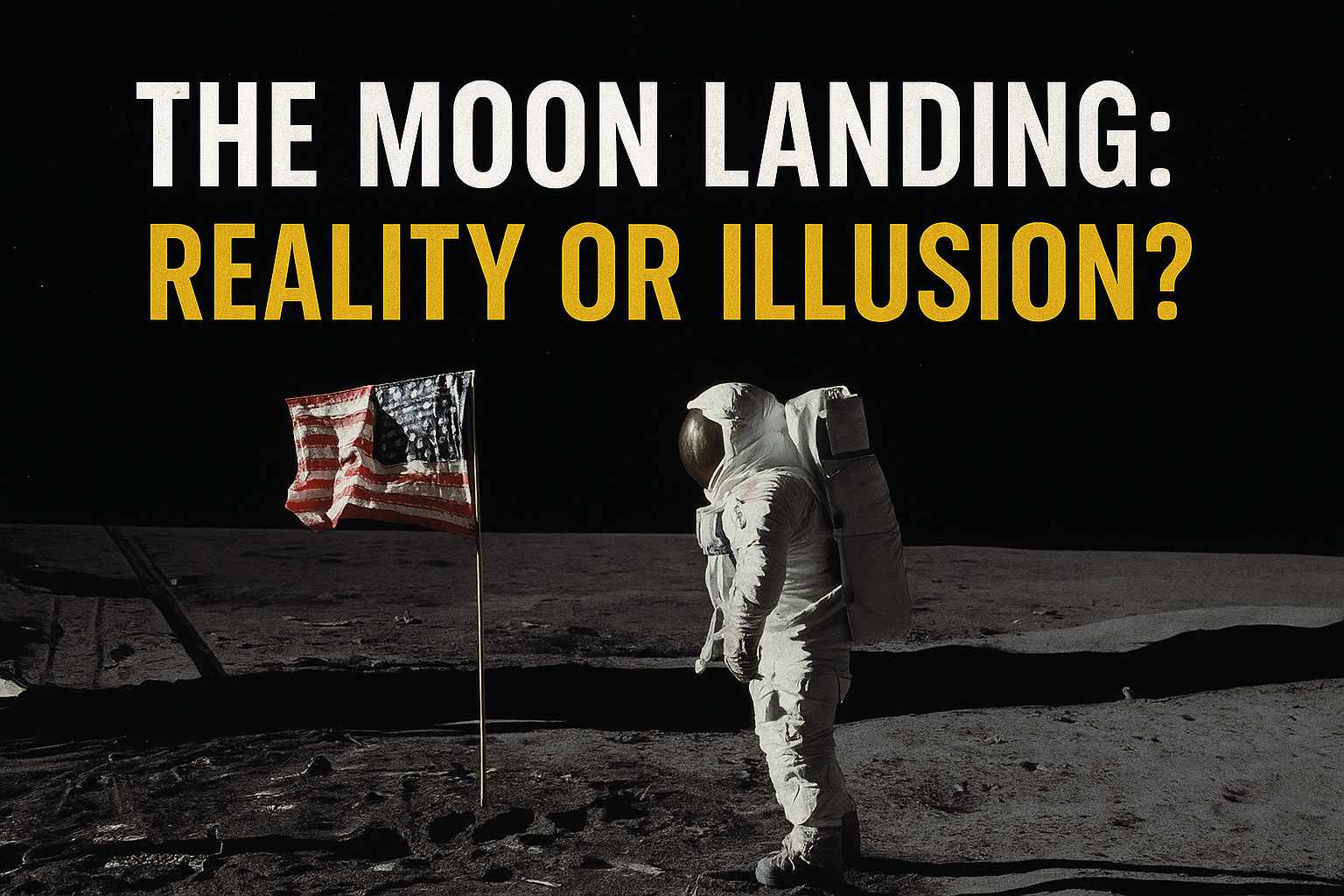
Introduction: The Giant Leap
On July 20, 1969, the world watched as Neil Armstrong set foot on the moon, declaring, “That’s one small step for man, one giant leap for mankind.” It was broadcast as proof of American triumph in the Cold War, an achievement unmatched in human history.
But more than half a century later, doubts remain. Was the moon landing truly a technological miracle — or a carefully staged performance at the height of geopolitical rivalry?
1. The Cold War Race for Space
The U.S. and Soviet Union were locked in the Cold War, racing for global dominance. After the Soviets launched Sputnik and sent Yuri Gagarin to space, America needed a victory. Landing on the moon was not just science — it was politics, prestige, and propaganda.
Could the U.S. afford to fail after promising the world they would reach the moon before 1970?
2. The Suspicious Evidence
Skeptics often point to oddities in the Apollo footage and photos:
-
Flags appearing to “wave” in a vacuum.
-
Shadows and lighting that suggest studio setups.
-
Lack of stars in photographs.
-
Identical backdrops appearing in different photos.
While NASA explains these with science, the questions persist. Why does so much of the evidence look more like a movie set than another planet?
3. The Missing Tapes and Lost Technology
NASA admitted that the original moon landing tapes were erased and reused. Billions watched history live, yet the highest-quality evidence no longer exists.
Even stranger, NASA officials have stated the technology used to go to the moon was destroyed and cannot be rebuilt without starting from scratch. If humanity really achieved this feat in 1969, why can’t we replicate it today with far superior technology?
4. Silence in the Stars
If humans truly landed on the moon, why have we never returned in over 50 years? NASA cites cost and safety — yet in the same period, trillions have been spent on wars, weapons, and projects of far less importance to humanity.
Why does the most celebrated milestone in history remain a one-time event?
5. A Leap of Faith
Whether real or staged, the moon landing achieved its goal: it convinced the world of American dominance in science and technology. For many, that belief is enough. But critical thinkers ask: was it the truth — or the perfect illusion for its time?
Conclusion: The Question That Remains
The moon landing sits between history and mystery. Some see it as humanity’s proudest moment; others see it as the greatest deception ever staged. The evidence raises questions that cannot be ignored.
Perhaps the most important step is not whether man walked on the moon — but whether we are willing to question the stories we are told.