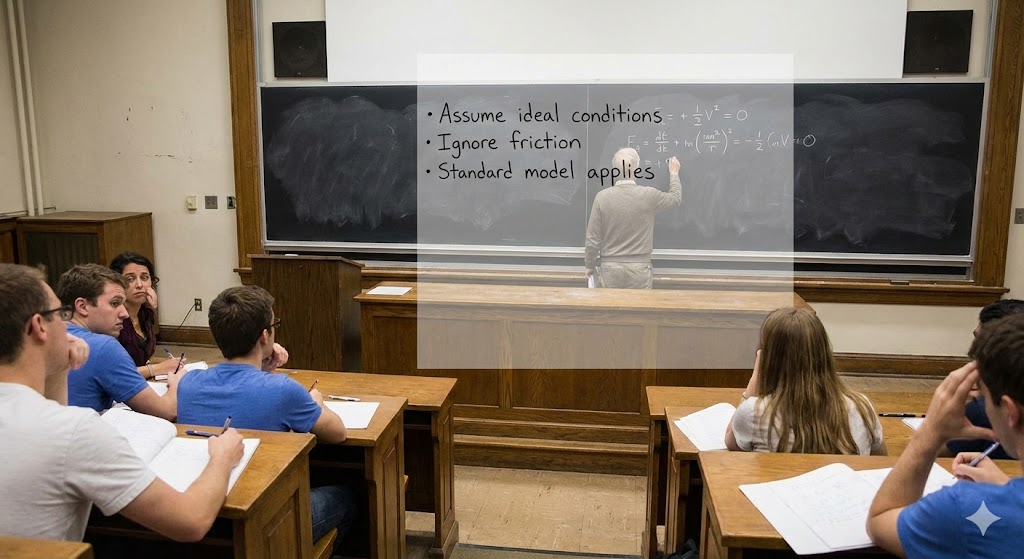
The world of science is often perceived as a realm of absolute truth and concrete facts, but the reality is that assumptions in scientific education play a significant role in shaping our understanding of the universe. From the laws of physics to the principles of biology, assumptions are an integral part of the scientific process, influencing the way we perceive, interpret, and apply scientific knowledge. As we delve into the fascinating world of science, it becomes increasingly evident that assumptions in scientific education are not only inevitable but also essential for the advancement of human knowledge. In this article, we will embark on a journey to explore the complex and often misunderstood realm of assumptions in scientific education, shedding light on their significance, implications, and the controversies surrounding them.
The history of science is replete with examples of assumptions that have shaped our understanding of the world. From the geocentric model of the universe to the concept of phlogiston, assumptions have been an integral part of the scientific process, often leading to groundbreaking discoveries and, at times, to profound misconceptions. The ancient Greeks, for instance, assumed that the Earth was at the center of the universe, a notion that was later challenged by Copernicus and Galileo. Similarly, the concept of phlogiston, which was once widely accepted as a fundamental element, was later discredited by Antoine Lavoisier, who discovered the true nature of combustion. These historical examples illustrate the dynamic and evolving nature of assumptions in scientific education, highlighting the need for constant scrutiny and revision.
Understanding Assumptions in Scientific Education: The Foundation of Scientific Inquiry
Assumptions in scientific education are the foundation upon which scientific inquiry is built. They provide a framework for understanding complex phenomena, guiding the development of hypotheses, and informing the design of experiments. In essence, assumptions are the starting points for scientific investigation, allowing researchers to navigate the vast and intricate landscape of human knowledge. However, assumptions can also be limiting, constraining our understanding and leading to misconceptions. It is essential, therefore, to recognize the role of assumptions in scientific education and to approach them with a critical and nuanced perspective.
The Types of Assumptions in Scientific Education
Assumptions in scientific education can be broadly categorized into two types: implicit and explicit. Implicit assumptions are those that are not explicitly stated but are nonetheless implicit in the scientific narrative. For example, the assumption that the laws of physics are universal and unchanging is implicit in many scientific theories. Explicit assumptions, on the other hand, are those that are clearly stated and acknowledged. For instance, the assumption that a particular experiment is representative of a larger population is an explicit assumption that is often stated in the methodology section of a research paper.
The Role of Assumptions in Scientific Theories
Assumptions play a crucial role in the development and validation of scientific theories. Theories, by definition, are explanatory frameworks that attempt to describe and predict natural phenomena. Assumptions are an integral part of this process, providing the underlying structure and logic that govern the theory. For example, the theory of evolution is based on the assumption that species evolve over time through the process of natural selection. This assumption is supported by a vast array of empirical evidence, including fossil records, comparative anatomy, and molecular biology. However, the assumption itself is not testable, and its validity is inferred from the predictive power of the theory.
Assumptions in scientific education have a profound impact on scientific progress, influencing the direction and scope of research. By shaping our understanding of the world, assumptions guide the development of new hypotheses and inform the design of experiments. However, assumptions can also hinder scientific progress, leading to dogmatic thinking and limiting our ability to consider alternative perspectives. The history of science is replete with examples of assumptions that have stifled innovation and hindered the advancement of human knowledge. The concept of luminiferous aether, for instance, was once widely accepted as a fundamental aspect of the universe, but it was later discredited by the theory of special relativity.
The Dangers of Unquestioned Assumptions in Scientific Education
Unquestioned assumptions in scientific education can have far-reaching consequences, leading to a lack of critical thinking and a narrow, dogmatic approach to scientific inquiry. When assumptions are not challenged or questioned, they can become entrenched, limiting our ability to consider alternative perspectives and hindering the advancement of human knowledge. The dangers of unquestioned assumptions are particularly evident in the context of scientific controversies, where assumptions can be used to justify a particular ideology or agenda. For example, the assumption that human activity is the primary cause of climate change is a highly debated topic, with some arguing that it is an unsubstantiated claim with no scientific basis.
Assumptions in scientific education are often the subject of controversy and debate, with some arguing that they are essential for scientific progress and others claiming that they are a hindrance to innovation. The controversy surrounding assumptions in scientific education is complex and multifaceted, involving philosophical, methodological, and ideological considerations. Some argue that assumptions are necessary for the development of scientific theories, providing a framework for understanding complex phenomena. Others claim that assumptions are a limitation, constraining our ability to consider alternative perspectives and hindering the advancement of human knowledge.
The Challenge of Identifying and Challenging Assumptions in Scientific Education
Identifying and challenging assumptions in scientific education is a significant challenge, requiring a critical and nuanced approach to scientific inquiry. It involves recognizing the implicit and explicit assumptions that underlie scientific theories and methodologies, as well as the cultural and ideological contexts in which they are situated. This requires a deep understanding of the history and philosophy of science, as well as the ability to think critically and creatively. Moreover, challenging assumptions in scientific education often requires a willingness to question established authority and to confront the possibility that our understanding of the world may be incomplete or inaccurate.
Critical thinking is essential for navigating the complex and often controversial realm of assumptions in scientific education. It involves the ability to analyze and evaluate information, to identify and challenge assumptions, and to consider alternative perspectives. Critical thinking is not only a valuable skill for scientists and researchers but also an essential tool for anyone seeking to engage with scientific knowledge. By promoting critical thinking and encouraging a nuanced understanding of assumptions in scientific education, we can foster a more informed and engaged public, better equipped to navigate the complexities of the scientific landscape.
The Role of Education in Promoting Critical Thinking and Challenging Assumptions in Scientific Education
Education plays a critical role in promoting critical thinking and challenging assumptions in scientific education. By incorporating critical thinking and media literacy into science education, we can empower students to think more critically and creatively, to question established authority, and to challenge assumptions. This involves not only teaching the scientific method and the principles of critical thinking but also encouraging students to engage with the history and philosophy of science, to consider alternative perspectives, and to reflect on the cultural and ideological contexts in which scientific knowledge is produced.
While challenging assumptions in scientific education is essential for promoting critical thinking and fostering a more nuanced understanding of scientific knowledge, there are also arguments against this approach. Some argue that challenging assumptions can lead to a lack of clarity and direction, hindering the advancement of human knowledge. Others claim that questioning established authority and challenging assumptions can be divisive and counterproductive, leading to a breakdown in scientific consensus and a lack of public trust in science. These counter-arguments highlight the complexity and nuance of the issue, emphasizing the need for a balanced and informed approach to challenging assumptions in scientific education.
Addressing the Counter-Arguments: The Importance of Nuance and Balance
Addressing the counter-arguments against challenging assumptions in scientific education requires a nuanced and balanced approach. It involves recognizing the importance of challenging assumptions while also acknowledging the potential risks and limitations of this approach. By promoting critical thinking and encouraging a nuanced understanding of assumptions in scientific education, we can foster a more informed and engaged public, better equipped to navigate the complexities of the scientific landscape. Moreover, by acknowledging the potential risks and limitations of challenging assumptions, we can work to mitigate these risks and promote a more constructive and respectful dialogue about the role of assumptions in scientific education.
In conclusion, assumptions in scientific education play a significant role in shaping our understanding of the world. By recognizing the importance of assumptions and promoting critical thinking, we can foster a more nuanced and informed approach to scientific inquiry. However, challenging assumptions in scientific education is a complex and often controversial issue, requiring a balanced and informed approach. As we move forward in an increasingly complex and rapidly changing world, it is essential that we prioritize critical thinking and encourage a nuanced understanding of assumptions in scientific education. By doing so, we can promote a more informed and engaged public, better equipped to navigate the complexities of the scientific landscape and to address the challenges of the 21st century.
Ultimately, the future of assumptions in scientific education depends on our ability to navigate the complex and often controversial realm of scientific knowledge. By promoting critical thinking, encouraging a nuanced understanding of assumptions, and fostering a more informed and engaged public, we can work towards a more balanced and informed approach to scientific education. As we embark on this journey, it is essential that we recognize the significance of assumptions in scientific education and approach them with a critical and nuanced perspective, acknowledging both their importance and their limitations. By doing so, we can ensure that the next generation of scientists, researchers, and thinkers is equipped to navigate the complexities of the scientific landscape and to address the challenges of the 21st century.
- Assumptions in scientific education are essential for the advancement of human knowledge, providing a framework for understanding complex phenomena and guiding the development of hypotheses.
- However, assumptions can also be limiting, constraining our understanding and leading to misconceptions, highlighting the need for constant scrutiny and revision.
- Critical thinking is essential for navigating the complex and often controversial realm of assumptions in scientific education, involving the ability to analyze and evaluate information, to identify and challenge assumptions, and to consider alternative perspectives.
- Education plays a critical role in promoting critical thinking and challenging assumptions in scientific education, empowering students to think more critically and creatively, to question established authority, and to challenge assumptions.
- Addressing the counter-arguments against challenging assumptions in scientific education requires a nuanced and balanced approach, recognizing the importance of challenging assumptions while also acknowledging the potential risks and limitations of this approach.