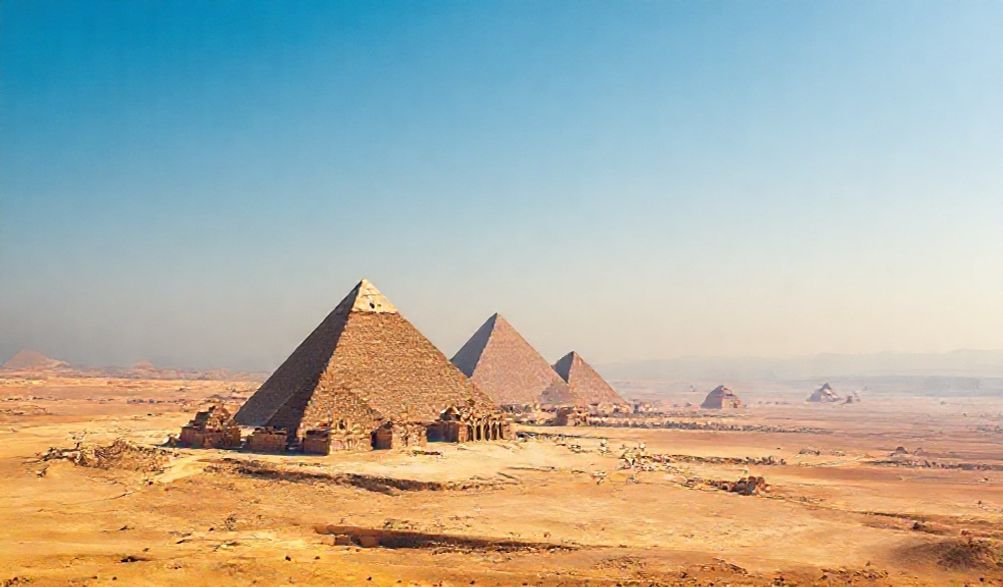
The number of pyramids that exist around the world is a staggering fact that often leaves people astonished. For decades, the general public has been led to believe that pyramids are a rarity, with only a handful of them scattered across the globe. However, the reality is far from it. Pyramids can be found on every continent, with some estimates suggesting that there are thousands of these ancient structures hiding in plain sight. In this article, we will delve into the world of pyramids, exploring their history, significance, and the surprising number of pyramids that can be found in various parts of the world.
Historical Context: Uncovering the Number of Pyramids
The history of pyramids dates back to ancient civilizations, with the earliest known pyramids being built in Mesopotamia around 4000 BC. These early pyramids were often simple structures, used for ceremonial and religious purposes. As time went on, the construction of pyramids became more sophisticated, with the ancient Egyptians building some of the most impressive pyramids the world has ever seen. The Great Pyramid of Giza, built for Pharaoh Khufu, is one of the most famous pyramids in the world and is considered one of the Seven Wonders of the Ancient World. However, the number of pyramids built by the ancient Egyptians is still a topic of debate among historians and archaeologists, with some estimates suggesting that there may be hundreds of pyramids scattered across the country.
Early Pyramid Builders
The ancient Egyptians were not the only civilization to build pyramids. The Mesopotamians, Greeks, and Romans also built pyramids, although they were often smaller and less elaborate than their Egyptian counterparts. The pyramids built by these civilizations were often used for similar purposes, such as tombs for rulers and ceremonial centers. The number of pyramids built by these civilizations is not as well-documented as those built by the ancient Egyptians, but it is clear that pyramids were an important part of many ancient cultures.
Detailed Examination of the Number of Pyramids
In recent years, there has been a growing interest in the number of pyramids that exist around the world. With the advent of advanced technology, such as satellite imaging and ground-penetrating radar, it has become possible to locate and explore pyramids that were previously unknown or inaccessible. This has led to a significant increase in the number of pyramids that have been discovered, with many more expected to be found in the coming years. In this section, we will take a detailed look at five different regions of the world, exploring the number of pyramids that can be found in each area.
1: Egypt – The Pyramid Capital of the World
Egypt is home to the largest number of pyramids in the world, with over 130 pyramids discovered to date. The most famous of these is the Great Pyramid of Giza, which is one of the most impressive architectural achievements in history. However, there are many other pyramids in Egypt that are worth exploring, including the Pyramid of Khafre and the Pyramid of Menkaure. The number of pyramids in Egypt is a testament to the importance of these structures in ancient Egyptian culture and society.
2: Sudan – A Hidden Treasure Trove of Pyramids
Sudan is home to a surprising number of pyramids, with over 220 pyramids discovered in the country. The most famous of these are the pyramids of Meroe, which are a UNESCO World Heritage Site. The pyramids of Sudan are often smaller and less elaborate than those found in Egypt, but they are still an important part of the country’s cultural heritage. The number of pyramids in Sudan is a reflection of the country’s rich history and its importance as a center of trade and culture in the ancient world.
3: China – The Pyramid Secret
China is not typically thought of as a country with a large number of pyramids, but the reality is that there are over 100 pyramids scattered across the country. The most famous of these is the Great White Pyramid, which is believed by some to be one of the largest pyramids in the world. However, the existence of this pyramid is still a topic of debate among historians and archaeologists, and the number of pyramids in China is not as well-documented as those found in other parts of the world.
4: Mexico – The Pyramid City of Teotihuacan
Mexico is home to a number of pyramids, including the famous Pyramid of the Sun and the Pyramid of the Moon at Teotihuacan. This ancient city is one of the largest and most impressive in the world, with a number of pyramids and temples that are a testament to the advanced culture and knowledge of the ancient Mexicans. The number of pyramids at Teotihuacan is a reflection of the importance of this city as a center of trade, culture, and spirituality in the ancient world.
5: Bosnia – The Pyramid Discovery of the Century
In recent years, a number of pyramids have been discovered in Bosnia, including the famous Pyramid of the Sun and the Pyramid of the Moon. These pyramids are believed by some to be the oldest and largest in the world, with some estimates suggesting that they may be over 10,000 years old. However, the existence of these pyramids is still a topic of debate among historians and archaeologists, and the number of pyramids in Bosnia is not as well-documented as those found in other parts of the world.
Counter-Arguments: Debunking the Number of Pyramids
While the number of pyramids that exist around the world is certainly impressive, there are some who argue that the significance of these structures has been exaggerated. Some historians and archaeologists believe that many of the pyramids that have been discovered are not actually pyramids at all, but rather natural formations or other types of structures. Others argue that the number of pyramids has been inflated by sensationalist media and pseudo-archaeologists. However, the majority of experts agree that the number of pyramids is a significant and important part of human history and culture.
Addressing the Critics
One of the main criticisms of the number of pyramids is that many of the structures that are claimed to be pyramids are not actually pyramidal in shape. While it is true that some of the structures that have been discovered may not fit the traditional definition of a pyramid, it is also true that the definition of a pyramid can be somewhat subjective. Many of the structures that have been discovered have pyramidal features, such as a square base and sloping sides, even if they do not fit the exact definition of a pyramid. Ultimately, the number of pyramids is a matter of interpretation, and it is up to each individual to decide what constitutes a pyramid.
Conclusion: The Number of Pyramids – A New Perspective
In conclusion, the number of pyramids that exist around the world is a staggering fact that challenges our traditional understanding of history and culture. From the pyramids of Egypt to the pyramids of Bosnia, it is clear that these structures have played an important role in the development of human society. While there may be some debate about the significance and definition of pyramids, it is undeniable that the number of pyramids is a significant and important part of our shared cultural heritage. As we continue to explore and discover new pyramids, we are reminded of the ingenuity, creativity, and perseverance of our ancestors, and we are inspired to learn more about the mysteries of the past.
The number of pyramids is a fascinating topic that continues to capture the imagination of people around the world. Whether you are an historian, an archaeologist, or simply someone who is interested in learning more about the world, the number of pyramids is a subject that is sure to inspire and educate. As we move forward in our understanding of the number of pyramids, we are reminded of the importance of preserving our cultural heritage and protecting these incredible structures for future generations.
- The number of pyramids in Egypt is over 130.
- The number of pyramids in Sudan is over 220.
- The number of pyramids in China is over 100.
- The number of pyramids in Mexico is significant, with many pyramids at Teotihuacan.
- The number of pyramids in Bosnia is still a topic of debate, but many believe that the pyramids in this country are some of the oldest and largest in the world.
As we continue to explore and learn more about the number of pyramids, we are reminded of the importance of these structures in our understanding of human history and culture. The number of pyramids is a significant and fascinating topic that continues to inspire and educate people around the world.