You Won’t Believe What’s Hiding at the Edge of Our Atmosphere!
admin
Author
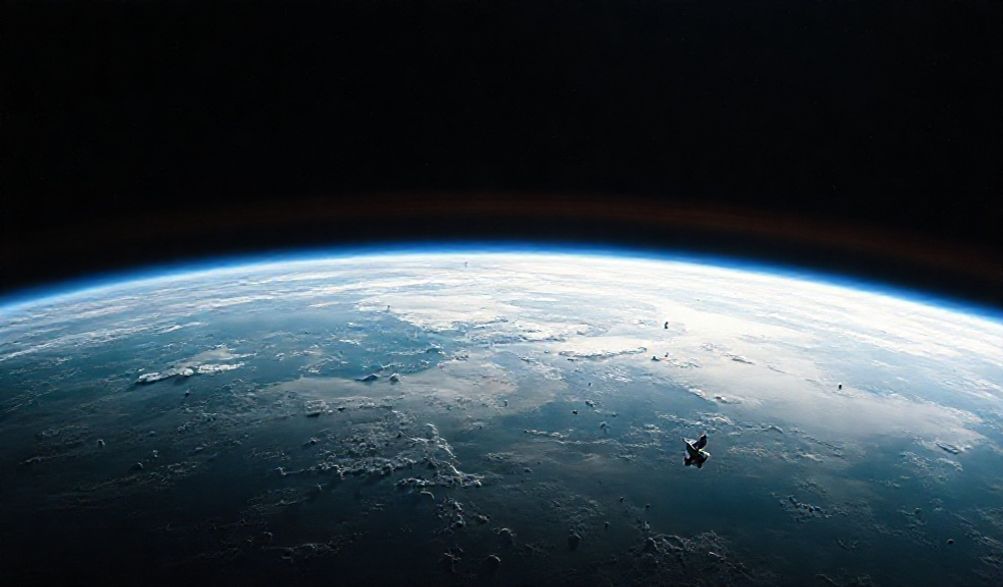
At the outer reaches of our planet, there exists a mysterious and largely unexplored region known as the Earth’s atmosphere boundary. This is the zone where the atmosphere slowly gives way to the vast expanse of space, and it’s home to a multitude of phenomena that continue to fascinate scientists and theorists alike. For decades, researchers have been probing the secrets of this enigmatic area, and what they’ve discovered is nothing short of astonishing. From strange, glowing clouds to inexplicable bursts of energy, the Earth’s atmosphere boundary is a realm that’s full of surprises, and it’s an area that holds many clues to the fundamental nature of our planet and its place in the universe.
Introduction to the Earth’s Atmosphere Boundary
The Earth’s atmosphere boundary, also known as the Karman line, is the point at which the atmosphere meets space. It’s a critical region that’s essential for understanding the complex interactions between our planet and the surrounding cosmos. The Karman line is located approximately 100 kilometers above the Earth’s surface, and it marks the boundary beyond which the atmosphere becomes too thin to support aircraft flight. However, this is not just a simple demarcation line; it’s a dynamic and constantly shifting zone that’s influenced by a wide range of factors, including solar activity, atmospheric pressure, and the gravitational pull of the Moon.
Historical Context: Exploring the Earth’s Atmosphere Boundary
Human fascination with the Earth’s atmosphere boundary dates back centuries, with early astronomers and scientists speculating about the nature of the upper atmosphere and its relationship to the cosmos. However, it wasn’t until the mid-20th century that the first serious attempts were made to explore this region. The launch of the first artificial satellites in the 1950s and 1960s provided a major breakthrough, allowing scientists to gather data about the upper atmosphere and its interaction with space. Since then, a wide range of spacecraft and satellites have been launched to study the Earth’s atmosphere boundary, including the Apollo missions, the Space Shuttle program, and the International Space Station.
Detailed Examination of the Earth’s Atmosphere Boundary
In this section, we’ll take a closer look at the Earth’s atmosphere boundary and the many phenomena that occur within this region. We’ll explore the different layers of the atmosphere, the role of solar and cosmic radiation, and the impact of human activity on the upper atmosphere.
The Layers of the Atmosphere
The Earth’s atmosphere is composed of several distinct layers, each with its own unique characteristics and properties. The lowest layer is the troposphere, which extends up to about 12 kilometers above the Earth’s surface. This is the region where weather occurs, and it’s the layer that’s most directly affected by human activity. Above the troposphere lies the stratosphere, which extends up to about 50 kilometers above the Earth’s surface. This layer is home to the ozone layer, which plays a critical role in protecting the planet from harmful ultraviolet radiation. The next layer is the mesosphere, which extends up to about 80 kilometers above the Earth’s surface. This is the region where meteors burn up, and it’s also home to a phenomenon known as “noctilucent clouds,” which are clouds that are visible at night.
Solar and Cosmic Radiation
The Earth’s atmosphere boundary is constantly bombarded by solar and cosmic radiation, which has a profound impact on the upper atmosphere. Solar radiation, in particular, plays a critical role in shaping the upper atmosphere, with the Sun’s ultraviolet and X-ray emissions causing the atmosphere to expand and contract. This, in turn, affects the formation of the aurorae, which are spectacular displays of colored light that occur when charged particles from the Sun interact with the atmosphere. Cosmic radiation, on the other hand, is composed of high-energy particles from outside the solar system, and it has a more subtle but still significant impact on the upper atmosphere.
The Role of the Magnetosphere
The Earth’s magnetosphere is a vast, doughnut-shaped region that surrounds the planet and protects it from the solar wind. The magnetosphere plays a critical role in shaping the Earth’s atmosphere boundary, with the magnetic field deflecting charged particles from the Sun and preventing them from penetrating too deeply into the atmosphere. The magnetosphere is also home to a phenomenon known as the “Van Allen radiation belts,” which are regions of intense radiation that surround the Earth. These radiation belts are composed of high-energy particles that are trapped by the magnetic field, and they pose a significant hazard to both people and electronic systems in space.
The Impact of Human Activity
Human activity is having an increasingly significant impact on the Earth’s atmosphere boundary, with the launch of satellites, spacecraft, and other objects into space causing a growing amount of debris to accumulate in the upper atmosphere. This debris, which includes old satellites, rocket parts, and other junk, poses a significant hazard to operational spacecraft and satellites, and it’s also having a subtle but significant impact on the upper atmosphere itself. Additionally, human activity is also affecting the upper atmosphere through the release of chemicals and pollutants, which can alter the atmospheric chemistry and have significant consequences for the planet as a whole.
The Future of Exploration
Despite the many advances that have been made in recent years, the Earth’s atmosphere boundary remains a poorly understood and largely unexplored region. However, with the advent of new technologies and the launch of new spacecraft and satellites, scientists are now able to study this region in greater detail than ever before. Future missions, such as the NASA’s Atmosphere Explorers program, will provide even more detailed information about the Earth’s atmosphere boundary, and they will help to shed light on the many mysteries that still surround this enigmatic region. Additionally, private companies such as SpaceX and Blue Origin are also playing a significant role in the exploration of the upper atmosphere, with their launch vehicles and spacecraft providing new opportunities for scientists to study this region.
Counter-Arguments: Challenges and Controversies at the Earth’s Atmosphere Boundary
While the Earth’s atmosphere boundary is a fascinating and complex region, it’s also an area that’s fraught with challenges and controversies. One of the main challenges is the difficulty of accessing this region, which is located at the very edge of space. This makes it hard to gather data and conduct experiments, and it also poses significant risks to both people and electronic systems. Additionally, the Earth’s atmosphere boundary is also a region that’s subject to a wide range of influences, including solar and cosmic radiation, atmospheric pressure, and the gravitational pull of the Moon. This makes it difficult to predict and model the behavior of this region, and it also raises significant questions about the long-term sustainability of human activity in space.
Another controversy surrounding the Earth’s atmosphere boundary is the issue of space debris. With the growing amount of junk in the upper atmosphere, there’s a significant risk of collisions and other accidents, which could have catastrophic consequences for operational spacecraft and satellites. This has led to calls for greater regulation and oversight of space activity, as well as the development of new technologies and strategies for mitigating the risks associated with space debris.
Conclusion: The Earth’s Atmosphere Boundary – A Region of Enduring Mystery and Importance
In conclusion, the Earth’s atmosphere boundary is a region of enduring mystery and importance, and it’s an area that continues to fascinate scientists and theorists alike. From the strange, glowing clouds that occur at the edge of space to the inexplicable bursts of energy that emanate from this region, the Earth’s atmosphere boundary is a realm that’s full of surprises and mysteries waiting to be uncovered. As we continue to explore and study this region, we’re gaining a deeper understanding of the complex interactions between our planet and the surrounding cosmos, and we’re also shedding light on the many challenges and controversies that surround this enigmatic area. Whether it’s the impact of human activity, the role of solar and cosmic radiation, or the future of exploration, the Earth’s atmosphere boundary is a region that’s critical to our understanding of the universe and our place within it.
As we look to the future, it’s clear that the Earth’s atmosphere boundary will continue to play a vital role in our understanding of the cosmos and our place within it. With the advent of new technologies and the launch of new spacecraft and satellites, scientists will be able to study this region in greater detail than ever before, and they will be able to shed light on the many mysteries that still surround this enigmatic area. Whether it’s the search for life beyond Earth, the study of the upper atmosphere, or the exploration of the cosmos, the Earth’s atmosphere boundary is a region that’s essential to our understanding of the universe, and it’s an area that will continue to fascinate and inspire scientists and theorists for generations to come.
- The Earth’s atmosphere boundary is a critical region that’s essential for understanding the complex interactions between our planet and the surrounding cosmos.
- The Karman line, which marks the boundary between the atmosphere and space, is located approximately 100 kilometers above the Earth’s surface.
- The Earth’s atmosphere boundary is a dynamic and constantly shifting zone that’s influenced by a wide range of factors, including solar activity, atmospheric pressure, and the gravitational pull of the Moon.
- Human activity is having an increasingly significant impact on the Earth’s atmosphere boundary, with the launch of satellites, spacecraft, and other objects into space causing a growing amount of debris to accumulate in the upper atmosphere.
- The Earth’s atmosphere boundary is a region of enduring mystery and importance, and it’s an area that continues to fascinate scientists and theorists alike.