You Won’t Believe Why Radar Systems Can See Behind the Horizon!
admin
Author
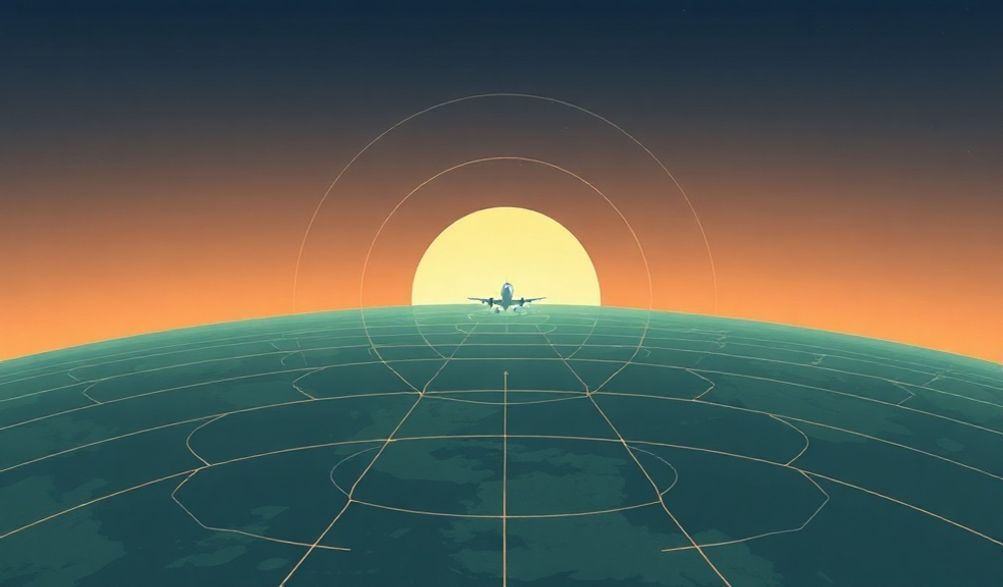
Radar systems have been a cornerstone of modern technology, used in everything from aviation and maritime navigation to weather forecasting and military operations. However, one of the most fascinating aspects of radar systems is their ability to see behind the horizon, a phenomenon that has left many people wondering how this is possible. In this article, we will delve into the world of radar systems and explore the science behind their ability to detect objects beyond the visual horizon.
Historical Context of Radar Systems
The development of radar systems dates back to the early 20th century, when scientists began experimenting with radio waves and their ability to detect and locate objects. The first practical radar system was developed in the 1930s by Scottish engineer Robert Watson-Watt, who used a system of radio transmitters and receivers to detect and track aircraft. Since then, radar systems have evolved significantly, with advancements in technology and engineering leading to the development of more sophisticated and accurate systems. Today, radar systems are used in a wide range of applications, from air traffic control and weather forecasting to military surveillance and navigation.
How Radar Systems Work
So, how do radar systems work? The basic principle of radar is simple: a transmitter sends out a beam of radio waves, which bounce off an object and return to the receiver. The receiver then uses the returned signal to calculate the distance, speed, and direction of the object. However, when it comes to seeing behind the horizon, radar systems use a phenomenon called “diffraction” to bend the radio waves around the curvature of the Earth. This allows the radar signal to follow the curvature of the Earth and detect objects that are beyond the visual horizon.
Diffraction and the Curvature of the Earth
Diffraction is the bending of waves around an obstacle or the curvature of a surface. In the case of radar systems, diffraction allows the radio waves to bend around the curvature of the Earth, following the shape of the planet and detection objects that are beyond the visual horizon. This is possible because radio waves have a relatively long wavelength, typically in the range of centimeters to meters, which allows them to bend around the curvature of the Earth. The amount of diffraction that occurs depends on the frequency of the radar signal, with lower frequencies experiencing more diffraction than higher frequencies.
Advantages of Radar Systems in Detection
Radar systems have several advantages when it comes to detection, particularly in situations where visibility is limited. One of the main advantages is their ability to see behind the horizon, which allows them to detect objects that are beyond the visual range of other sensors. Radar systems are also relatively unaffected by weather conditions, such as fog, clouds, and rain, which can limit the effectiveness of other sensors. Additionally, radar systems can detect objects at much greater distances than other sensors, making them ideal for applications such as air traffic control and military surveillance.
Radar Systems in Modern Applications
Radar systems are used in a wide range of modern applications, from aviation and maritime navigation to weather forecasting and military operations. In aviation, radar systems are used to track aircraft and guide them to safe landings. In maritime navigation, radar systems are used to detect and track ships, as well as to navigate through busy waterways. In weather forecasting, radar systems are used to track storms and predict weather patterns. In military operations, radar systems are used for surveillance and reconnaissance, as well as to guide missiles and other weapons.
Phased Array Radar Systems
One of the most advanced types of radar systems is the phased array radar system. Phased array radar systems use a large number of small antennas, arranged in a flat panel, to transmit and receive radar signals. The signals are then combined and processed using advanced algorithms, allowing the radar system to detect and track multiple targets simultaneously. Phased array radar systems have several advantages over traditional radar systems, including higher resolution, greater accuracy, and increased range. They are also more resistant to interference and can operate in a wider range of environments.
Doppler Radar Systems
Another type of radar system is the Doppler radar system. Doppler radar systems use the Doppler effect, which is the change in frequency of a wave as it moves relative to an observer, to measure the velocity of objects. Doppler radar systems are commonly used in weather forecasting, where they are used to track storms and predict weather patterns. They are also used in aviation, where they are used to detect and track aircraft. Doppler radar systems have several advantages, including high accuracy and resolution, as well as the ability to detect and track multiple targets simultaneously.
Frequency Modulated Continuous Wave Radar Systems
Frequency modulated continuous wave (FMCW) radar systems are another type of radar system that is commonly used in modern applications. FMCW radar systems use a continuous wave signal, which is frequency modulated to encode the signal with information about the target. FMCW radar systems have several advantages, including high resolution and accuracy, as well as the ability to detect and track multiple targets simultaneously. They are also relatively simple and inexpensive to implement, making them a popular choice for many applications.
Pulse-Doppler Radar Systems
Pulse-Doppler radar systems are a type of radar system that uses a combination of pulse and Doppler techniques to detect and track targets. Pulse-Doppler radar systems use a series of pulses to detect and track targets, and then use the Doppler effect to measure the velocity of the targets. Pulse-Doppler radar systems have several advantages, including high accuracy and resolution, as well as the ability to detect and track multiple targets simultaneously. They are commonly used in military and aviation applications, where they are used to detect and track aircraft and missiles.
Counter-Arguments to the Effectiveness of Radar Systems
While radar systems have many advantages, there are also some counter-arguments to their effectiveness. One of the main limitations of radar systems is their vulnerability to interference, which can limit their range and accuracy. Radar systems can also be affected by weather conditions, such as heavy rain or fog, which can reduce their effectiveness. Additionally, radar systems can be expensive to implement and maintain, particularly in complex systems such as phased array radar systems.
Another limitation of radar systems is their potential for false alarms, which can occur when the radar system detects a target that is not actually present. False alarms can be caused by a variety of factors, including interference, clutter, and anomalies in the radar signal. To mitigate false alarms, radar systems often use advanced signal processing algorithms and techniques, such as pulse-Doppler processing and moving target indication.
Conclusion
In conclusion, radar systems are a powerful tool that has revolutionized the way we detect and track objects. Their ability to see behind the horizon, combined with their high accuracy and resolution, makes them an essential component of many modern applications. While there are some limitations to radar systems, including vulnerability to interference and potential for false alarms, these can be mitigated through the use of advanced signal processing algorithms and techniques. As technology continues to evolve, it is likely that radar systems will become even more sophisticated and accurate, with new applications and uses emerging in fields such as aviation, maritime navigation, and weather forecasting.
As we have seen, radar systems have come a long way since their development in the early 20th century. From their early use in aviation and maritime navigation to their modern applications in weather forecasting and military operations, radar systems have proven to be a versatile and essential tool. Whether used to detect and track aircraft, ships, or storms, radar systems have consistently demonstrated their ability to provide accurate and reliable information, even in the most challenging environments. As we look to the future, it is clear that radar systems will continue to play a vital role in shaping our world and improving our understanding of the environment around us.