The Secret Archives of the Vatican: Knowledge of the True Earth Hidden?
admin
Author
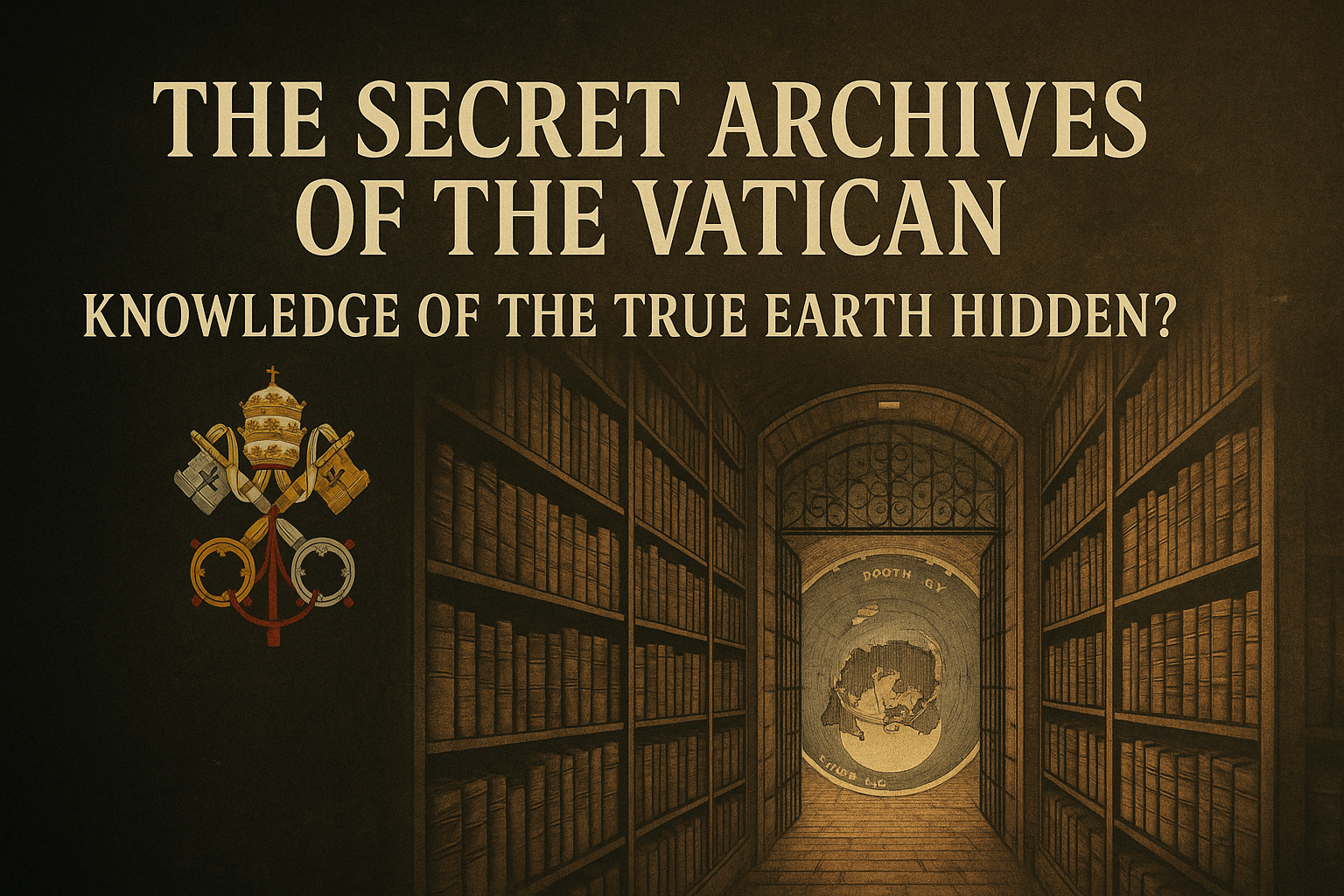
The Secret Archives of the Vatican: Knowledge of the True Earth Hidden?
For centuries, the Vatican Secret Archives have piqued the curiosity of historians, researchers, and conspiracy theorists alike. Housing some of the most mysterious and ancient documents in human history, these archives are often rumored to contain forbidden knowledge, including secrets about the true nature of our Earth. But is there any truth to the claims that the Vatican conceals hidden knowledge about our planet? In this article, we delve into the Vatican Secret Archives, exploring their history, the myths surrounding them, and what they might really hold about the Earth.
What Are the Vatican Secret Archives?
The Vatican Secret Archives—officially known as the Archivum Secretum Apostolicum Vaticanum—are one of the most extensive and well-preserved collections of historical documents in the world. Contrary to its somewhat ominous name, “secret” actually means “private” in Latin, referring to the archives’ status as the Pope’s personal collection.
Established in 1612 by Pope Paul V, the archives contain over 85 kilometers (about 53 miles) of shelving filled with letters, manuscripts, papal correspondence, official documents, and other priceless historical artifacts dating back over 12 centuries. These documents cover a wide range of subjects—from medieval church affairs and political treaties to scientific observations and explorations.
The Mystique Surrounding the Vatican Archives
The Vatican’s reputation for secrecy and its profound influence over global religious and political affairs have fueled countless theories and speculations. Popular culture often depicts the archives as a treasure trove of suppressed knowledge, lost civilizations, and even extraterrestrial encounters. One recurring theme is the idea that the Vatican holds hidden truths about the Earth itself—whether it’s ancient maps showing unknown continents, evidence of alternative cosmologies, or proof of suppressed scientific knowledge.
Many conspiracy theories suggest that the Church has deliberately concealed knowledge that contradicts official teachings, particularly regarding the Earth’s shape, origins, and place in the cosmos. Given the historical conflict between the Church and figures like Galileo Galilei, who advocated for heliocentrism, it’s not surprising that some believe the archives hold more secrets than have been publicly disclosed.
Does the Vatican Archive Hide Knowledge About the True Earth?
Ancient Maps and Geography
One of the most intriguing aspects of the Vatican Archives is their collection of ancient maps. Some researchers claim that among these maps are depictions of lands and geographical features unknown or lost to modern historians, suggesting that the Church might have access to forgotten knowledge about the Earth’s geography.
For instance, the Vatican holds copies of Ptolemaic maps as well as medieval and Renaissance cartographic works. While these maps are valuable historical documents, there is little credible evidence that they reveal unknown continents or radically different Earth structures. Most of the maps follow the geographical understanding of their respective periods, reflecting the limitations and knowledge of their times.
The Shape and Structure of the Earth
Another area of speculation involves the shape of the Earth. Throughout much of history, various cultures proposed different models of the world—from flat Earth theories to early spherical models. Some conspiracy theories claim that the Vatican has documents proving alternative models, such as a hollow Earth or a flat Earth, and that this knowledge is hidden from the public.
In reality, the Catholic Church officially accepted the heliocentric model and the spherical shape of the Earth centuries ago. There is no verified evidence in the Vatican Archives to support the notion that the Church denies established scientific understanding. The archives primarily contain theological writings, papal decrees, and historical records rather than scientific treatises challenging Earth science.
Hidden Scientific Discoveries?
The Vatican has historically been associated with scientific scholarship, housing the Vatican Observatory since the late 16th century and supporting astronomers and scientists. Some suggest the archives might include suppressed discoveries, such as alternative cosmologies or early knowledge of earthquakes, climate, or planetary science.
While the Vatican has contributed to scientific research, the documents in the Secret Archives are not known to contain groundbreaking scientific data unknown to the global scientific community. Instead, they reflect the Church’s position and engagement with science across history, including periods when it was cautious or even resistant to certain ideas.
Who Can Access the Vatican Secret Archives?
Access to the Vatican Secret Archives is highly restricted. Only qualified scholars with proven research credentials and a legitimate purpose can gain entry after applying through a rigorous vetting process. The archive rooms themselves are secured and climate-controlled to preserve the delicate manuscripts.
This limited access fuels speculation about the contents and what might be deliberately withheld from public scrutiny. However, many scholars have been granted access and have published works based on their research in the archives, helping demystify much of what the Vatican holds.
Separating Fact From Fiction
The allure of the Vatican Secret Archives lies in their combination of genuine historical importance and the aura of mystery surrounding them. While there is no doubt that the archives contain priceless knowledge about human history, religion, and culture, the sensational claims about concealed truths about the Earth often lack credible evidence.
Historians emphasize that the archives are a treasure trove for understanding the Catholic Church’s role in history—not a secret vault for alternative Earth theories or hidden scientific knowledge. Most claims about the Vatican hiding the “true Earth” resemble modern myths shaped by cultural fascination with conspiracies rather than grounded facts.
Conclusion
The Vatican Secret Archives remain one of the most captivating and enigmatic repositories of human history. While the idea that they conceal secret knowledge about the true Earth is an exciting narrative, the evidence simply does not support such theories. Instead, the archives offer invaluable insights into the Church’s spiritual, political, and historical journey through the centuries.
For those intrigued by mysteries, the archives symbolize humanity’s pursuit of knowledge and the tension between secrecy and discovery. But as research continues and more documents are studied and published, the truth about our Earth remains firmly within the realm of science and open inquiry—not locked away in secret Vatican vaults.
—
If you’re fascinated by historical mysteries and want to explore more about the Vatican and its archives, stay tuned for future articles diving deeper into the Church’s role in science, culture, and history.