Mars in Hollywood: Why Rover Photos Look Like Earth’s Deserts
admin
Author
Mars in Hollywood: Why Rover Photos Look Like Earth’s Deserts
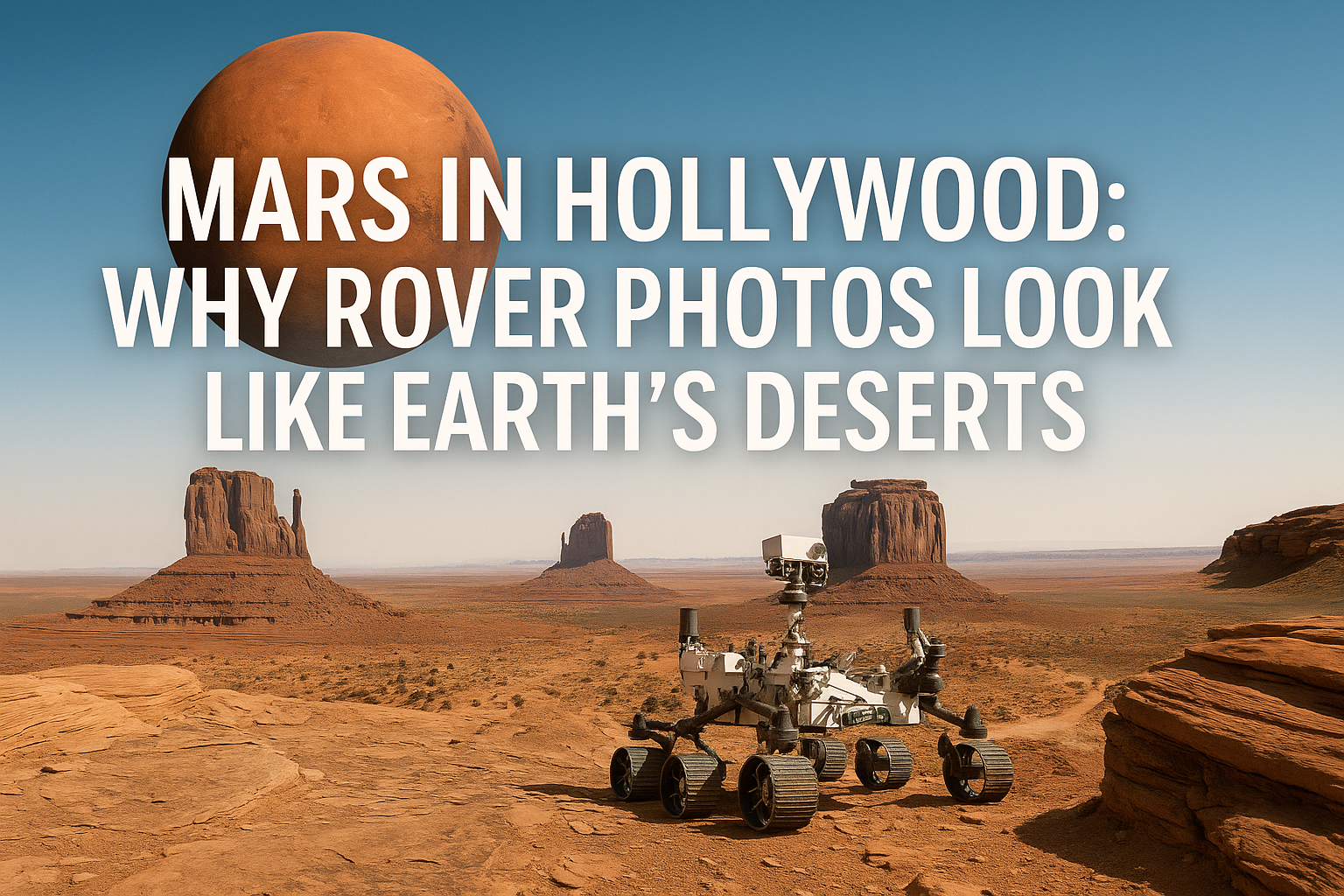
When you scroll through breathtaking images from Mars rovers like Curiosity or Perseverance, you might be struck by a surprising similarity: the Martian landscape often looks just like Earth’s deserts. From the reddish dunes to rocky outcrops and dusty plains, many Mars photos could almost be mistaken for terrestrial deserts in places like Arizona or the Sahara. But why does Mars look so Earth-like in rover photos? In this article, we’ll explore the science behind Mars’ desert-like appearance and how Hollywood’s depiction of the Red Planet often draws inspiration from these familiar landscapes.
The Red Planet’s Desert Identity
Mars is famously known as the “Red Planet” due to its distinctive rusty hue, a result of iron oxide (rust) on its surface. But beyond its color, Mars shares several features with Earth’s desert regions:
– Arid conditions: Mars has an extremely thin atmosphere, composed mostly of carbon dioxide, with very little water vapor. This creates one of the driest environments imaginable, similar to Earth’s most arid deserts.
– Rocky terrain: The Martian surface is scattered with rocks, sand, and dust, much like deserts on Earth.
– Temperature extremes: Temperatures on Mars can swing drastically, akin to deserts that experience scorching days and freezing nights.
– Wind erosion: Mars experiences strong winds that create sand dunes and sculpt rocky formations, paralleling processes in terrestrial deserts.
Scientists have long known that Mars’ environment is hostile and barren — but the similarities to Earth deserts help frame our understanding and expectations.
Why Mars Rover Photos Resemble Earth Deserts
Limited Surface Diversity
One reason rover photos look like Earth’s deserts is that large portions of Mars are uniform in geology and landscape. Unlike Earth, where oceans, forests, and varied landforms abound, Martian imagery mostly captures dry, rocky plains with sparse variation. The rovers tend to explore regions with geological interest — often ancient lakebeds or volcanic plains — but these sites still resemble deserts because of their dryness and barren rock.
Dust and Sand Cover Everything
Mars is covered in a fine layer of reddish dust that settles everywhere. This ubiquitous dust creates a monochrome effect in photos, dampening color contrasts and making the landscape look like a continuous desert expanse. On Earth, desert sands can vary in color but often share similar textures with Mars’ surface dust.
Rovers Visit Earth-like Test Sites First
Before landing rovers on Mars, scientists test rover mobility and instruments in Earth deserts such as the Atacama Desert in Chile or the Mojave Desert in California. These locations mimic Martian conditions — extreme dryness, rocky soil, and temperature swings — making them perfect analogs. As a result, the early rover images may remind us of these familiar terrestrial deserts.
Camera and Lighting Effects
Mars photos are often taken using cameras designed to capture scientific data rather than color accuracy. The lighting on Mars, filtered by a thin atmosphere and dusty skies, produces a diffuse, reddish glow that accentuates the desert-like appearance. Moreover, some images are color-corrected to approximate what the human eye would see, but many retain tones that emphasize the dusty, arid nature of the landscape.
Hollywood’s Use of Desert Imagery in Mars Films
Desert Locations as Mars Backdrops
Hollywood has long leaned on Earth’s deserts to simulate Martian terrain for movies like The Martian (2015), Mission to Mars (2000), and even Total Recall (1990). The deserts of Utah, Arizona, and Namibia provide a realistic and cost-effective way to represent the Red Planet on screen. Their sandy dunes, rocky outcrops, and reddish hues visually communicate the harsh, alien environment of Mars.
Visual Symbolism of Deserts
Deserts carry symbolic weight in storytelling — they evoke isolation, survival, and the struggle against an unforgiving environment. Mars films tap into these themes by showcasing vast desert landscapes that mirror the emotional and physical challenges of exploring the Red Planet. The barren desert thus becomes a character itself, reinforcing the narrative.
Limitations of Practical Effects and CGI
While CGI can create fantastical alien worlds, practical effects like filming in real deserts provide authenticity. The texture, lighting, and natural imperfections of desert terrain are difficult to replicate digitally. By utilizing Earth deserts, filmmakers ground their Mars stories in realism and connect audiences with familiar yet otherworldly settings.
Scientific Missions and Earth Deserts: Mutual Benefits
Desert Analogs Help Prepare Mars Exploration
Studying Earth’s deserts helps NASA and other space agencies design better rovers and mission plans. Scientists examine how extreme dryness and temperature variations affect instruments, rover mobility, and astronaut survival in desert analogs. This mutual learning improves the chances of success on Mars.
Mars Rover Data Enhances Desert Research
Conversely, data from Mars missions provide insights into geological and atmospheric processes that also occur in Earth deserts. Understanding Martian wind erosion, dust storms, and mineralogy enriches our knowledge of desert dynamics on Earth.
Conclusion: Mars and Earth’s Deserts — Two Worlds Connected
Mars may be millions of miles away, but its surface bears an uncanny resemblance to the deserts we know on Earth. This is no coincidence — both environments share harsh, dry conditions, rocky landscapes, and dynamic dust processes. Rover photos capture these features in stunning detail, often reminding us of familiar deserts back home.
Hollywood wisely capitalizes on this resemblance to create visually compelling and believable Mars settings in film. Meanwhile, scientists continue to draw on Earth’s deserts to prepare for humanity’s next giant leap.
In the end, the deserts of Earth and Mars are interconnected through science, storytelling, and exploration — helping us bridge the gap between worlds and imagine our future among the stars.