Stonehenge and the Firmament: A Calendar for a Flat Sky
admin
Author
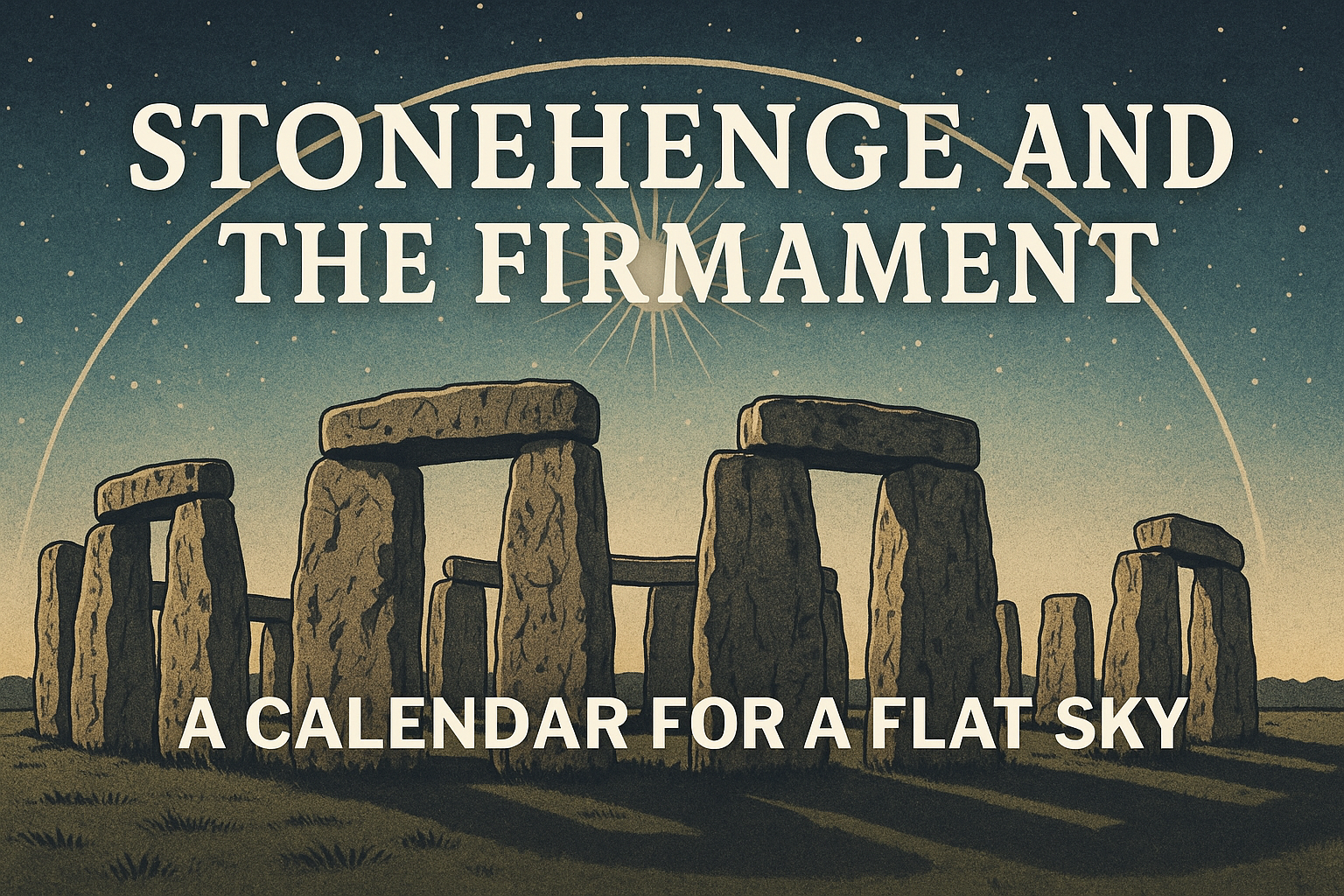
Stonehenge and the Firmament: A Calendar for a Flat Sky
Stonehenge, one of the most iconic prehistoric monuments in the world, has long fascinated scholars, archaeologists, and enthusiasts alike. Located on the Salisbury Plain in England, this ancient stone circle has puzzled experts regarding its purpose and construction techniques. Among the many theories, an intriguing idea connects Stonehenge to cosmology—specifically, its function as a calendar aligned with a flat sky or firmament. In this article, we explore the relationship between Stonehenge and the concept of the firmament, proposing how the monument might have served as a sophisticated calendar system designed for a flat sky worldview.
—
Understanding Stonehenge: More Than Just Stones
Stonehenge was constructed in several stages between 3000 and 2000 BCE. Its massive sarsen stones and smaller bluestones are arranged in concentric circles and horseshoe shapes. Despite centuries of research, the monument’s exact purpose remains widely debated. However, one of the most accepted theories is that Stonehenge was an astronomical observatory and calendar.
Astronomical Alignments at Stonehenge
The monument’s positioning shows precise alignments with solar and lunar events. The most famous example is the alignment of the Heel Stone with the sunrise on the summer solstice. This suggests its builders understood the cyclical nature of the sun and its importance in marking time.
Other alignments correspond to the winter solstice sunset, equinoxes, and certain lunar cycles. These observations reinforce the idea that Stonehenge was a tool for tracking celestial movements and organizing the year.
—
The Concept of the Firmament: A Flat Sky Model
Before the establishment of the heliocentric solar system, many ancient cultures viewed the sky as a solid dome—called the firmament—arching over a flat Earth. This cosmology appears in various mythologies and religious texts, where stars and celestial bodies were believed to be fixed points on this dome.
What is the Firmament?
The firmament is often described as a crystal-like vault separating the heavens from the Earth. In this model, the sky is flat or slightly curved, not spherical as understood by modern astronomy.
This worldview influenced how ancient people interpreted celestial phenomena. Movements of the sun, moon, and stars were seen as patterns on this flat dome, making the sky predictable and cyclical—key for agriculture and ritual life.
—
Stonehenge as a Calendar for a Flat Sky
If Stonehenge was built within a cultural context that believed in the firmament and a flat Earth, its design might reflect the need for a calendar system adapted to this cosmology.
Aligning with the Firmament
The placement of stones at Stonehenge could correspond to fixed points on the firmament, marking vital solar events that repeat annually. The flat sky concept implies that celestial bodies move along predictable paths across this dome-like structure, allowing early observers to track seasons and time with remarkable accuracy.
Tracking Solar and Lunar Cycles
Stonehenge’s structure appears designed to monitor the sun’s path along the horizon. The summer and winter solstice alignments mark the extreme points of the sun’s annual journey. In a flat sky model, these points would be critical markers on the firmament dome, helping communities anticipate seasonal changes.
Similarly, the lunar alignments could correspond to the moon’s phases and cycles, crucial for timing rituals, hunting, and farming activities.
—
The Practical Implications of a Flat Sky Calendar
Why would ancient people need a calendar based on a flat sky concept? The answer lies in survival and societal organization.
Agriculture and Seasonal Cycles
Early agricultural societies depended heavily on understanding the seasons. Stonehenge’s alignments would signal when to plant or harvest crops. Observing the sun and moon against the backdrop of the firmament helped predict weather patterns and seasonal shifts.
Religious and Ceremonial Significance
The firmament wasn’t just a physical concept; it had spiritual meaning. Celestial events observed through Stonehenge likely played a role in religious ceremonies, connecting people to the cosmos and their gods.
The monument itself—constructed through enormous communal effort—symbolized harmony between humans and the universe, reinforcing social cohesion.
—
Modern Interpretations and Controversies
While the flat sky theory provides an interesting perspective, mainstream archaeology and astronomy view Stonehenge through the lens of a spherical Earth and heliocentric solar system. However, understanding ancient peoples’ cosmology is crucial for interpreting their artifacts accurately.
Reconciling Ancient Beliefs with Modern Science
Modern research supports many of Stonehenge’s astronomical alignments but interprets them within a spherical sky framework. The idea of a firmament or flat sky is largely symbolic or mythological today.
Yet, considering the flat sky model helps us appreciate how our ancestors conceptualized the universe, influencing their monumental architecture.
Ongoing Research and Discoveries
Archaeologists continue to uncover new findings about Stonehenge’s purpose and construction. Advanced technologies like 3D scanning and computer simulations allow researchers to test calendar hypotheses, including those aligned with ancient cosmologies.
—
Conclusion: Stonehenge as a Bridge Between Earth and Sky
Stonehenge remains a testament to human ingenuity and our ancestors’ quest to understand the cosmos. Whether viewed as a calendar for a flat sky firmament or as an astronomical observatory within modern cosmology, the monument highlights the profound connection between ancient people and the heavens.
By examining Stonehenge through the lens of the firmament concept, we gain insights into how prehistoric cultures interpreted celestial cycles and structured their lives around them. Stonehenge stands not only as a physical monument of stone but also as an enduring symbol of humanity’s timeless fascination with the sky above.
—
Keywords: Stonehenge, firmament, flat sky, ancient calendar, summer solstice, prehistoric monument, astronomical alignments, flat earth cosmology, lunar cycles, ancient astronomy