The Buried Scrolls of Derinkuyu: Underground Cities of Ancient Cappadocia
admin
Author
1. Introduction
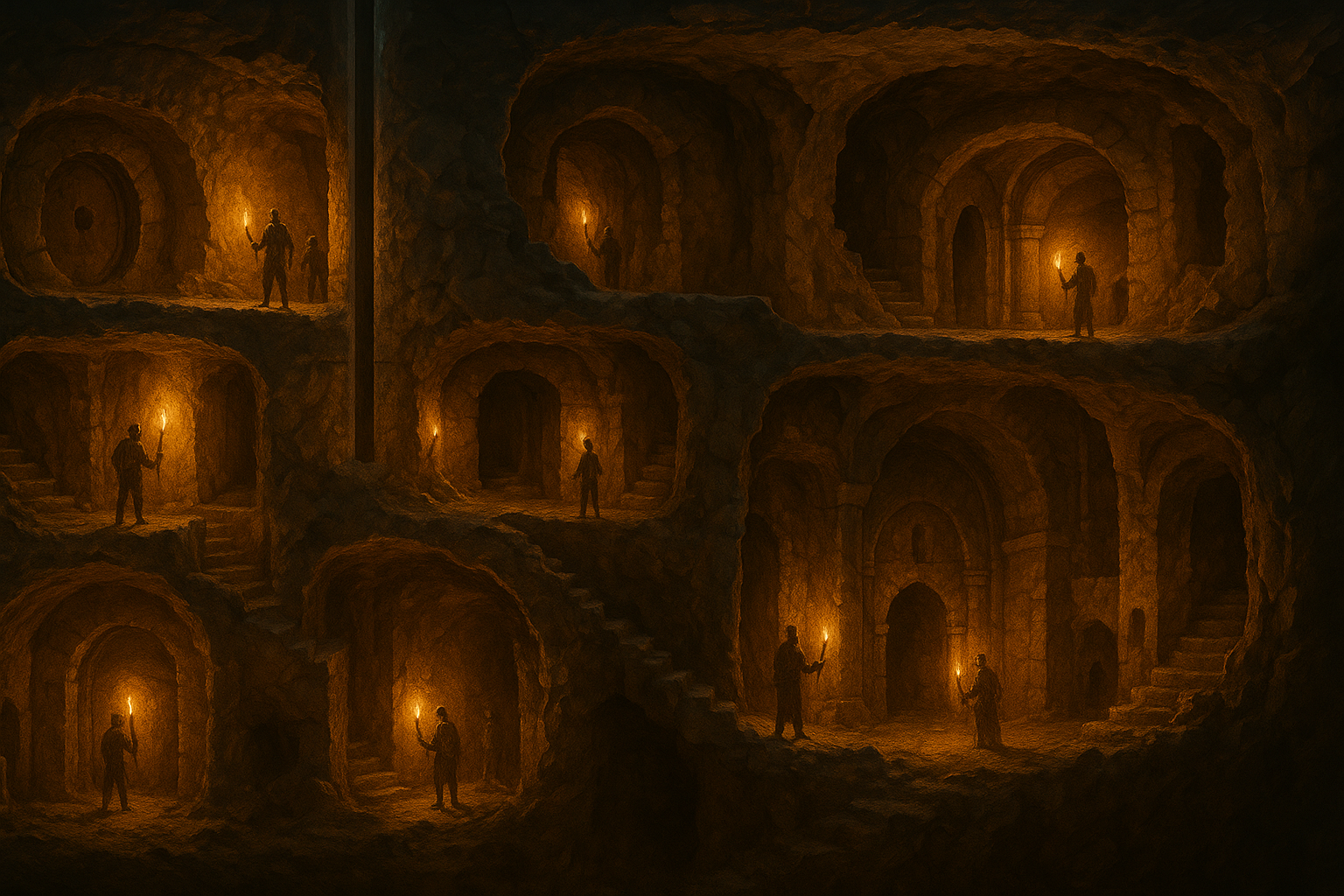
Beneath Cappadocia’s breathtaking fairy-chimneys lies a hidden marvel: the underground city of Derinkuyu. Discovered in 1963, this astonishing complex spans at least 18 levels—of which eight are accessible today—and could shelter upwards of 20,000 inhabitants. Often likened to an ancient “scroll” of human resilience, its passages and chambers chronicle millennia of adaptation, faith, and communal ingenuity.
2. Origins and Excavation
-
Early Carving: Beginning in the 8th–7th centuries BCE, Phrygian and later Hittite artisans quarried the soft volcanic tuff to create storage cells and stables.
-
Roman and Byzantine Expansion: From the 4th to 7th centuries CE, Christian communities extended the tunnels, adding chapels, baptismal fonts, and advanced defenses as they fled persecutions and barbarian incursions.
-
Modern Rediscovery: In 1963 a local resident stumbled upon a hidden shaft behind a wall; systematic excavations thereafter revealed long-buried levels of this subterranean labyrinth.
3. Architectural Marvels
-
Ventilation System: Over 50 air shafts, some rising more than 55 m to the surface, ensured fresh air circulated through every floor.
-
Defensive Doors: Massive cylindrical stone doors—five-ton “pistons”—could roll into place to seal off passages in minutes.
-
Water Management: Wells tapped freshwater aquifers at the lowest level, while rainwater channels fed cisterns above, providing a reliable supply during sieges.
4. Life Underground
-
Communal Halls: Expansive meeting rooms and kitchens allowed large groups to eat and assemble.
-
Religious Spaces: A 13 m-long rock-hewn church with fresco fragments reveals early Christian worship in isolation.
-
Daily Necessities: Wine presses, grain silos, animal stalls, and even a primitive schoolroom illustrate self-sufficiency during extended refuge.
5. Purpose and Function
Derinkuyu’s builders crafted a sanctuary against both human and natural threats:
-
Invasions: Arab raids and Mongol incursions made aboveground life perilous in Late Antiquity.
-
Climate Extremes: Cappadocia’s harsh winters and summer heat were moderated underground, where temperatures remain near 14 °C year-round.
-
Communal Identity: Living in close quarters reinforced social bonds and religious solidarity among diverse Anatolian communities.
6. Conservation and Tourism
-
Site Management: The Turkish Ministry of Culture has stabilized tunnels, installed lighting, and restricted visitor numbers to protect fragile plaster and frescoes.
-
Interactive Interpretation: Guided tours and a nearby museum showcase miniature models, excavation photographs, and VR reconstructions of hidden levels.
-
Ongoing Research: Archaeologists continue to map unexplored galleries, using 3D laser scanning and geophysical surveys to reveal the city’s full extent.
7. Legacy of the Buried City
Derinkuyu stands as an enduring testament to human adaptability and the lengths our ancestors went to secure safety, community, and faith. Its labyrinthine corridors—like the coils of an ancient scroll—still whisper stories of ingenuity carved into the very rock. In exploring its depths, we reconnect with a world where survival and solidarity were etched into stone.