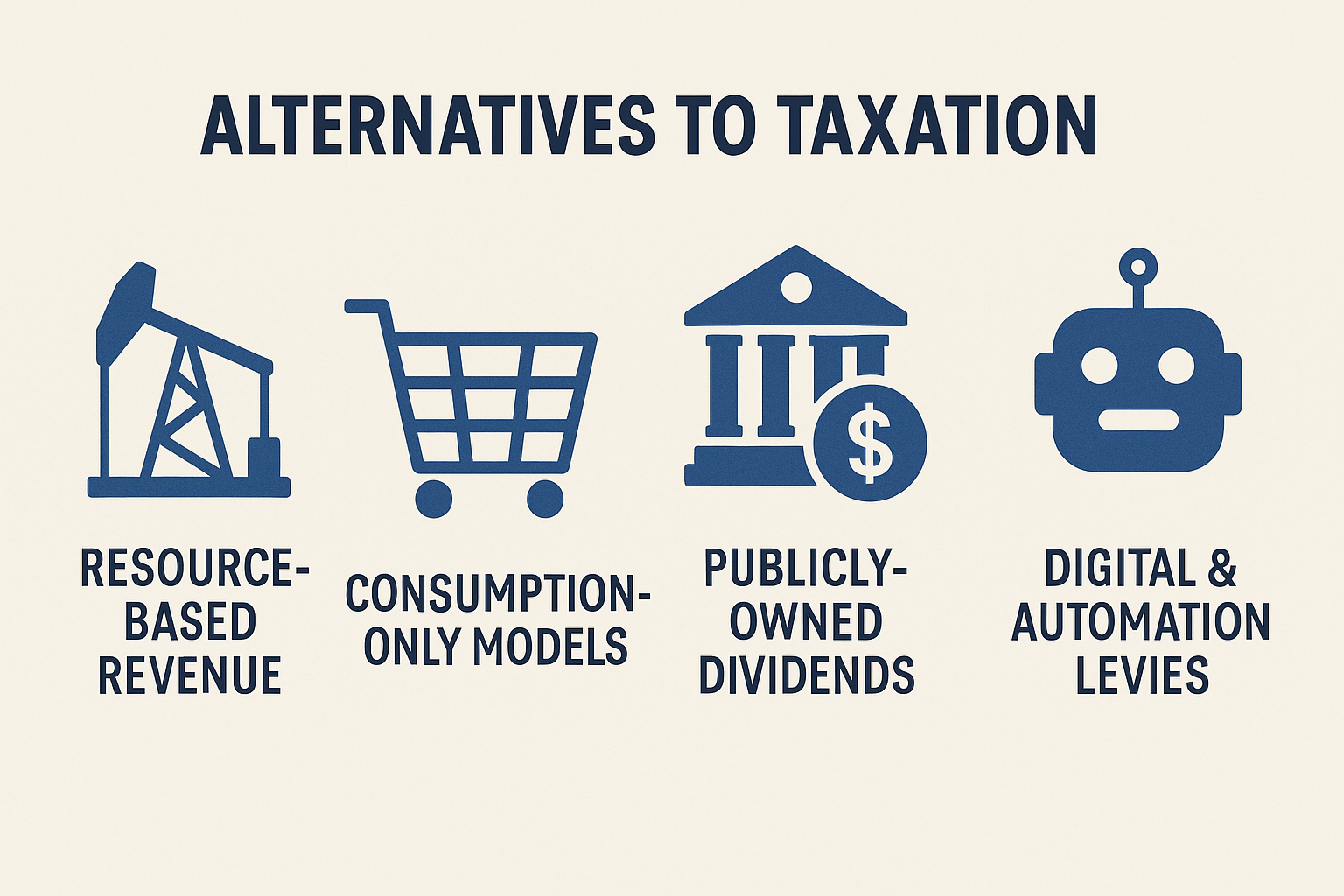
1. Resource-Based Revenue
Instead of taxing citizens, governments could fund themselves directly from the nation’s natural resources.
-
Oil, gas, minerals, land, or water rights could generate revenue.
-
Norway’s sovereign wealth fund is an example: profits from oil are invested, and citizens benefit without heavy taxes.
-
This model shifts the burden from workers to shared natural wealth.
2. Consumption-Only Models
Rather than taxing income or property, governments could collect revenue only from consumption.
-
Flat sales tax or “pay-as-you-use” systems.
-
Luxury goods, pollution, and waste could be taxed heavily, while essentials remain untaxed.
-
This rewards saving and investment while targeting excessive consumption.
3. Publicly-Owned Dividends
Imagine a society where citizens own shares in public infrastructure.
-
Ports, railways, digital networks, and energy grids could generate profits.
-
Instead of being privatized, profits go back to citizens as dividends.
-
Government revenue comes from services society already uses, not forced taxation.
4. Digital & Automation Levies
As AI and automation replace human jobs, governments could shift revenue from labor to machines.
-
Robots, AI systems, and automated factories pay operating fees.
-
This redistributes wealth created by technology.
-
Workers are freed from excessive taxation while automation funds public life.
5. Voluntary Contribution Models
Some argue for a radical shift: citizens directly choose where their money goes.
-
Instead of taxes, people contribute voluntarily to healthcare, education, or defense.
-
Technology (blockchain, smart contracts) could track and verify contributions transparently.
-
This forces governments to compete for efficiency — no more blank checks.
6. Wealth & Speculation Capture
Instead of taxing wages, focus on wealth hoarding and speculation.
-
Land value tax (Henry George’s idea): unearned land wealth funds society.
-
Transaction levies on high-frequency trading and offshore banking.
-
Shifts burden from workers to speculative wealth accumulation.
7. Resource-Based Economy (RBE)
A radical vision promoted by futurists like Jacque Fresco (The Venus Project):
-
No money, no taxation.
-
Resources are managed scientifically and shared equitably.
-
Technology automates scarcity, and governance is based on efficiency, not profit.
Though utopian, RBE forces us to imagine life beyond taxation entirely.
Conclusion: Breaking the Illusion
Taxation has been framed as the only way to fund civilization. But history and innovation show otherwise. From resource dividends to automation levies, there are countless alternatives that don’t enslave workers while protecting the rich.
The real question is not whether alternatives exist — it’s why governments resist them. Because taxation isn’t just revenue — it’s control.