❄️ The Soviet Cannibal Islands: Stalin’s Forgotten Horror in Siberia
admin
Author
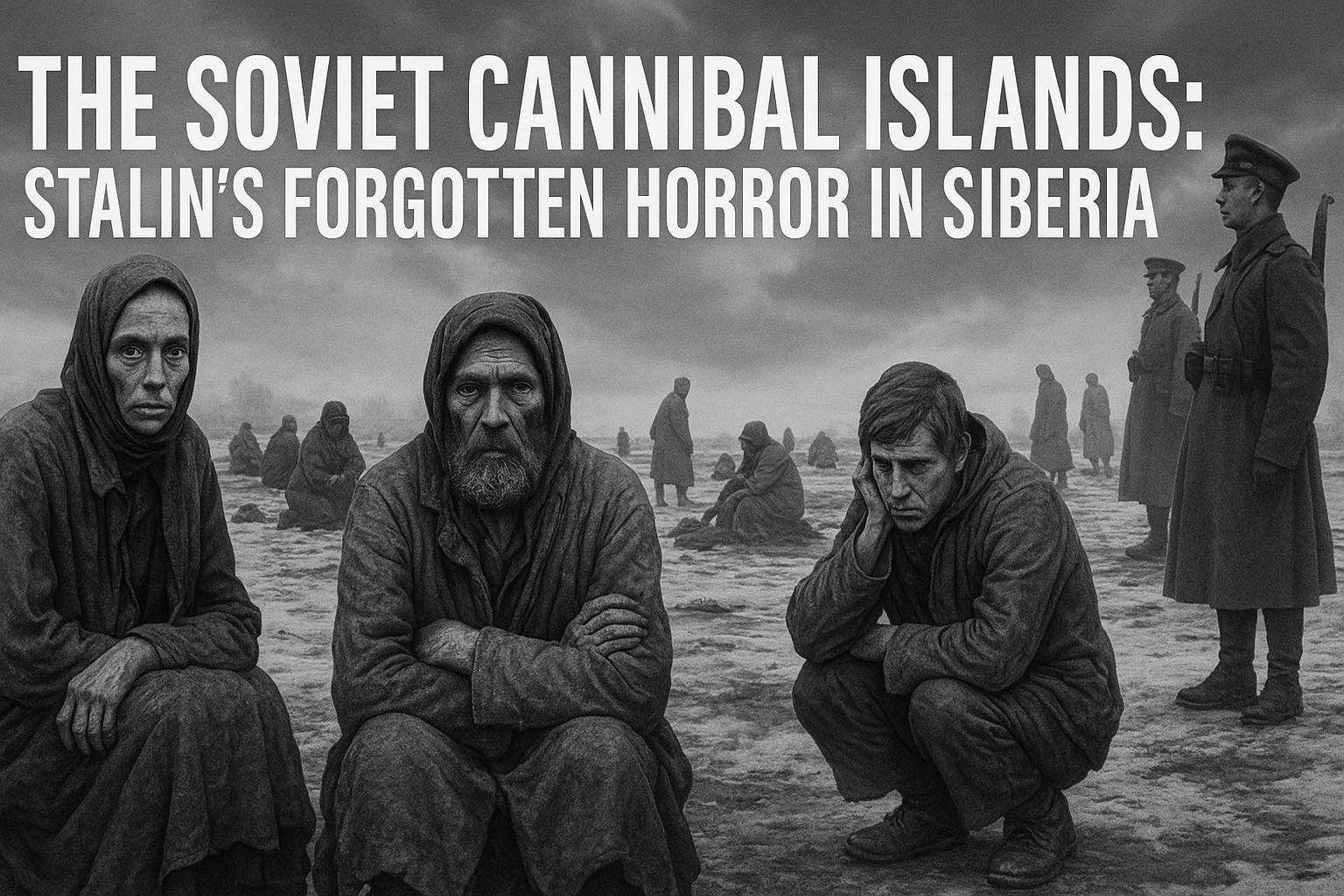
In the shadows of Stalin’s Soviet Union, long before World War II exploded across Europe, a chilling story unfolded on a remote patch of Siberian wilderness.
It was 1933 when thousands of men, women, and children — labeled “undesirable” by the regime — were shipped to an uninhabited swamp in the Ob River. The place would be remembered as Nazino Island.
Exile Without Food or Shelter
The deportees were peasants, beggars, and supposed “enemies of the people.” Loaded onto barges, they were dumped on Nazino Island with little more than the clothes on their backs. There were no tools, no shelter, and only a small ration of flour handed out sporadically.
When the flour ran out, survival turned desperate. People tried to eat bark, leaves, and grass. But within weeks, starvation consumed the island.
The Descent Into Cannibalism
What followed was one of the most horrifying episodes of the Stalin era. Eyewitnesses later testified that cannibalism became widespread. Starving prisoners preyed on the weak. Some were attacked while still alive.
Official Soviet reports, buried for decades, confirmed that hundreds were killed and consumed. Survivors described bodies mutilated for meat, guards complicit in the horror, and total collapse of humanity in the face of desperation.
A Forgotten Prequel to the Gulag Tragedy
Though Nazino happened before World War II, it foreshadowed the brutality of Stalin’s later wartime deportations and Gulag labor camps. During the war, entire ethnic groups — Chechens, Crimean Tatars, Volga Germans — were uprooted and exiled to Siberia and Central Asia under similarly inhumane conditions.
The Nazino tragedy remained classified in Soviet archives until the late 1980s, when glasnost finally exposed what had long been denied.
The Human Cost of Silence
Exact numbers are uncertain, but of the 6,000 exiled to Nazino Island, over 4,000 perished within weeks. Survivors carried the scars of starvation and horror for life.
For decades, the Soviet Union buried this episode. Only after the fall of communism did the world fully learn of the “Cannibal Island” that revealed the extremes of human suffering under totalitarian rule.
Why It Matters
The story of the Soviet Cannibal Islands reminds us that atrocities are not always committed in open battle. Sometimes, they happen quietly — in forgotten corners of the world, erased by official silence.
History is shaped not only by great wars, but also by the hidden tragedies of those who never had a voice.