🎭 The Phantom Army That Fooled Hitler: How Artists and Illusions Helped Win the War
admin
Author
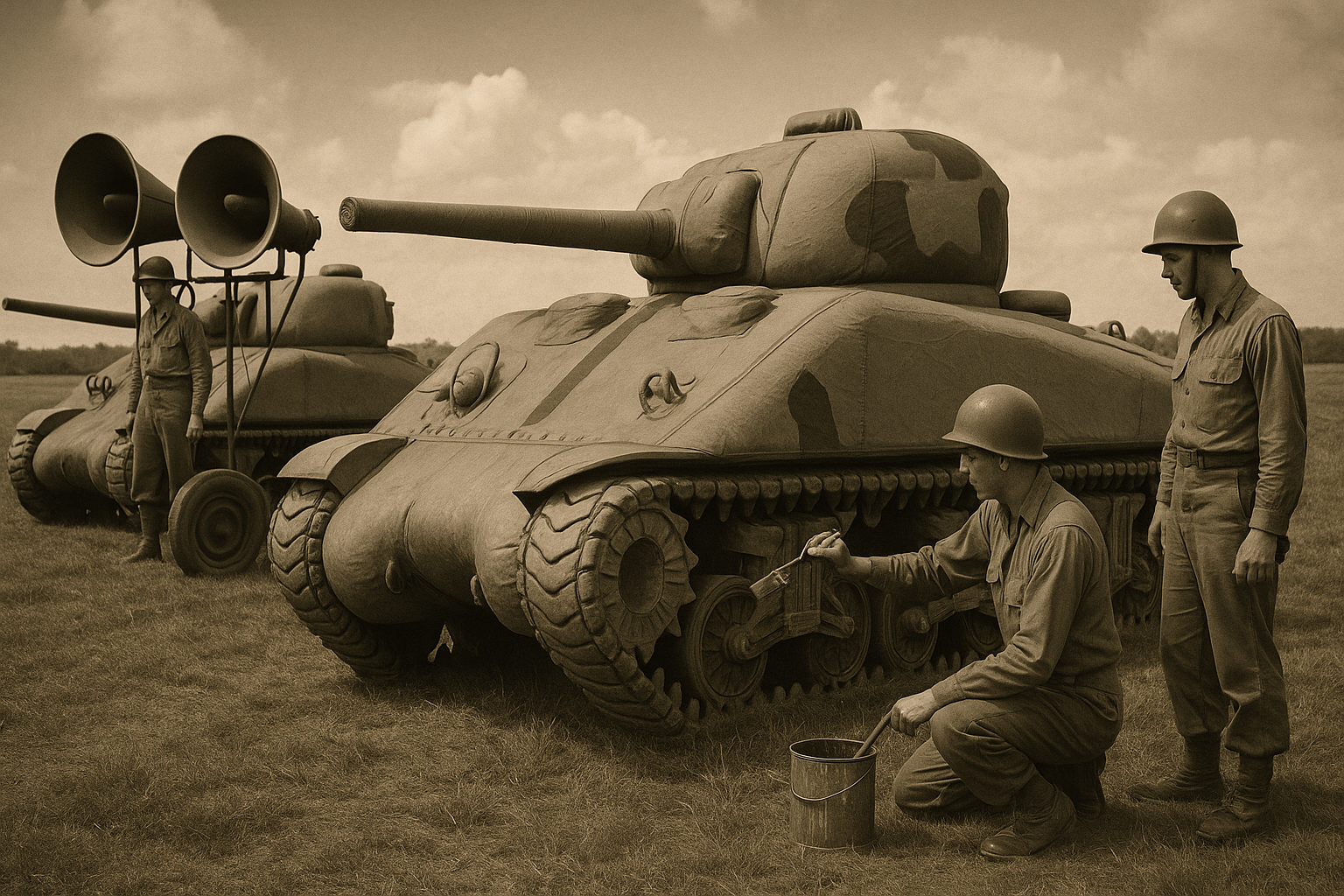
Not all of World War II’s heroes carried rifles. Some carried paintbrushes, speakers, and sewing kits. Their mission wasn’t to fight — it was to fool.
This was the story of the Ghost Army, officially known as the 23rd Headquarters Special Troops, a top-secret U.S. military unit that staged one of history’s most audacious deceptions.
The Masters of Illusion
Formed in 1944, the unit included 1,100 men — many of them artists, designers, actors, and sound technicians. Their battlefield was deception. Their weapons: inflatable tanks, rubber planes, fake artillery, and giant loudspeakers blasting pre-recorded battle sounds.
They painted fake unit insignias, sent phony radio transmissions, and even impersonated officers in local cafés to spread false rumors.
D-Day and Beyond
The Ghost Army’s greatest contribution came during the run-up to D-Day. Through Operation Fortitude, Allied forces tricked Hitler into believing the invasion would hit Pas de Calais instead of Normandy. Inflatable tanks and fake divisions convinced the Germans to hold back crucial reinforcements, buying the Allies precious time.
Later, in the push across Europe, the Ghost Army staged over 20 major deceptions — masking troop movements, disguising weaknesses, and creating the illusion of overwhelming strength where none existed.
Artists at War
Future famous names were among them. Fashion designer Bill Blass, painter Ellsworth Kelly, and photographer Art Kane all served in the Ghost Army. They turned their creative talents into tools of survival, proving that art could be as powerful as firepower.
Secrets in the Shadows
The Ghost Army’s existence was kept classified for more than 40 years. Veterans were forbidden to talk about their missions until the 1990s. Many of their illusions went unrecognized in the official histories of World War II.
When records were finally declassified, historians realized how much of the war’s success rested on this unlikely band of tricksters.
Why It Matters
The Ghost Army proves that wars are not won by strength alone, but also by imagination and deception. Their inflatable tanks and fake battlefields may look comical today, but in 1944 they saved thousands of lives and hastened the fall of Hitler’s empire.
In the end, the Phantom Army showed that sometimes the best way to fight a war is not with bullets, but with illusions.